A fractured post-war Europe in a powerhouse new play.
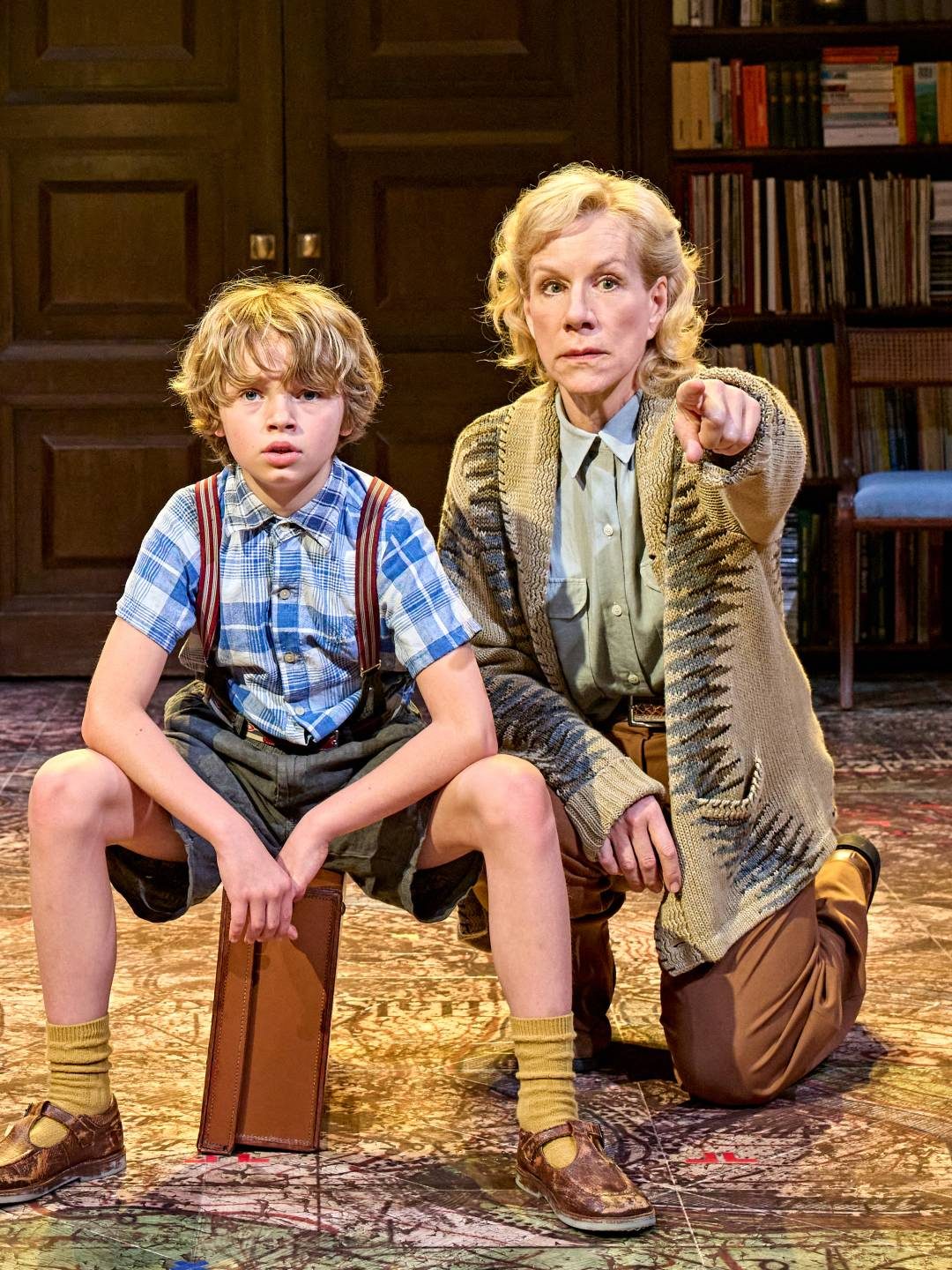
The Land of the Living, opens on a hesitation. Ruth (Juliet Stevenson) stumbles over her words, circling a question posed by a man from her past, Older Thomas (Tom Wlaschiha). We do not hear the question, but as the play unfolds it is revealed as the inexhaustible one: who am I, and where do I come from, writes Emily Driver.
For Thomas, that question is freighted with a uniquely brutal inheritance. Back in war-torn Bavaria, we learn with Ruth, a UN relief worker, that as a boy he was torn from his family by the Nazis and chosen as one of their so-called ‘special children’, marked out for repatriation by virtue of possessing Aryan traits.
Ruth and her fellow humanitarian workers seek to return him to his family and restore some order on an Eastern Europe in disarray and its millions of displaced peoples. It is the murky, morally equivocal nature of these missionary methods which Lan forces under a microscope. When Ruth is confronted decades later by the man that she both cared for and handled as cargo, it is no wonder her words get caught in her throat.
Juliet Stevenson gives a performance of tensile strength: taut, pained, and self-aware. Yet it is the younger Thomas, (played on Thursday night by Artie Wilkinson Hunt) who provides the evening’s most piercing note. He moves through degrees of unadulterated rage, grief and vulnerability with a kaleidoscopic adeptness that recall only the rarest child performances, such as that of Owen Cooper in Netflix’s Adolescence.
Lan’s supporting characters are more schematic: the brash, tongue-in-cheek American soldier who longs to escape that ‘hell-hole’ continent, or the blubbering, unworldly aid workers. These types gesture towards the diverse, international efforts of postwar Europe, but remain silhouettes compared to the density of Ruth and Thomas’s moral entanglement.
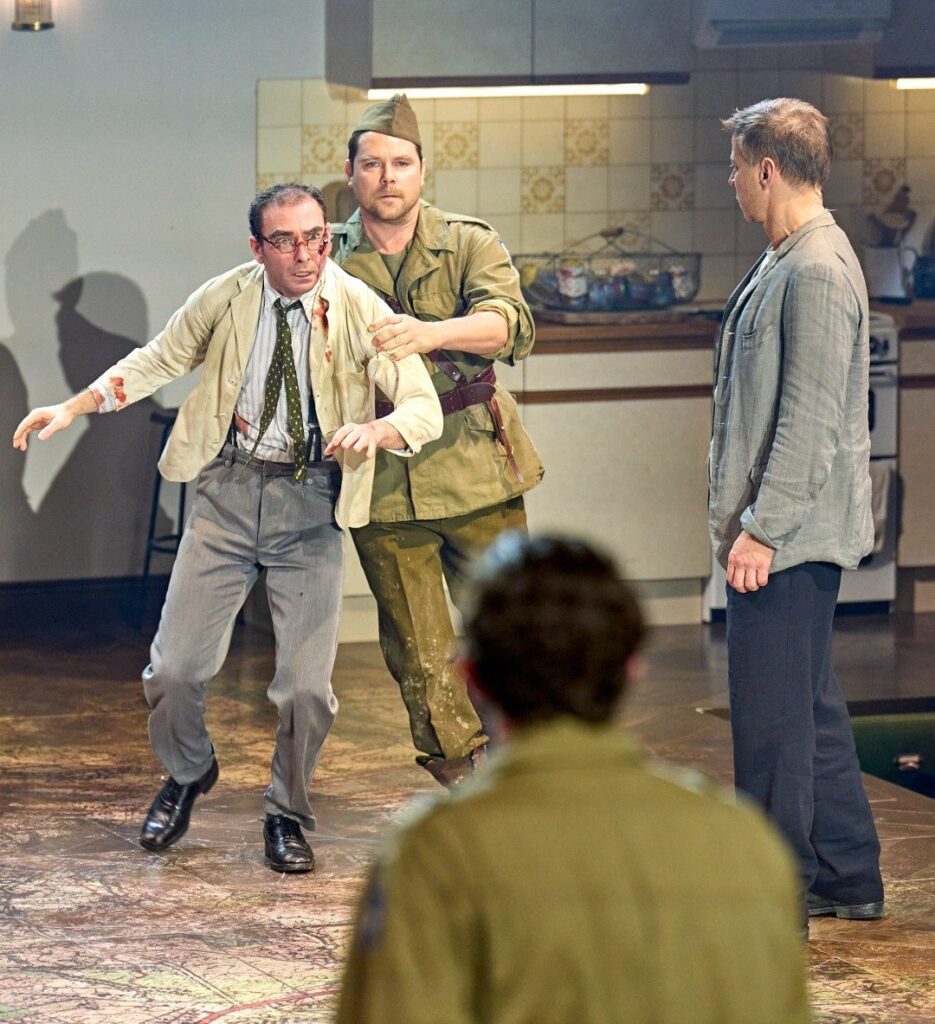
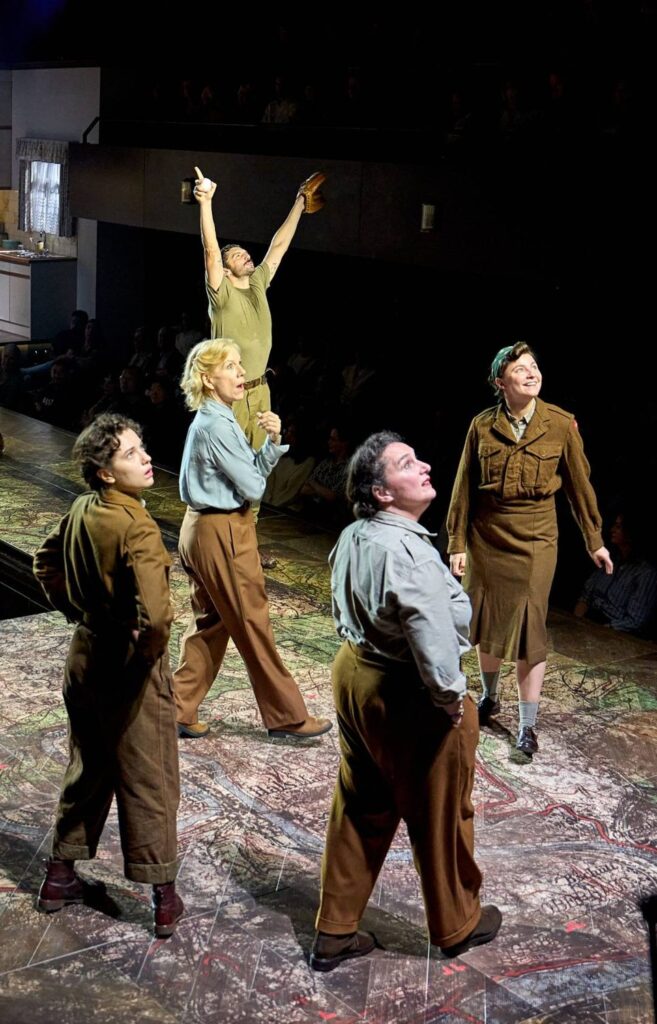
All of these performances are facilitated by Miriam Beuther’s powerfully suggestive set design in the Dorfman Theatre. On stage, we find the cosy trappings of domestic order – a kitchen, drawing room, piano, bookshelves. Beyond the kitchen, lurks the wild and unmasterable Bavarian woods. Beneath the floorboards, lie confidential war files – the conspiracies and secrets on which lives were tentatively rebuilt after the war. Together, Lan and Beuther stage history not as backdrop but as sediment: layered, unstable, and prone to fissure.
The Land of the Living is a drippingly dark, confrontational and cacophonous play. If sometimes it errs on the side of density – with its shifting temporalities and chorus of languages – it nevertheless manages to achieve a rare moral seriousness. And if it leaves us unsettled, it is because the questions that are posed – of memory, complicity, and ownership – do not yield easily to answers.
Dorfman Theatre, National Theatre, South Bank. London,SE1 9PX until November 1st.
Booking and full details: https://www.nationaltheatre.org.uk/productions/the-land-of-the-living/