Redefining a cultural symbol bigger than history
These days, especially among young people, Japanese culture has the ultimate hegemony. Anything trendy and cool has its origins in Japan from Matcha-flavoured drinks, streetwear to stationery and trips to Japan; right now everything Japanese is the height of cultural capital, writes Aneela Aslam.
Samurai takes the concept of the age-old warrior identity, which has become synonymous with Japan itself, and unsheathes the reality of how the Samurai evolved into a global cultural phenomenon. The exhibition breaks from usual conventions as it starts with a timeline of the Samurai to be read right to left in the Japanese way rather than the western order of reading.
In the first part of the exhibition, Rise of the Samurai: AD 800-1600. We get to see the Samurai as we know them, brutal warriors wielding mighty weapons, with the small armoury weaved in amongst other artefacts, including the finest bow and arrows, Katanas (traditional swords) and helmets. We learn that, unsurprisingly, distinctive helmets were used to differ amongst high-ranking warriors on the battlefield.
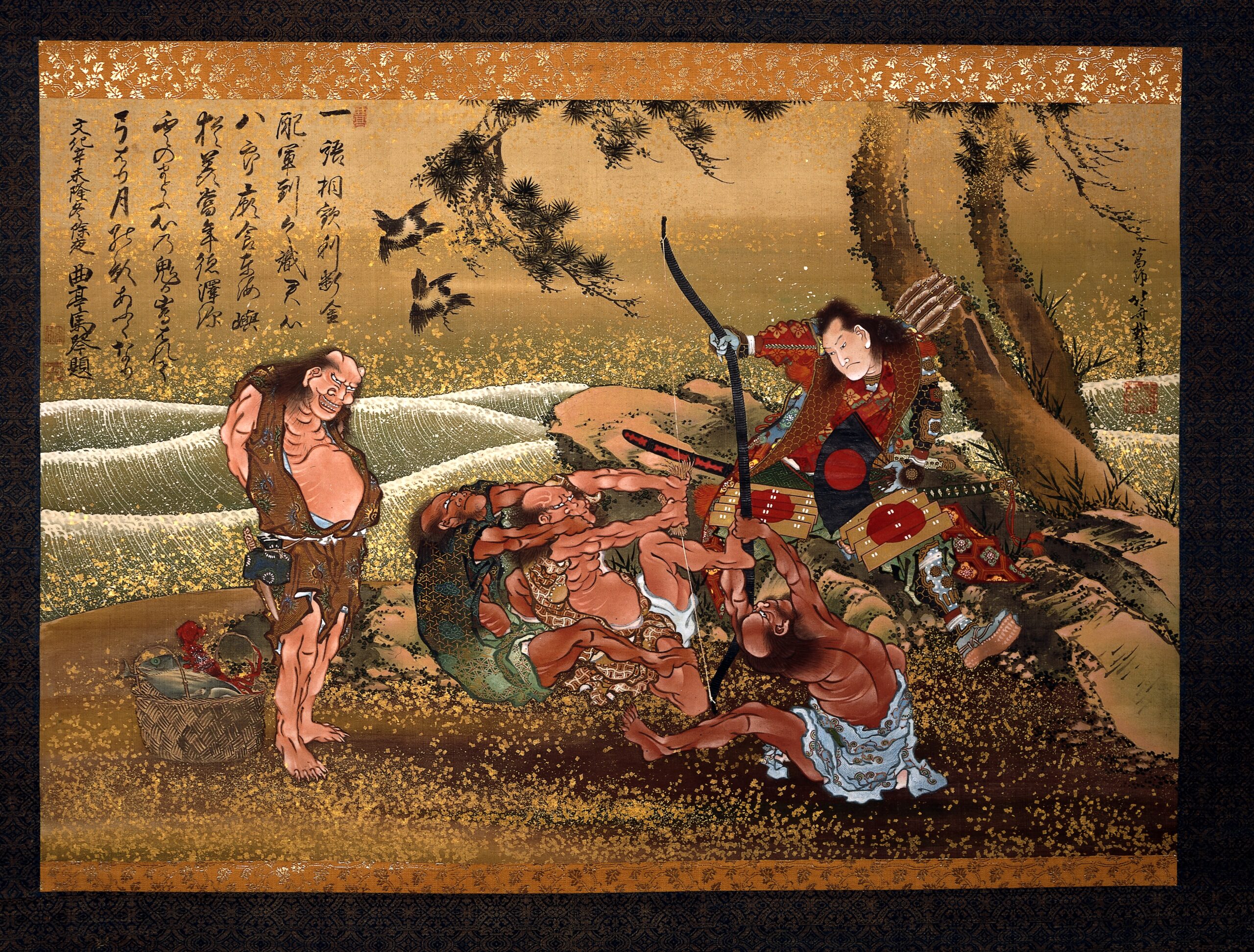
Also, in this first section we discover that Samurai lords or Shoguns were particularly fond of ceramics and cultivating aesthetics; folding screens depict epic battles, with one displaying the Battle of Ichotani.
The careful choice of darker lighting at the beginning makes sense, allowing visitors to witness the interesting animated re-enaction of a bloody Samurai battle, with minute details such as tree branches blowing. This section transports the viewer into the heart of ancient warfare.
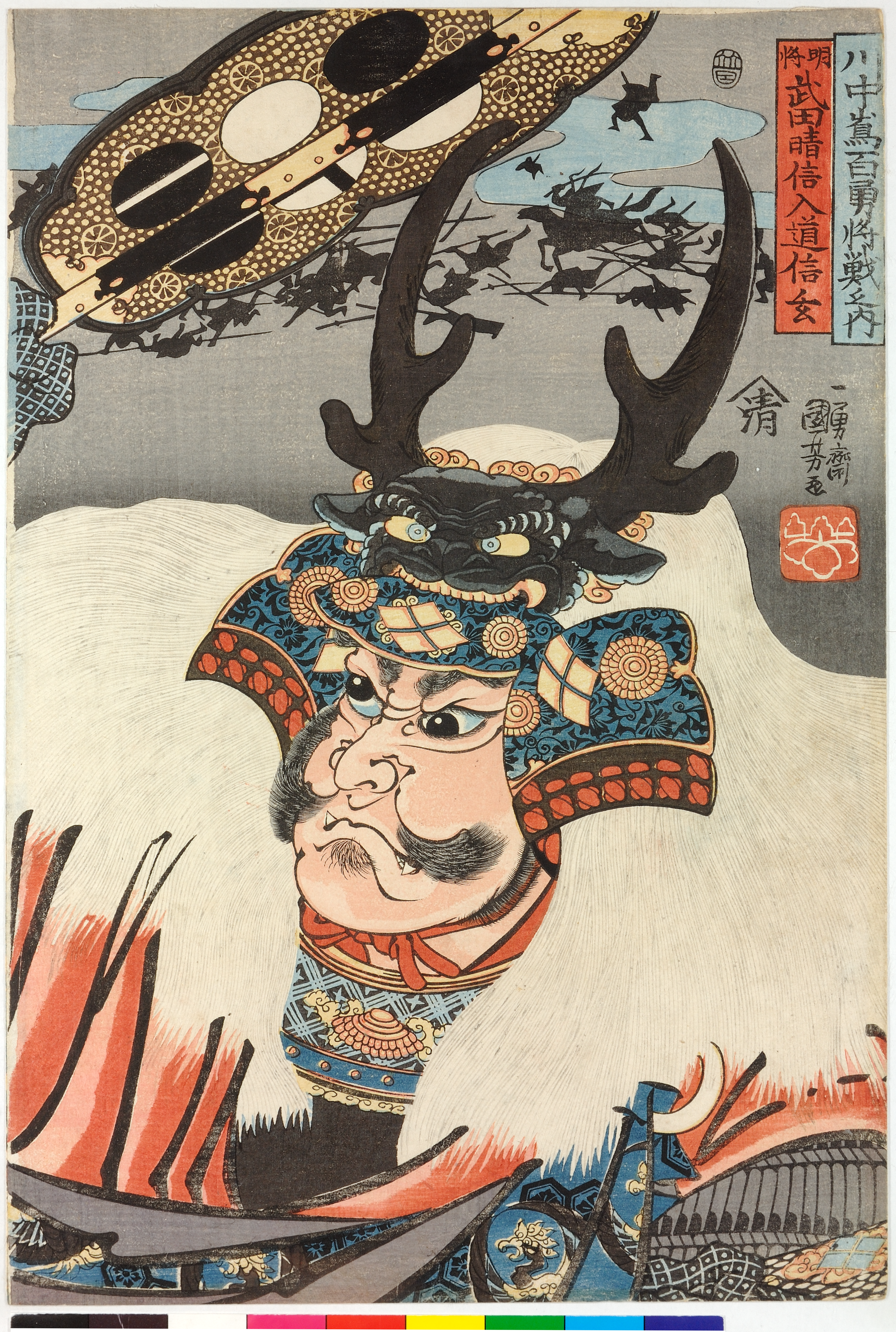
Moving from the Rise of the Samurai into The long peace (1600-1850s AD) we get to understand some of the hidden elements of the Samurai identity that have been lost to history.
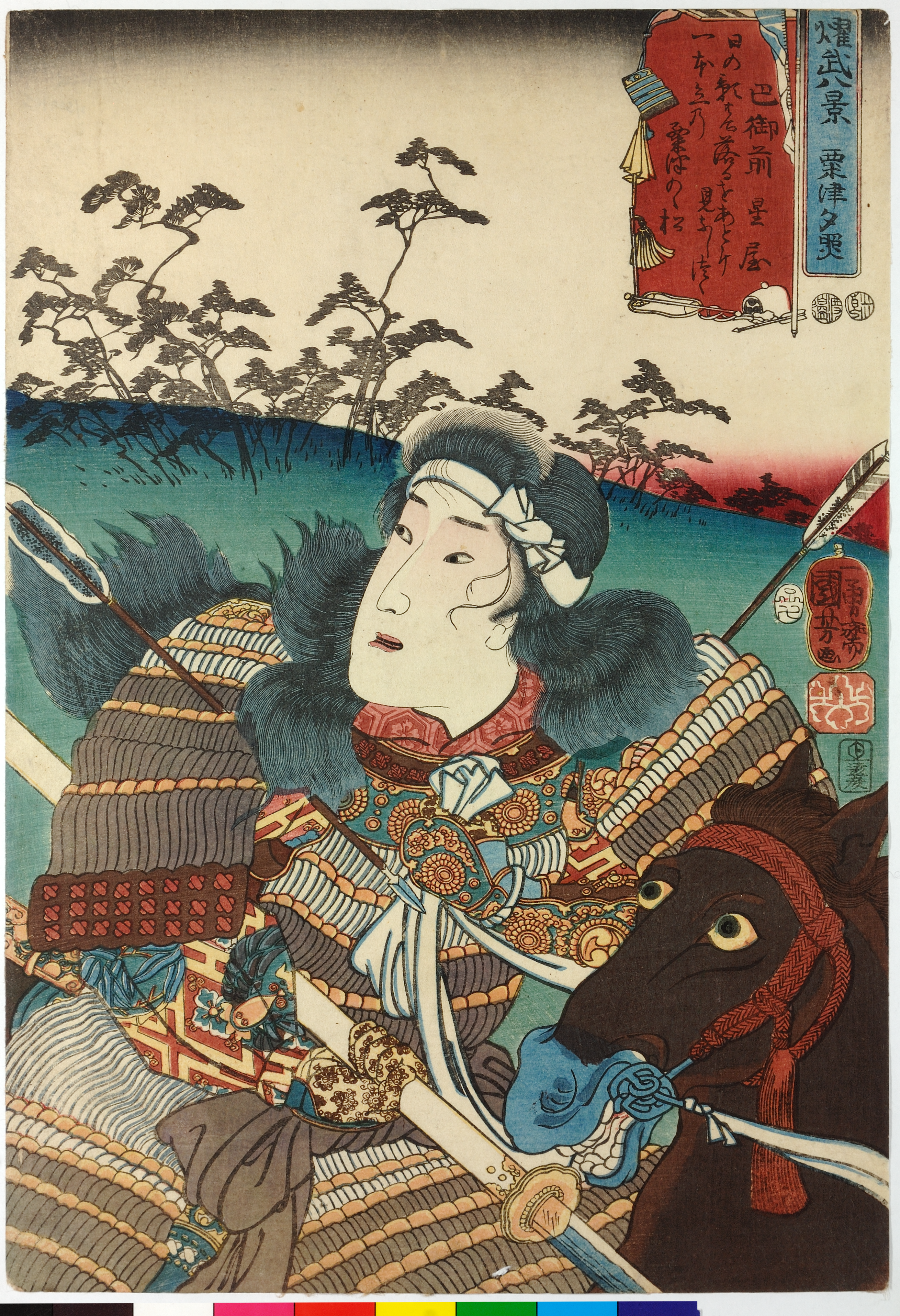
The long peace showsthe Samurai as we imagine them. They had become legends to be reimagined through art, literature, theatre and poetry. Now a bureaucratic class, a palanquin portrays how high-ranking Samurai women travelled in style. But we also learn of the firefighting Samurai women from Kanagaki Robun’s coloured wood-block book, recounting a devastating fire after an earthquake in 1855. In The long peace, we also find Tomoe Gozen, the female warrior who Tsukioka Yoshitoshi portrays prepared for battle yet with her hair blowing in the wind, still feminine with red-painted lips.
However, Japanese propriety still exists amongst the artefacts, with one popular author from the time, Jippensha Ikku, whose books depicting moral lessons with Samurai were considered too “frivolous” by the government because of his use of vibrant colours. They were reprinted in monochrome.
Nevertheless, despite this long-held belief of Japanese propriety we also learn of theatrical interpretations with men playing female Samurai and the young men of the period embracing androgenicity. Perhaps surprising to some but not all, we see the indulgent sensual behaviour of the period through handscrolls such as Chōbunsai Eishi’s erotic scene of Edo from the 1790s.
Most importantly, we see the Samurai depicted as something they’ve always been, cultural transmitters. With the portrait of Samurai Hasekura Tsunenaga, painted in Rome by Archita Ricci in 1615, showing the Samurai in their most important role, as diplomats and Japan’s most iconic cultural exports.
In the final part of the exhibition, visitors get to experience cultural outpour. With an amalgamation of hundreds of years of history built into modern pop-culture on display, you will more than likely recognise several of the items. Plus, it comes with a beautiful soundscape to match.
From clever digital artefacts, beautiful colouring and a backdrop of sound effects, Samurai at the British Museum is a moment of redefinition.
The British Museum, Great Russell Street, London WC1B 3DG until 4th May.
Booking and full details: https://www.britishmuseum.org/samurai