“Love is a commodity that I cannot afford”
1934. A basement apartment in Greenwich Village, New York. Basil Anthony (Laurie Kynaston) hears news on the radio that Antonescu shares have just plummeted, following rumours of a failed merger between Manson Radios and American Electric Incorporated. At the heart of the crisis is Basil’s father, Gregor Antonescu (Ben Daniels), a Romanian-born high flying financier — whose cooked books not only threaten to collapse this gargantuan merger, but also trigger another financial crash, writes Frankie Jenner.
Five years estranged, and yet here is Gregor — descending on his son’s apartment with so much tenacity and entitlement that it’s surprising he fit his own head through the stage door. He tells everyone that his son died five years ago, but tonight, his entire operation hinges on Basil. Gregor is about to conduct the most important meeting of his life… his reputation depends on it, and his dignity demands its success. The game plan: Gregor intends to exploit his son’s youthful looks as bait for Mark Herries, a covertly gay businessman that Gregor needs to impress.
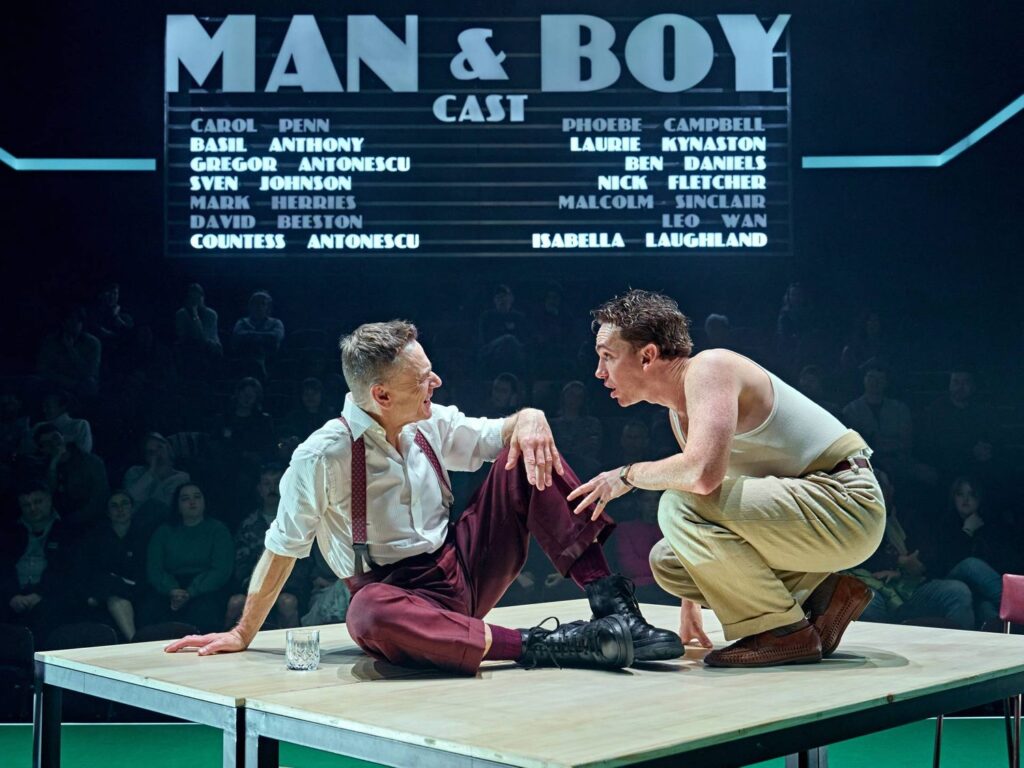
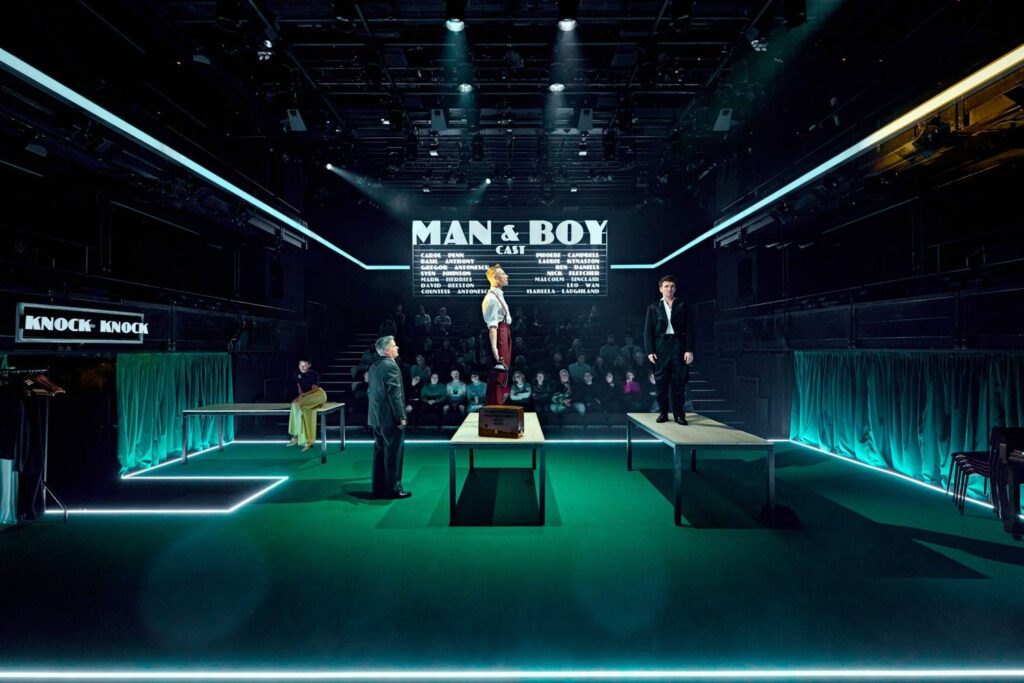
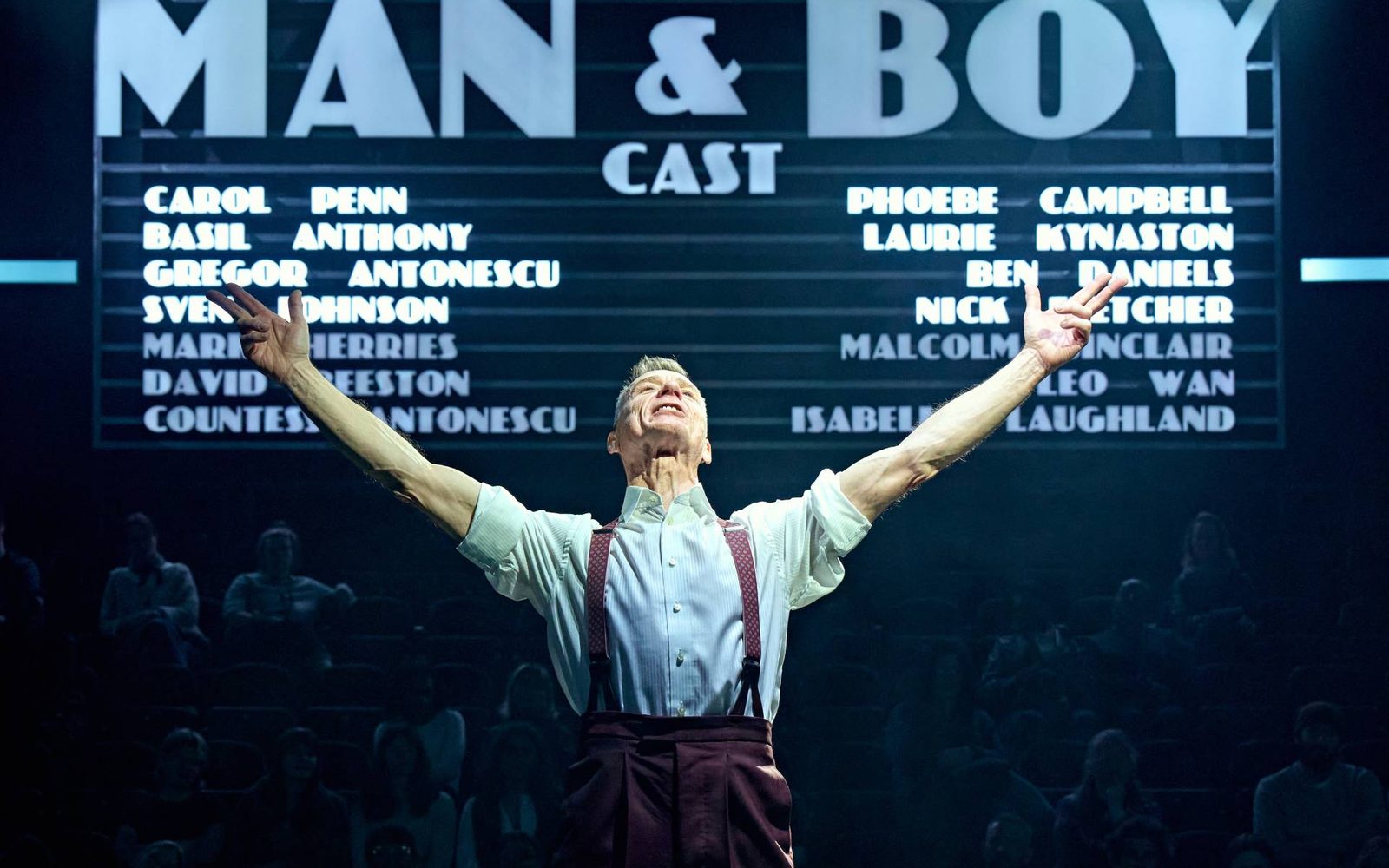
A classic picture-house style billboard with backlit panels was elevated on the back wall of the theatre and illuminated the cast and corresponding actor’s names as they entered the stage. This was a brilliant addition and made it really easy to immerse yourself into the narrative, especially if you had no prior knowledge of the story.
The actors commanded the set; forcefully sliding tables across the stage, overturning clothes racks and claiming tabletops as platforms. This invitation to play with the space added a further layer of trickery and deceit, amplified by the in-the-round staging of the National’s Dorfman Theatre, that pinned every spectator’s gaze directly at them. The green-felted carpet set against two pale wooden tables gave the unmistakable impression of a billiards table, inverted — perhaps a subtle nod to the fact that the game was rigged from the start.
Fatherhood and masculinity are somewhat tortured themes throughout not only the play, but upon further reading, writer Terence Rattigan’s work more generally. That being said, Ben Daniels masterfully adopted Gregor’s paternal fragility in an embodied manner; an intense and invisible grief consumed him throughout the 2-hour and 25-minute long play, a gradual accumulation that finally ruptured; “Love is a commodity that I cannot afford,” he protested.
As someone not familiar with Rattigan’s work prior to this performance, I couldn’t help but feel that in this grave time of fascist leaders, gross abuses of power and authority and the latest shocking developments from the Epstein files – that lay bare how financial greed repeatedly weds itself to sexual depravity – Rattigan’s 1963 play, Man and Boy, addresses many of the battles and corruptions that we seek to avenge today.
Man and Boy’s sharpest provocation comes at the very end – that “to be absolutely powerful, a man must corrupt himself absolutely.” A play on Lord Acton’s famous 1887 assertion, it suggests Gregor’s corruption is not a consequence but a conscious act of self-destruction at the altar of ambition.
Man and Boy, Directed by Anthony Lau is showing at The National’s Dorfman Theatre until 14 March 2026.
Booking and full details: https://www.nationaltheatre.org.uk/productions/man-and-boy/