An icon to future generations
It’s hard to believe Frida Kahlo was relatively unknown when she died aged 47, with only a couple of solo exhibitions and having sold just a handful of her work. This show examines how she became one of the most influential women of all time, writes Barbara Buchanan .
Identity is key in Kahlo’s self-portraits, with the artist exploring her multi-faceted persona as a mestiza, wife, bi-sexual woman, and political activist. In nearly all her self-portraits, Kahlo is looking directly at the observer.
“She is facing the public, her eyes are addressing the viewer, she is putting herself out there – this is me; this is who I am, this is my suffering. It’s this direct engagement with the viewer that makes her so special,” notes curator Tobias Ostrander.
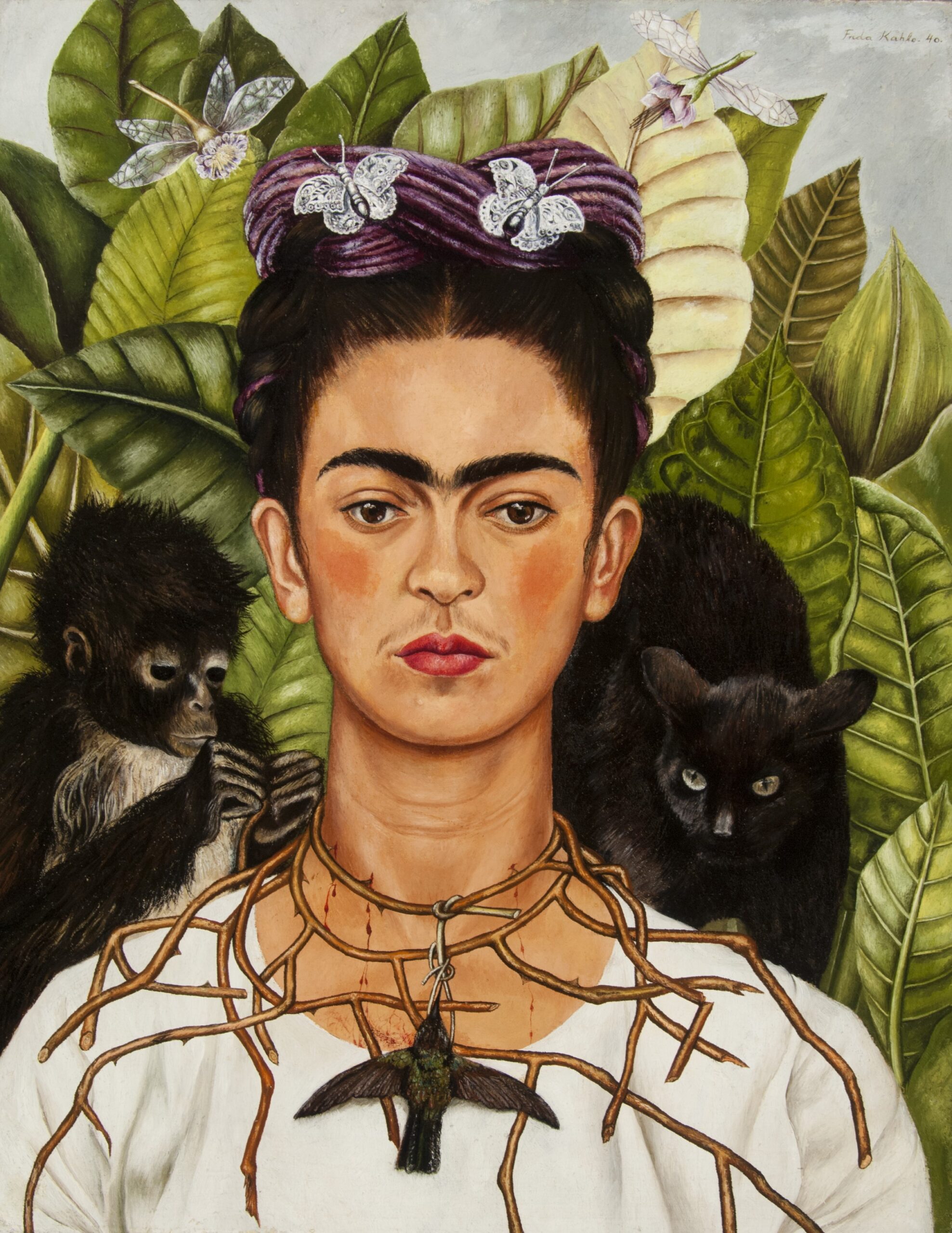
Her self-portrait in a jungle, wearing a necklace of thorns and a monkey on one shoulder and a black cat on the other, is intense. The monkey, a gift from her husband Diego Rivera, is picking at the thorns, which are drawing blood, and the cat is ready to pounce. Painted in 1940, the year she divorced Diego and then remarried him, captures her suffering.
A sketch of the bus accident that changed her life when she was 18 shows her at the bottom, lying on a stretcher, her right leg bandaged. The bus is floating above with damaged bodies floating underneath. Her pelvis was shattered, her spine broken, along with numerous other fractures. It was during her long convalescence that she learnt to paint and pursued art instead of studying medicine.
The crash ruined her chances of motherhood, leading to a life of pain and hospital visits depicted in so many of her paintings. The plaster cast she wore in 1950 while bedridden at Hospital Inglés in Mexico City for spinal issues features in the early part of the show. Kahlo transformed her cast with a hammer, sickle, and star and an unborn foetus.
Her indigenous Purépecha ancestry on her mother’s side shaped her work, and she was also inspired by Mexican ex-voto paintings. These are images and text dedicated to saints for miraculous survival. Peres Maldonado’s 18th-century painting of a young Mexican woman undergoing breast surgery with text underneath of gratitude made a deep impression on Kahlo.
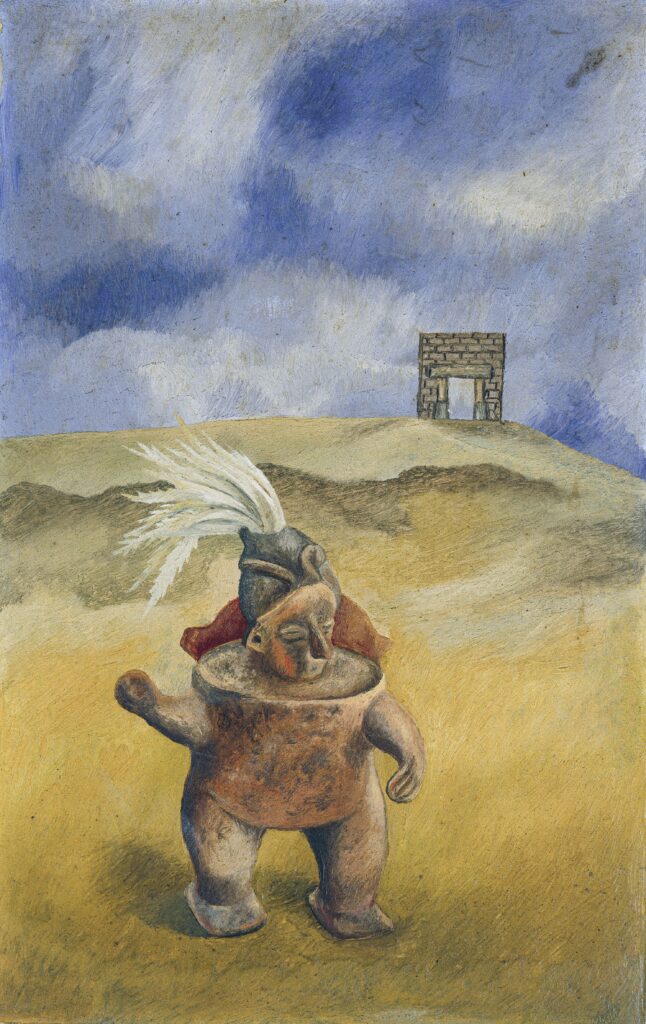
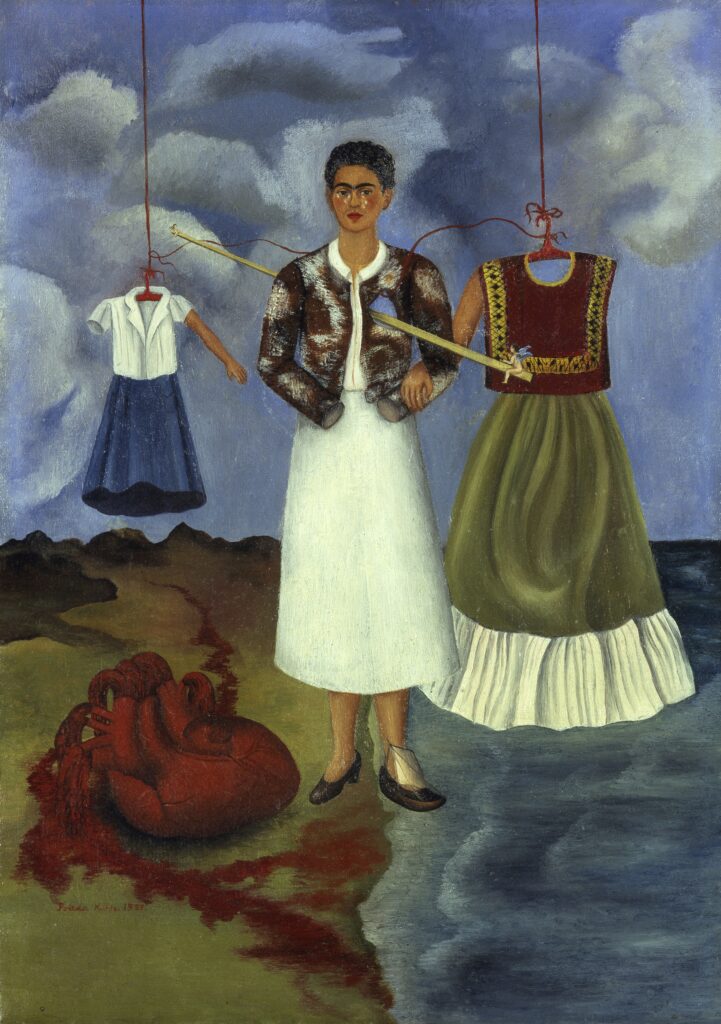
Art historian Mari Carmen Ramirez believes Kahlo’s emotional connection is why she made such a mark on contemporary and future generations of artists. Although Kahlo said her art was rooted in reality and not dream works, such as Survivor, Memory (The Heart), and Girl with a Desk Mask suggest otherwise.
Her fascination with masks, skeletons, death, and dreaming explains why André Breton, the founder of surrealism, described her as a self-made one.
You are left in no doubt at the end of this exhibition why Kahlo was such an icon to future generations of artists, particularly the Chicano movement of the seventies. Reinvention of her seminal works such as Las Dos Fridas as a tool to fight social injustice reveals how rich her work is. However, the most powerful element is undoubtedly the work by Kahlo herself and the influence she had on her contemporaries. The swathes of Kahlo merchandise are less of a draw, given you can buy hundreds and thousands of objects associated with her, everything from sanitary towels to egg cups, on Etsy.
Tate Modern until 3 January 2027.