Philharmonia Orchestra’s Virtual Orchestra: Play Along
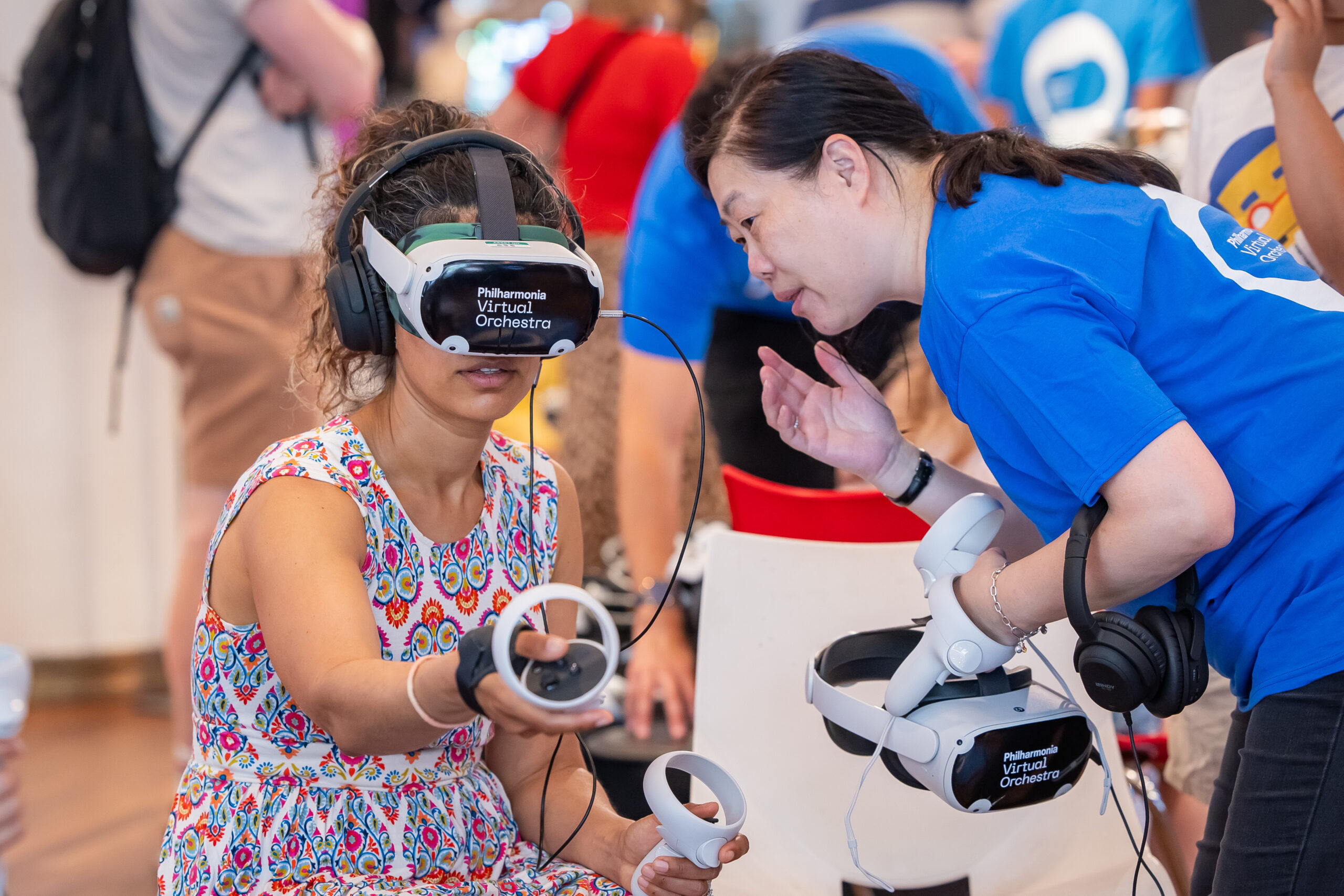
On my budding percussion-playing 13-year-old and I cycled through a downpour to the Southbank: the Philharmonia was inviting us to be virtually part of their orchestra, in the rhythm section, and my daughter was very clear that she wanted to give it a go. As a music-loving non-musician myself, I’ll admit that this virtual opportunity seemed hard to get my head around, but total beginners could equally participate, the literature assured me, so it was time to be brave, writes Eleanor Thorn.
Making our way to one of the quiet foyers upstairs, we were given the warmest of welcomes. Marta Génova, Head of Digital Product and Experience at the Philharmonia, introduced the project that has so far been tested out in 45 schools across the country, from which feedback has been positive. The current drop in music-learning opportunities in schools will soon be hitting orchestras hard, and this is something they are trying to address. By giving youngsters a virtual taste of orchestra participation, they hope to inspire real instrument-learning in young musicians who can develop a real sense of purpose.
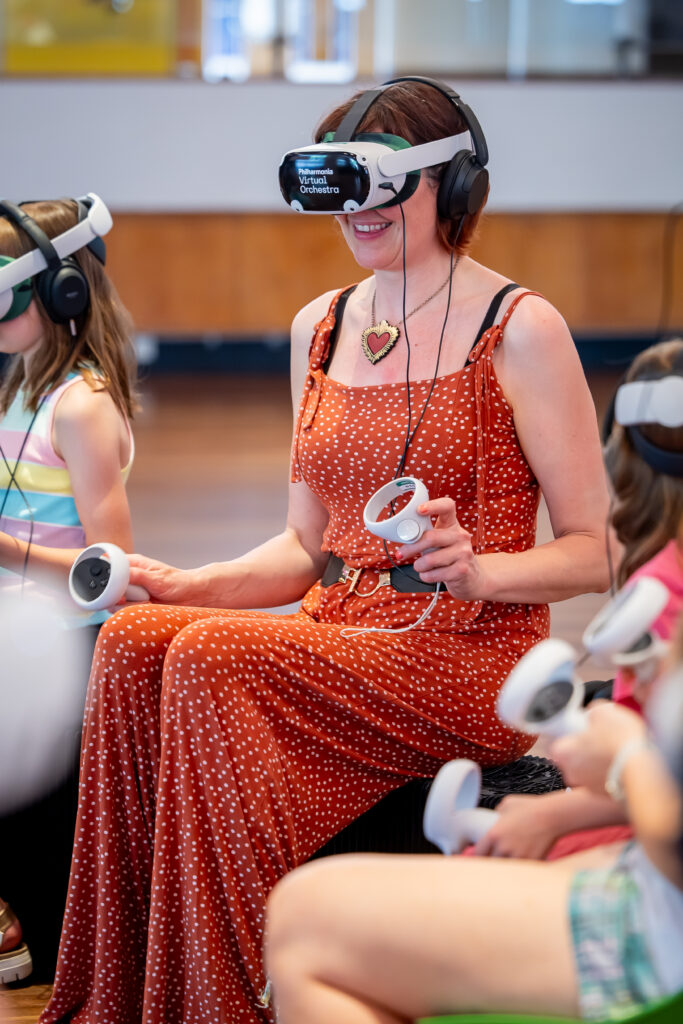
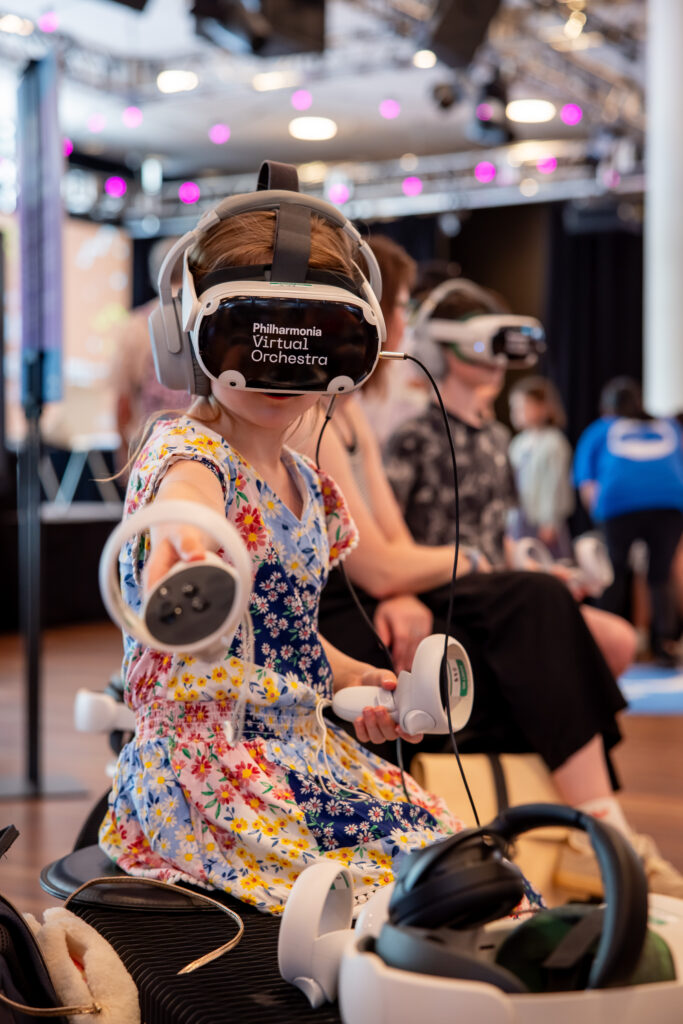
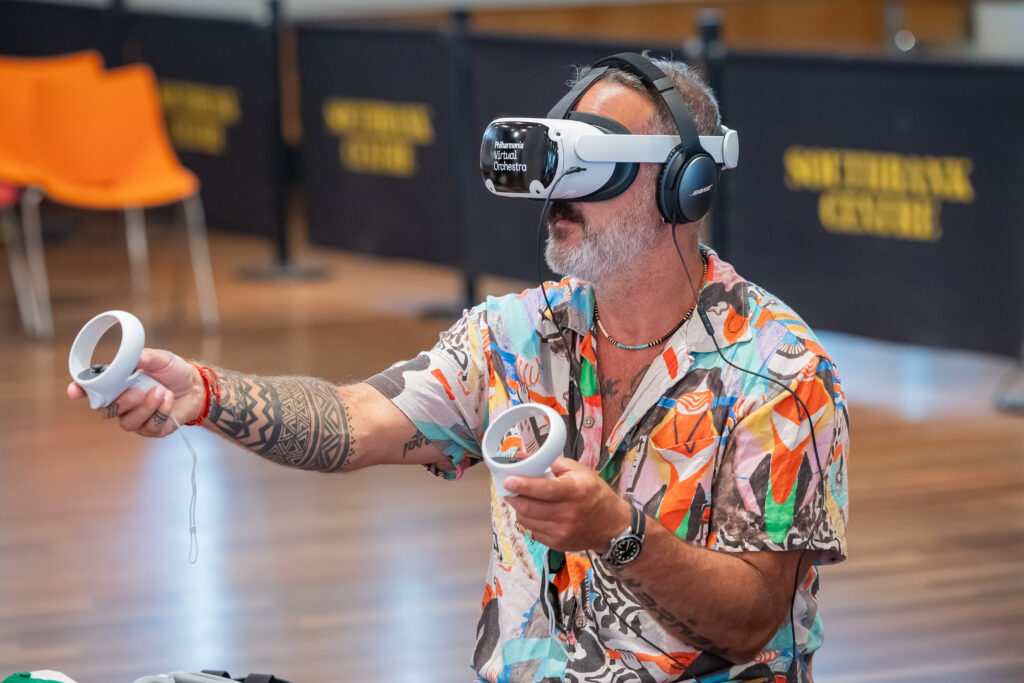
The activity had only been going for half an hour yet every seat was taken of the rows of benches: young and old wearing VR headsets a bit more bulky than what you might don when entering a boxing ring. Bulky yes, but very lightweight. All participants were engrossed in the orchestral experience, blind to new arrivals, waving their arms rhythmically. This was like a silent seated disco, of the classical kind.
In the space of thirty minutes, we were to be trained up to be able to perform timpani, cymbals, or triangle in Rossini’s William Tell overture on the Royal Festival Hall stage. Virtually so. Love Ssega, former artist in residence at the Philharmonia, appeared rather like a hologram, introducing the activity, before an instrument is chosen and a basic tutorial on beat-reading is explained by Tom Edwards, orchestra percussionist. From studio rehearsal, we are then parachuted onto the back rows of the stage, from where the view is almost vertiginous, and below and to left and right are other musicians. Thenceforth, my daughter on timpani and myself on cymbals, we did our best at hitting those beats. Good job it was only virtual reality, in my case. The incentivising hit rate is given as a score at the end: 80% for my daughter, and 53% for myself. Better than the young man assisting us who said he got around 25% on his first go. But it’s not about the score, it’s about the experience, one designed to pique an appetite for the real thing.
I spoke with fellow participant Michael and his son Louis, 14, whilst they waited for Louis’ nine and 15-year-old siblings to finish. “It’s great, really immersive. I felt under pressure to perform. It wasn’t too much like a video game and felt like you were really learning something. I think it is really successful,” said Louis. Michael could see the massive potential, which is the type of feedback that will be music to Marta Génova and her team’s ears. As a father keen to get his children into music, actually exposing children to this, he could see it could be far more inspiring than them just being presented a violin, say.
The Philharmonia were successful in obtaining funding for this project from the Innovate UK/DCMS Create Growth Programme. The activity was part of the Creative Intelligence Festival.