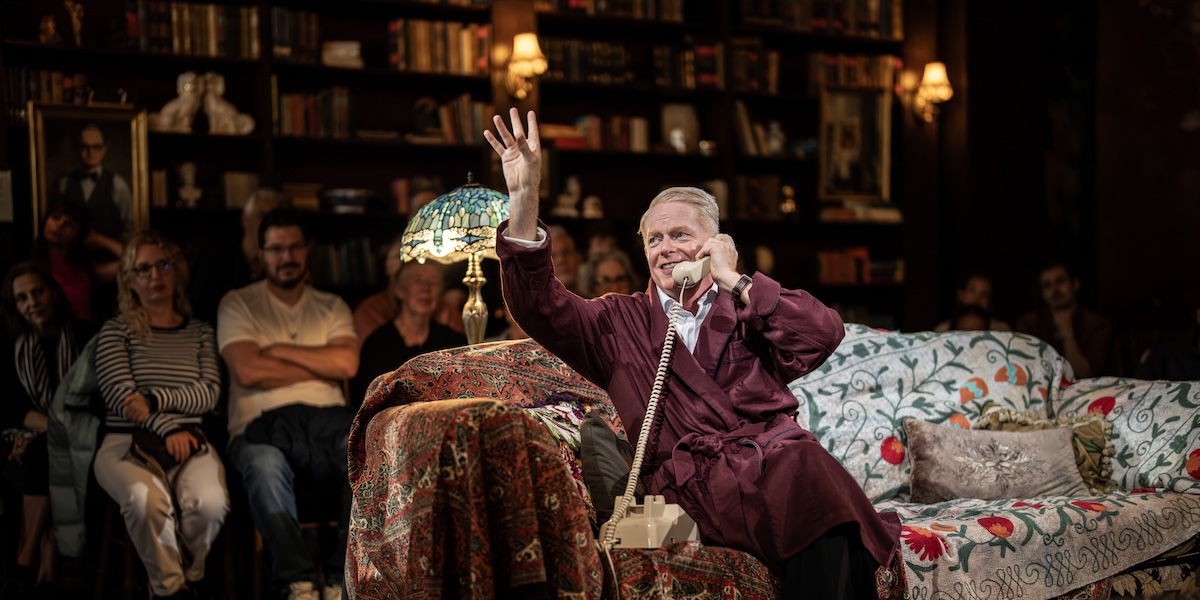
It was all change at the theatre last, and all a bit secretive… We had to wait to be guided in to our seats (?) And what a Wow of a surprise we got when we went through the door: the auditorium had been turned into Truman Capote’s New York apartment, all Tiffany lamps, books, artworks, and expensive paperweights. I had an upholstered, wing-back chair, with a side table and mood-lighting lamp for the evening, writes Michael Holland.
Other audience members had tables for two, or divans, all aimed towards the centre of the apartment where the action would unfurl. Hats off and awards for Paul Farnsworth.
Capote arrived, flustered, carrying poinsettias, which he immediately put down and called a friend to complain about the flowers and the person who gifted them to him. He pours himself a drink to help him through this crisis, and many more follow, along with uppers, downers and anything else he finds lying around.
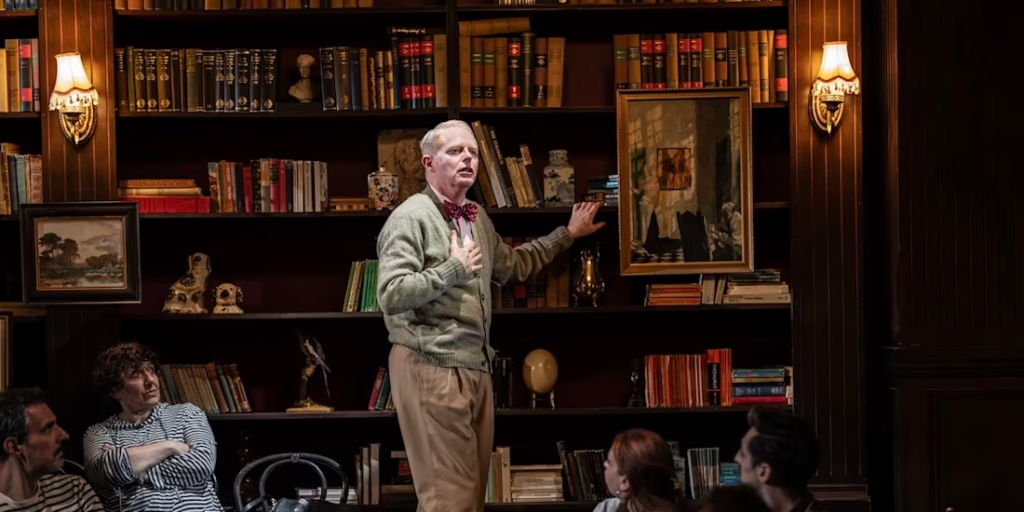
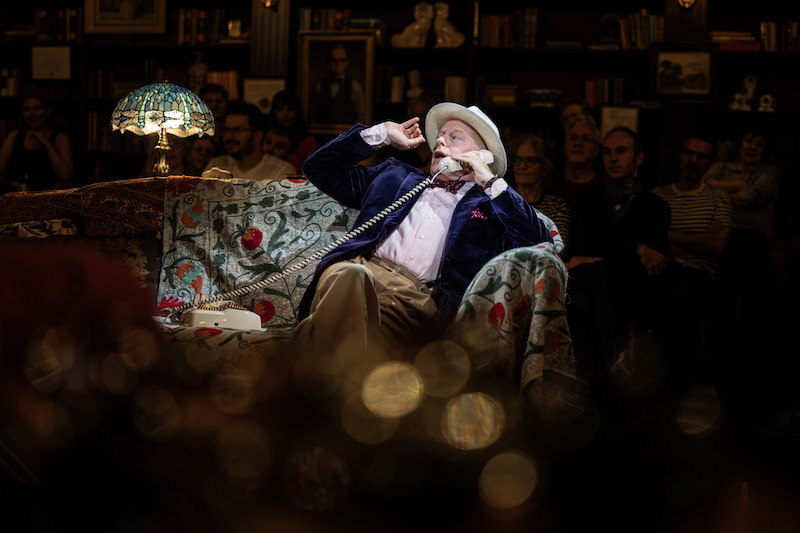
It is 1975, and the writer has just had sections of his unfinished roman à clef – Answered Prayers – published in Esquire magazine, but the gossipy, rich socialites that he had thinly disguised in his novel were not happy. They felt he had betrayed their trust by revealing their dysfunctional lives and innermost secrets. That elite social circle were shunning him.
Jay Presson Allen’s Tru portrays Capote trying to justify his actions but doubling down on his bitchiness and telling all and sundry, by phone or telegram, other anecdotes about the characters in the book – Some, probably not even true. He rails against the ‘sacred monsters’, while also realising he is committing social suicide by upsetting them. ‘I’m only there to provide the wit,’ he tells us, but the good thing is, ‘they never hit you up for a loan.’ Swifty Lazar was his agent, but even he stopped inviting Truman to his legendary parties.
It is written from words and reports of Capote’s life, so you get some great lines: ‘I’ve been to seven parties in two days,’ and, ‘I collect art, but I stop loving it once I’ve got it.’
This one-man show, directed by Rob Ashford, actually has two people on at all times. It is Charlotte D’Amboise as The Swan, who pretty much swans about, lounges about, sometimes struts like a catwalk model, and says a few words that had little meaning. In fact, she was confusing to me. Maybe she was supposed to be his conscience. Perhaps the voice in your head that tells you to do the things you shouldn’t do. Could she be the listener when he rambles out loud to himself? Someone who does not talk back, leaving him as the life and soul of his one-man party?
As the evening continues, we get to hear about his worsening addiction. He is therapising himself for us. The more drink he has, the more revelations are revealed. And they come with more vitriol. He becomes increasingly neurotic, his mother’s suicide comes up, and he seems to be going the way of his mother. It ends with Sinatra’s Strangers in the Night, just how it started…
Ultimately, Truman Capote is a alcoholic, name-dropping narcissist, and Jesse Tyler Ferguson’s portrayal of him is brilliant.
Menier Chocolate Factory until 14th November.
Booking and full details: https://www.menierchocolatefactory.com/tickets/tru/