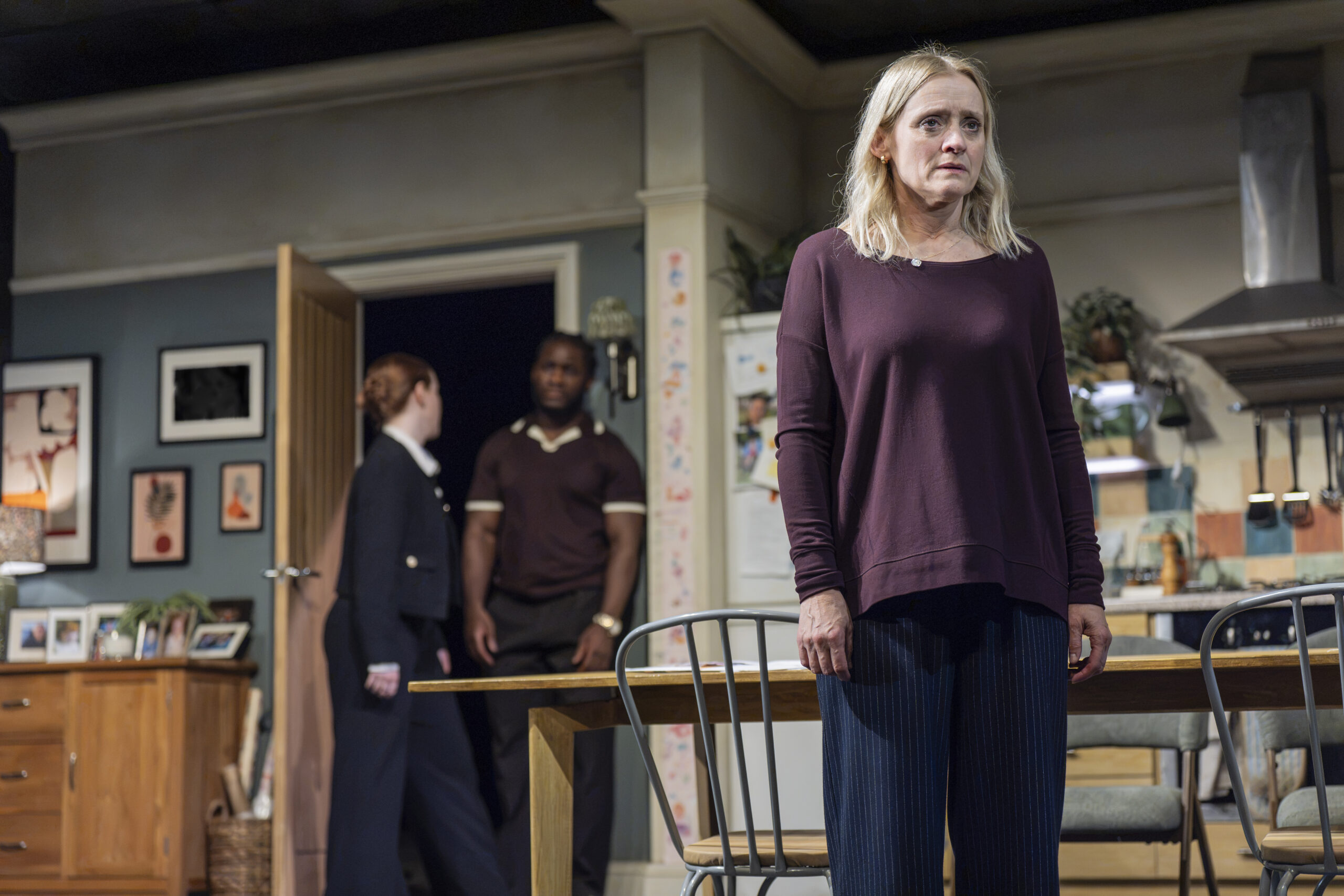
Julie is a figure for countless women on the receiving end of abuse
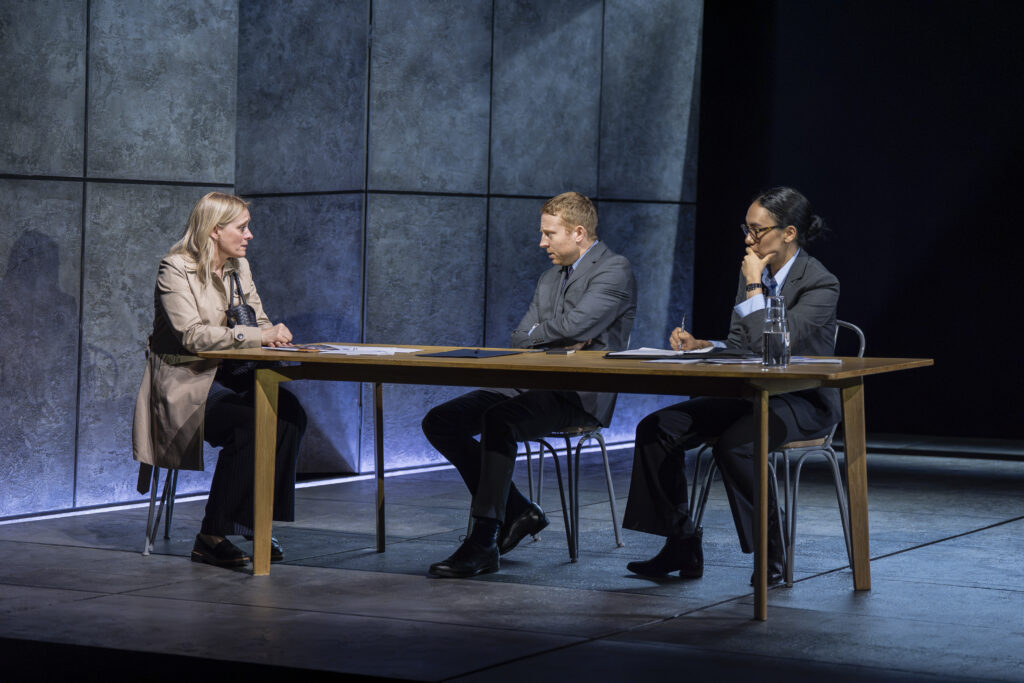
Julie is the mother of two daughters, a divorcee and a working woman. She is the modern woman drowning in what society expects of her. But years of misplaced tolerance and swallowed irritation tip over when a young boy verbally abuses her, unprovoked, on a tube station platform. Her response is measured, admirable even; but the consequences are not. Following a series of increasingly implausible and almost unbelievable turns, she ends up battling a legal case that could land her in prison, writes Frankie Jenner.
Anne-Marie Duff plays Julie, grappling with the paradox of the woman who can ‘have it all’: combining an ambitious and successful career with a loving and stable relationship, children who are healthy and thriving, financial independence and maintaining a close-knit circle of friends. Her boss feels free to contact her at all hours – she picks up every call and seems almost to welcome each disturbance, as though being needed were preferable to being left alone. It speaks to something many women will recognise: the instinct to stay available, to make oneself indispensable, even at the cost of one’s own time.
In this new play from Helen Edmundson, Julie’s character isn’t especially likeable on stage. She’s not surrounded by any friends and has no one to confide in or lean on. With nothing to push against, she drifts. At times, this results in a slowed pace, exacerbated by a script that lacks tightness in some areas. Early scenes linger past their point, and the cumulative effect is misdirected and unfortunate – that of watching Julie wallow.
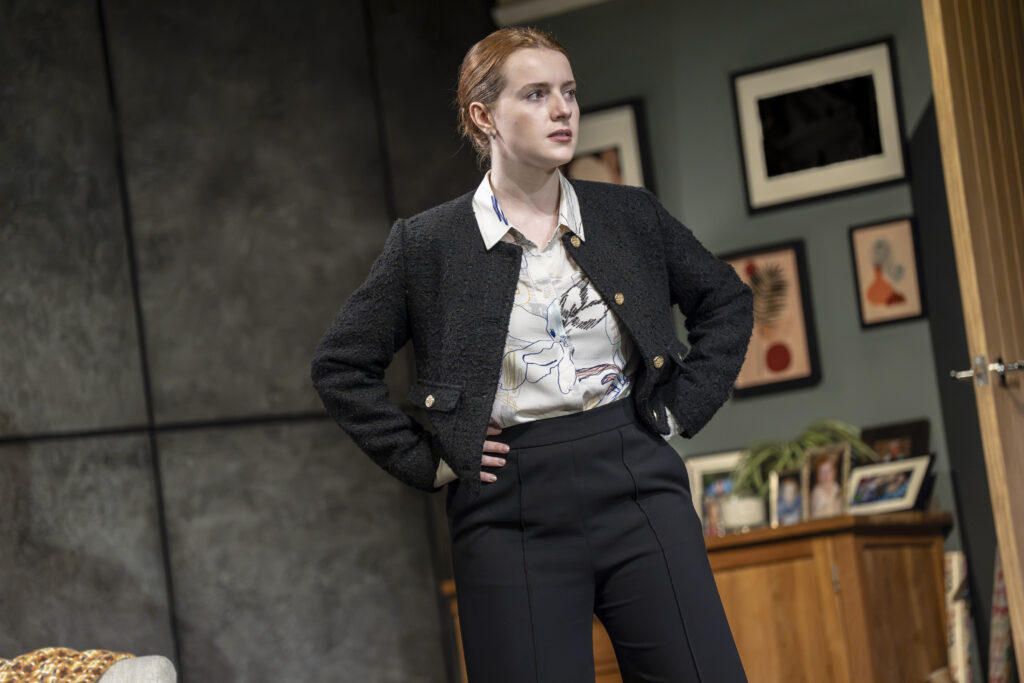
Towards the end of the play, an exchange between Julie and her eldest daughter Kate reveals more than the script intends. When Kate tells her mother that, of course, she doesn’t want children, the audience laughs as if it were a punchline. But it isn’t a joke. The growing number of young women choosing not to have children reveals the stark reality of economic pressures, the inequity of the mental load and shifting cultural expectations. The audience’s reaction is shocking and directed at a character whom Edmundson casts aside too quickly. Hannah Onslow as Kate brings a tenacity to the stage that deserves far more than the script gives space for.
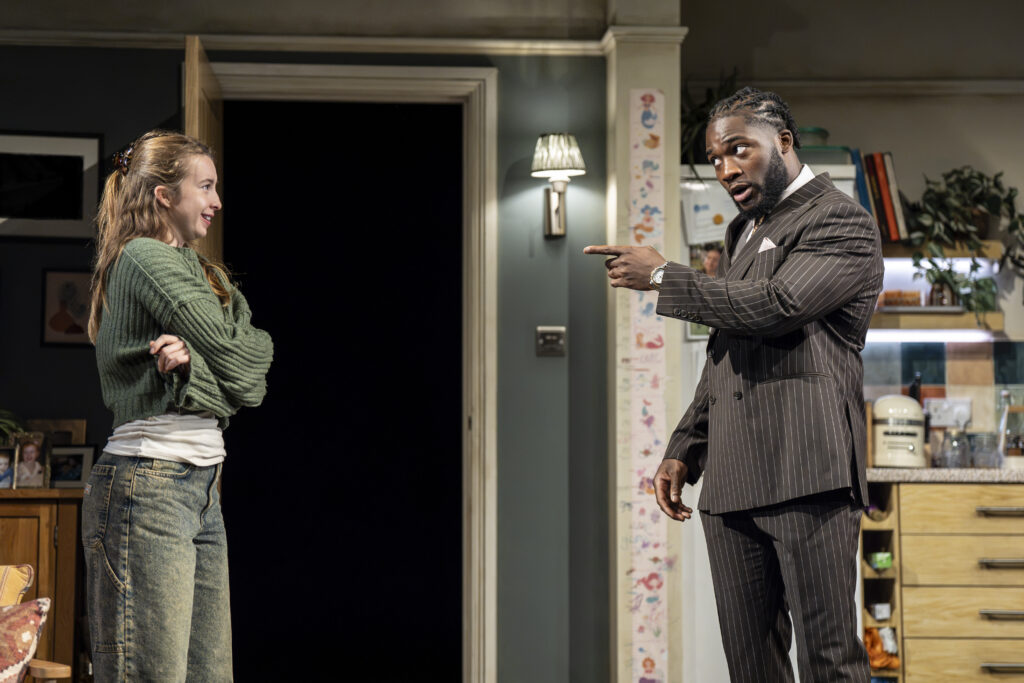
Unfortunately, the same can’t be said of Ginny, played by Grace Doherty, who seems to meet every interaction with the same furrowed brow. Her speech is imbued with worry and exasperation, and after a while the effect is less endearing and more a means of interruption: her interjections puncture the mood rather than shift it, and the character adds little the play couldn’t do without her.
Though the script doesn’t always serve the energy and skill of the cast, Edmundson’s central message holds at the end of this relatively short play. In a world where misogyny operates in plain sight, where boys and men are allowed to spew misogynistic and abusive rhetoric with open contempt, Julie becomes a figure for countless women on the receiving end of this abuse. She will not surrender to the litany of systemic and structural failings. She is a witness who will not be silenced.
Dorfman (National Theatre) until 21 November. Tickets from £20.
Booking and full details: https://www.nationaltheatre.org.uk/productions/some-woman