A West London council has threatened to take away a disabled girl’s wheelchair because they say it’s a fire risk.
The teenage girl’s family have urged Hammersmith and Fulham Council to make “reasonable adjustments” because they say there’s nowhere else to store it in their housing block.
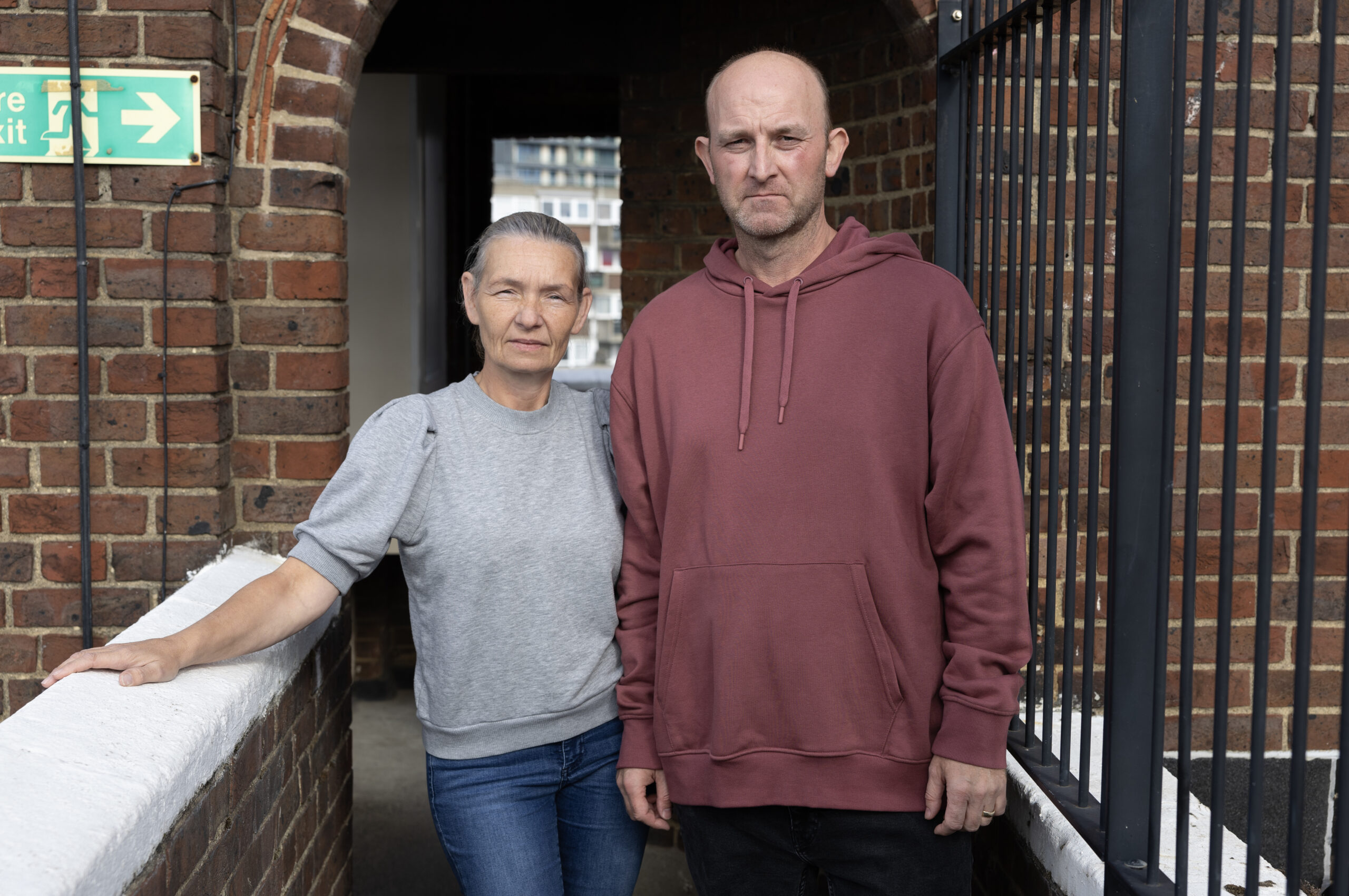
Donna Jennings, 47, and her husband Darren Jennings, 48, say the impact on their 17-year-old daughter, Ruby, of losing the chair would be enormous.
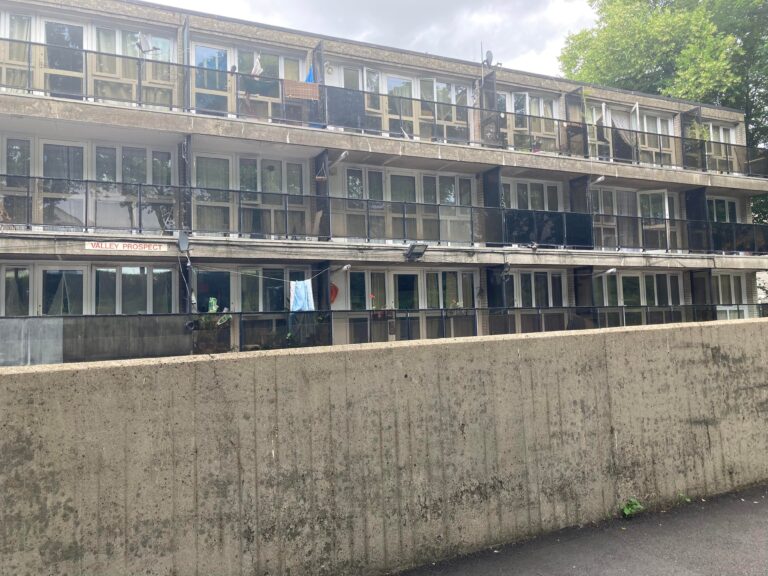
The family, who live on the top floor of a block of Hammersmith flats with no immediate neighbours, were shocked when they were instructed to remove the wheelchair. It is currently stored on an external walkway out the front of the family’s flat, by a set of stairs.
A notice left by the council had requested it be moved, along with other items left outside.
“I absolutely get concerns around stuff in communal areas being a fire risk, but when you get something like this, you need to make reasonable adjustments and risk assess,” Donna said.
“Their proposal was to put it on the other side of the door and wrap it up. So I said, ‘how does she unwrap it if she can’t stand up?’”
Ruby is reliant on the wheelchair due to a condition called tibial torsion, causing her tibia to twist and changing how her foot aligns with her knee. Since being diagnosed two years ago Ruby has had two major operations which leave her non-weight bearing and dependent upon the wheelchair to get around.
Donna and Darren said the instruction from the council to store the wheelchair elsewhere or risk it being removed has had a particularly stark impact on Ruby.
“People with autism are literal,” Ms Jennings said. “So they see a sign saying they’re going to throw it away, and they believe it until we tell them otherwise.”
A Hammersmith and Fulham Council spokesperson said they have worked closely with the family “to ensure the resident’s wheelchair can remain outside her home while complying with fire safety requirements”.
This has however been disputed by Donna and Darren, who say the issue has been ongoing for more than a year.
The family, which as well as Ruby includes a second daughter, moved into the flat around 13 years ago. At that point Ruby was able-bodied, with her diagnosis only coming two years ago.
In June 2025 she underwent her first major operation, prior to which she had been bought a wheelchair.
The couple said the issue first arose last September, when a council contractor was caught grabbing the wheelchair, taking it down a set of stairs and using it to stand on to get into the loft.
The family filed a complaint with the council, seen by the LDRS, with the local authority acknowledging the contractor’s actions were “inappropriate and unacceptable”.
Donna, however, said that the day after the incident a council officer called to say the wheelchair had to be removed from outside the flat. She said she relayed the difficulties with placing it elsewhere.
Nothing further happened until a Friday last month, when a notice was put through the door and another cable-tied to the railing by the wheelchair saying all combustible materials must be removed from the communal area.
Donna said she rang the council and explained she was willing to remove other items left outside but that the wheelchair had to remain. She said it could not be brought into the flat, nor could it be moved to an exposed area and covered with a tarpaulin, as Ruby would be unable to take it off before going to school.
And while the council is citing a risk in the event of a fire, Ruby’s safe evacuation in such an event depends on her being able to quickly get into her wheelchair.
Donna added that the impact on her daughter has been particularly acute due to her autism.
“The only way we could settle her was to take that [sign] down immediately. We walked to the fire station that Friday night and spoke to a guy there. He was fantastic, spoke to the commander, and said, ‘remove the sign, put that it’s being investigated by the London Fire Brigade’.
“That settled Ruby down. She sees this sign saying, ‘remove it or we’re going to put it in the bin’, and to her it’s, ‘how am I going to get to school or get out in the event of a fire?’ Everything goes over in her head.”
The family said they were visited by the fire brigade, who told them verbally that the wheelchair being positioned outside the front door is not an issue. The LDRS asked the brigade about this, but had not received a response at the time of publication.
Donna said she wants the council to work with the family and consider making adjustments, given Ruby’s reliance on the wheelchair and needing it to be easily accessible.
She added the authority has been involved in providing support for Ruby and so is aware of her situation.
This includes contact via its Occupational Therapy (OT) service, with a bath lift installed to help Ruby get in and out, and preparing a Personal Emergency Evacuation Plan (PEEP) for her last summer.
The ongoing issue has caused “significant and unnecessary distress to our family”, Donna said.
“I just think what’s frustrating for me is that it’s hard enough trying to navigate London with a disabled child. Honestly, you can’t get on a freaking bus, and you don’t realise how difficult things are until you are disabled or you need that.”
A Hammersmith and Fulham Council spokesperson said: “We have worked closely with the family to ensure the resident’s wheelchair can remain outside her home while complying with fire safety requirements.
“We understand the resident’s concerns and have proposed several storage options for the wheelchair and developed a PEEP for the resident.
“The notice issued to the family related to the removal of combustible items on the outdoor landing in line with our fire safety measures to keep residents safe.”