Being one of the world’s most famous political figures, Mahatma Gandhi’s story has been told in many forms many times over, however, much less is known about Nathuram Godse, the man who took Gandhi’s life, writes Christopher Peacock.
Anumpama Chandrasekhar’s The Father and the Assassin explores Godse’s and Gandhi’s lives in a historical ‘why-dunnit’. First staged at the National Theatre in May 2022 the show returns for another month-long run on the Olivier stage.
Chandrasekhar’s story takes what is known of Godse and maps it onto the independence movement as a whole, juxtaposing his life with the events and discussions that Gandhi and the political elite were having about the potential future of their nation.
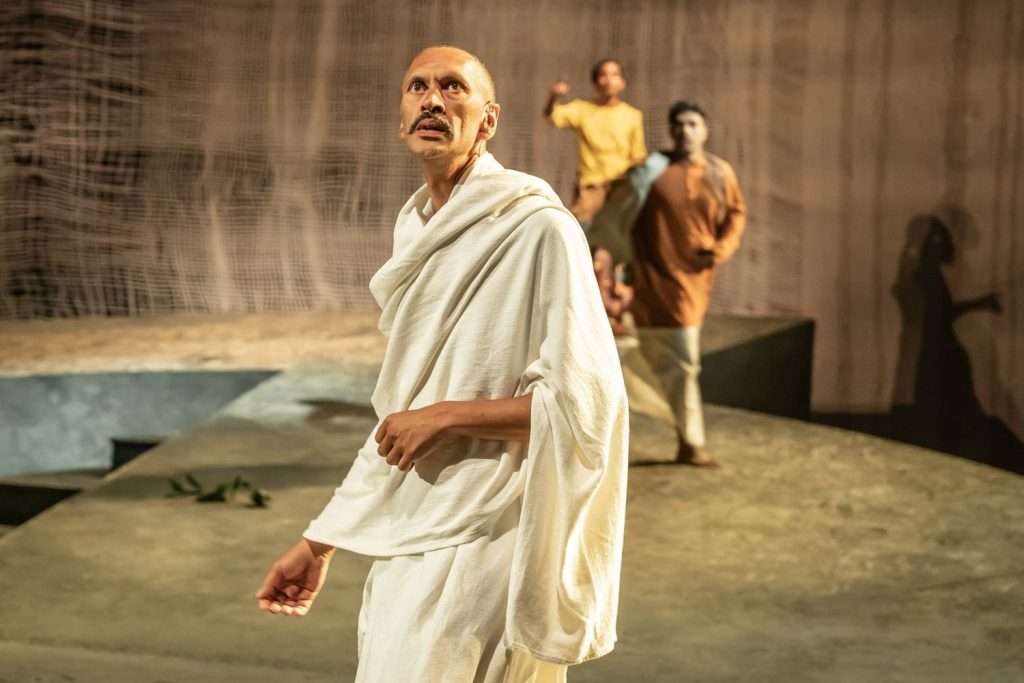
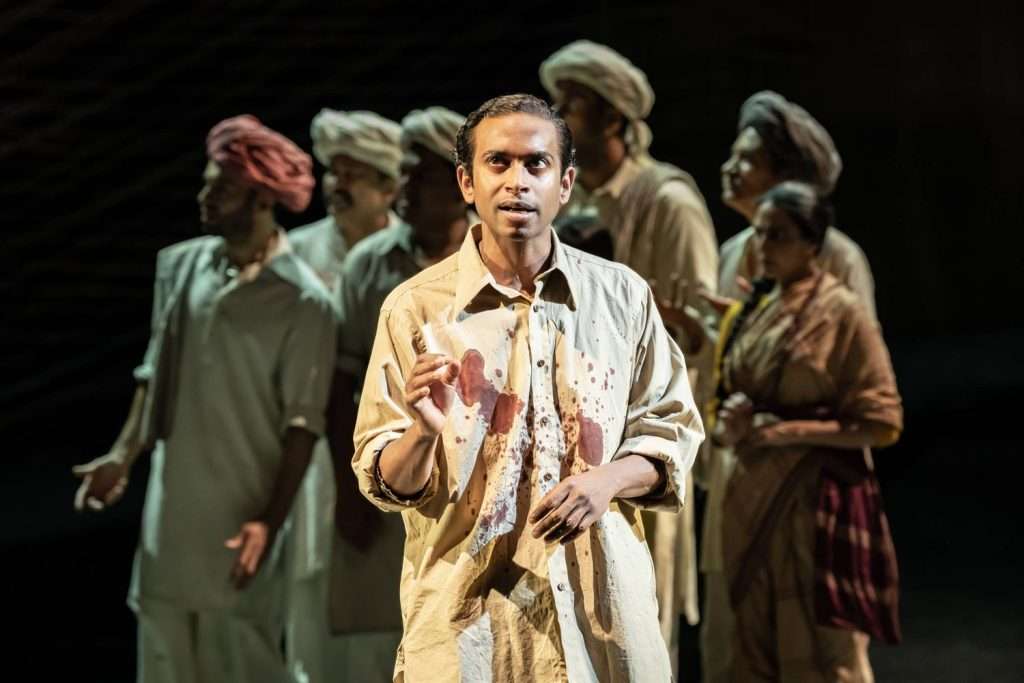
Godse was raised a girl by his parents who were fearful that they would lose yet another son in infancy. Their only daughter had made it through childhood and by raising him the same they believed he would survive. Godse soon, however, finds his own identity and we see him develop his own political voice.
After meetings with Vinayak Sanarkar, Godse’s political views become more extreme as he falls deeper into Hindu Nationalism. Meanwhile, the show tracks Gandhi’s return from South Africa and the growing civil disobedience movement. Feeling that it is Gandhi who is holding back their ideals, Godse and his accomplices plan the assassination.
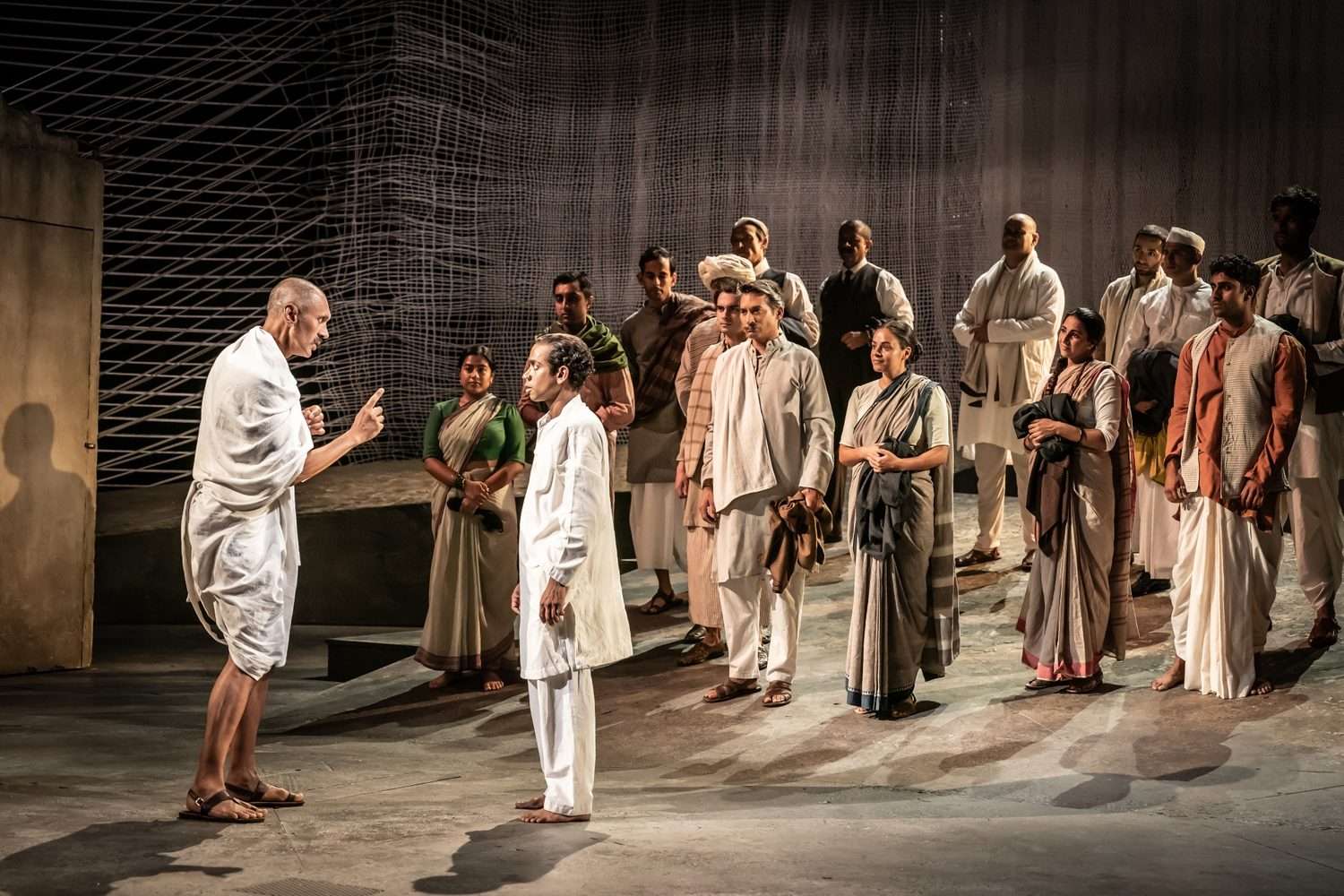
For a historical drama that has such tragedy throughout there are plenty of laughs. Hiran Abeysekera as Godse is spritely and joyous. His wit and charm endear you to him, if not for his cause. Paul Bazely gives a measured performance as Gandhi and the contradiction between his ageing Gandhi and the energetic Abeysekera as Godse represents another layer in their differences.
The show as a whole is captivating. In the moments where the stage is sparse, Indhu Rubasingham’s direction still creates a visually filling piece. The ensemble work makes the transitions between scenes seamless and keeps the show moving at a pace. Rajha Shakiry’s set design makes full use of the Olivier stage’s revolve and assists in creating visually dynamic scenes. Along with Lucy Cullingford’s movement direction, the scene around the partition of India and the tragic fallout will live long in the memory.
Chandrasekhar admits to taking dramatic licence with some of the historical events, omitting personnel and filling in the parts of Godse’s life that are not known. This does work in the show’s favour. It refines and helps condense the history into a two-hour show whilst at the same time raising questions of what and how things could have been different.
Olivier Theatre, National Theatre, South Bank, London SE1 9PX until 14th October. Times: Mon-Sat 7.30pm; Wed & Sat matinees 2pm. Admission: £20 – £89.
Booking: www.nationaltheatre.org.uk