It’s 2026 and Misanthropy is Thriving
Misanthropy: noun
The general hatred, dislike, or distrust of the human race.
First performed in 1666, Molière’s Le Misanthrope explores the deep tension between conformity and resistance. In Martin Crimp’s third adaptation of the play, this ancient story speaks to the same stark tensions we find ourselves navigating today writes, Frankie Jenner.
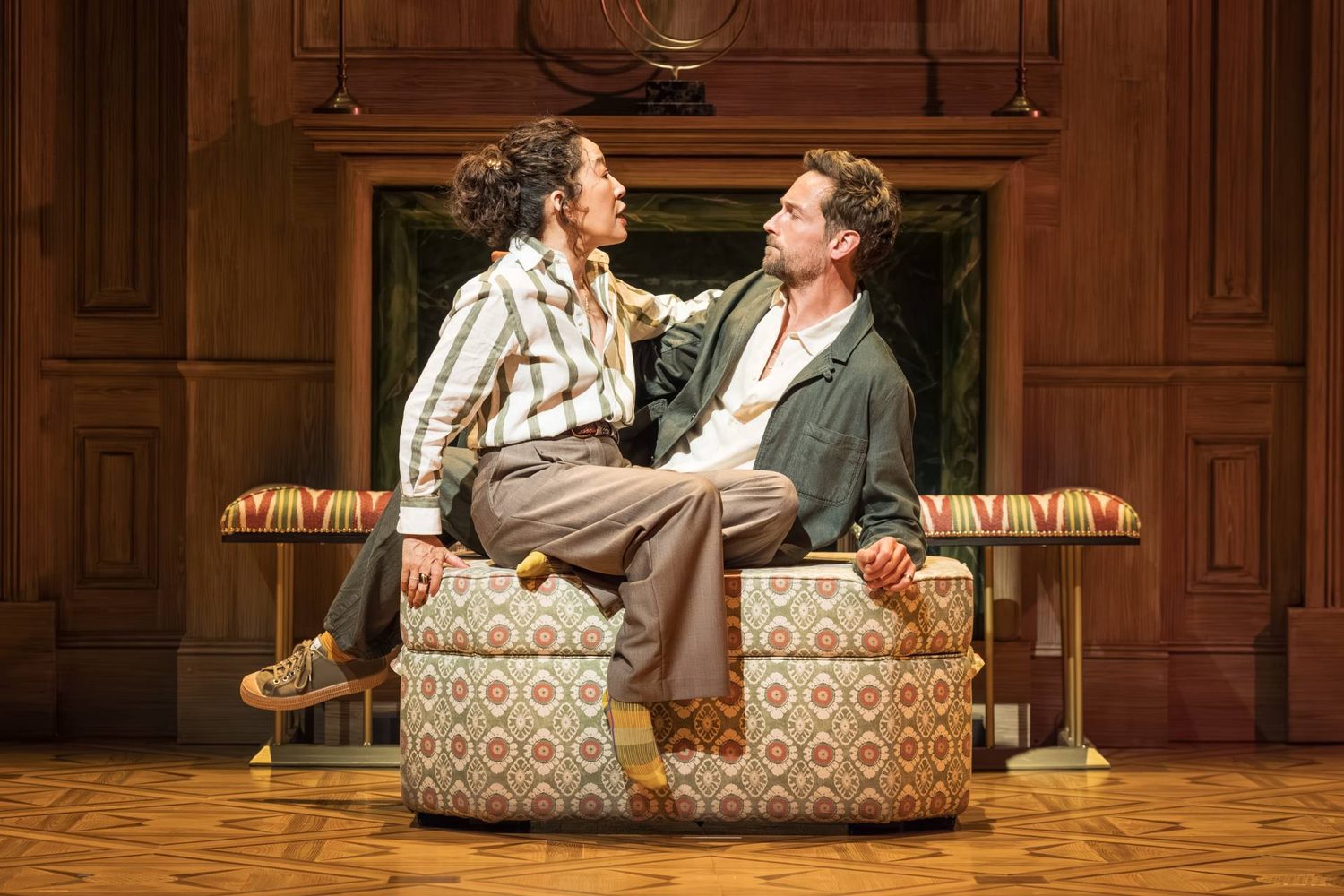
Originally, Molière’s central character Alceste is labelled as the misanthrope. He is both ridiculous in his inability to think before he speaks, and yet disarmingly charming in his honesty. Sandra Oh’s character Alice takes the lead role, in this confronting and provocative retelling of Molière’s classic.
Sandra Oh commands the stage as the misanthrope. Having seen her in roles that demand fierce intelligence and emotional complexity – such as Eve Polastri in Killing Eve – it came as no surprise to see her cast as Alice. She brings a tenacious audacity to the role from the very beginning – unabashedly unafraid to speak her mind.
And like Alceste, she too is a tissue of contradictions – longing for solitude but yet constantly anchored in the dialogue that concerns herself and her work. She searches for belonging in her younger love interest, Stefan (played by Tom Mison) – with whom Alice humorously admits, ”my happiness is not dependent on a man…it’s connected.”
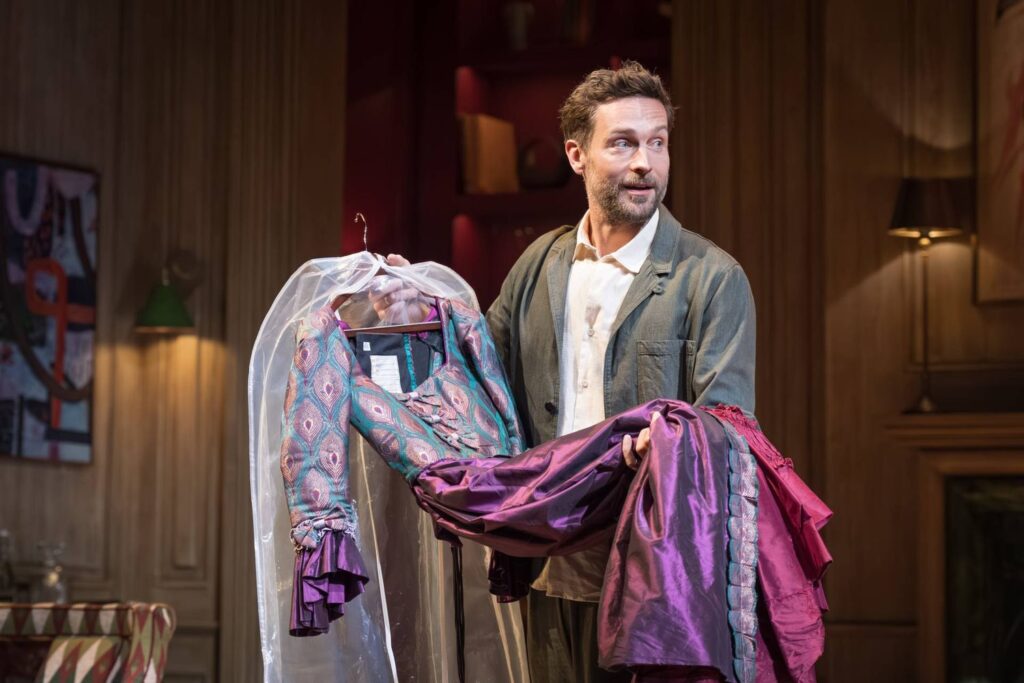
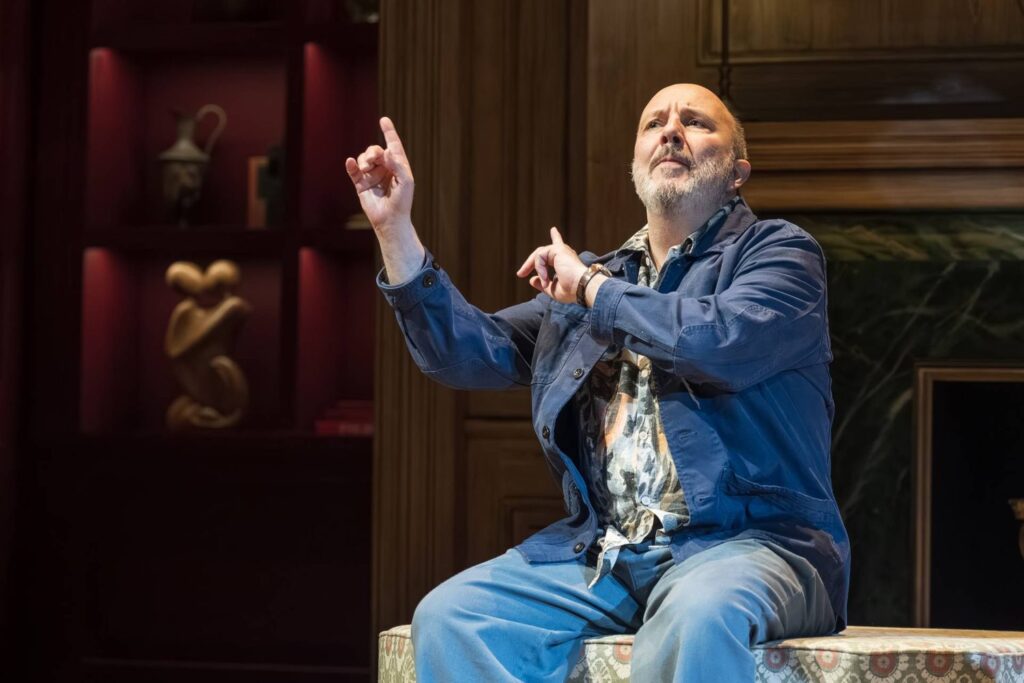
We learn of Alice’s predicament relatively early on as her dear friend John (played by Paul Chahidi) warns her of the possible repercussions from a recent interview she did with the Financial Times. Having spoken out openly against war crimes and the patriarchy, she’s now at risk of losing a ‘prestigious’ award that’s due to be presented in Berlin. In the UK, the Home Office refers to such an act as “the exclusion of foreign nationals for the public good” – whatever that means?
It evolves that Alice is formally disinvited from the award ceremony in Berlin. We’re not afforded the specifics but she alludes to their disdain for her “rewarding the work of designated terrorists”. This is enough to bear a striking resemblance to today’s political climate. Recent months have seen a sharp rise in such decisions here in the UK – most recently concerning the visa bans of Hasan Piker and Cenk Uygur because of their outspoken stances against Israel’s genocide in Gaza.
As Alice reflects on this development to John, she emphasises that this should be a warning to us all and is part of an ongoing and much more sinister authoritarian crackdown on freedom of expression. It’s here that we begin to understand – perhaps Alice’s misanthropy is fashioned more as a protest against the society in which she is forced to navigate.
That’s all to say – it’s 2026 and misanthropy is thriving. Initially, Alice’s deep-seated hatred of humanity is disarming and somewhat extreme. But as the play develops, I couldn’t help but feel as if it aligns disturbingly well with reality. Self-serving billionaires proliferate (as if this isn’t silly enough, we now have the world’s first trillionaire); genocides continue to lay bare humanity’s disregard for basic dignities, respect and self-determination; and each time military technology ‘develops’ we edge one step closer to obliterating life on earth. Misanthropy takes on a whole new dimension and it becomes easier to understand why Alice thinks the way she does.
The production runs 1hr 45min without an interval, so before you know it, the audience is thrown into the final sequence. A mirage of chandeliers illuminates the cast in 17th century dress, deep throes of heavy bass reverberate throughout the Lyttelton Theatre and the opulent madness of it all is laid bare – as Alice begins to realise that she too is part of the humanity she so detests.
Lyttelton Theatre, National Theatre until 1 August.
Booking and full details: https://www.nationaltheatre.org.uk/productions/the-misanthrope/