London during the Second World War, as seen by artists
Until she died, my mum was the last living person I knew who had lived through the Blitz. I grew up with tales from Mum and my nan of how they ran to the shelters whenever the sirens sounded and Hitler’s bombs rained down on Surrey Docks and anything along the River Thames, where my family lived. These troubling times are captured in the paintings of the war artists in Beauty and Destruction: Wartime London in Art at the Imperial War Museum, writes Michael Holland.
There is a short introductory video that opens with a shot of Tower Bridge, one of the main targets for the Luftwaffe, along with St Paul’s Cathedral and the Houses of Parliament, for their iconic status. The artworks follow on, set in sombre lighting, intermittently accompanied by oral and written testimony.
The family’s hometown of Rotherhithe and Bermondsey feature quite a bit. ‘Reginald Webster, resident of Rotherhithe, remembered, ‘At low tide we could go down and fill our sacks… we found a line of incendiary bombs sticking out of the mud, all intact. I took three home for closer inspection.’
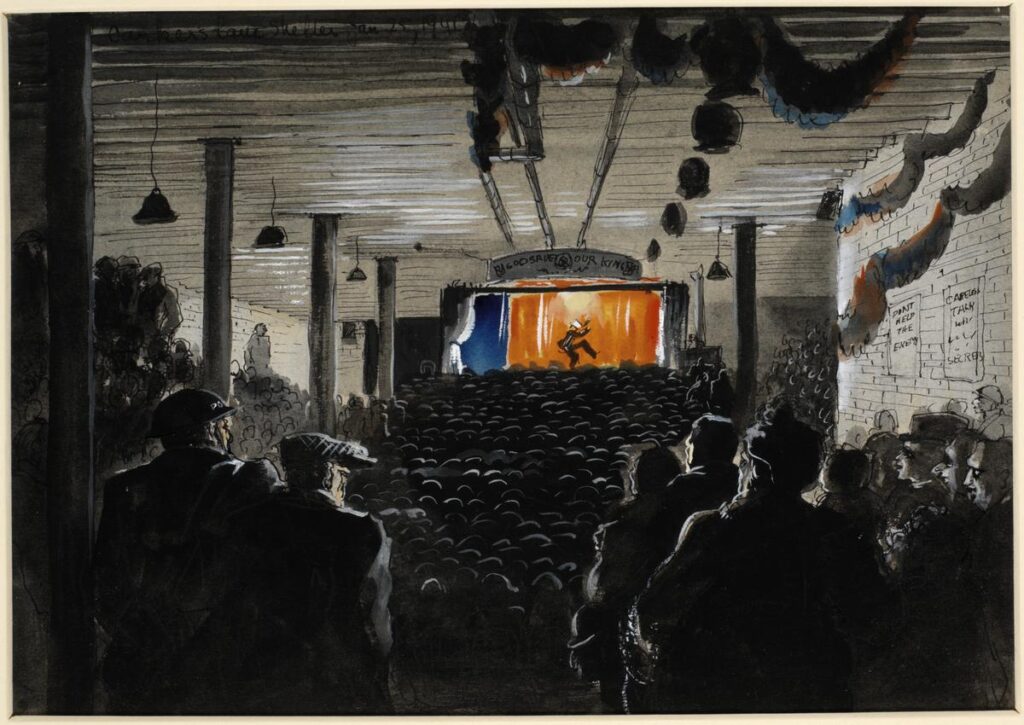
a Shelter, St Pancras Borough, 1941
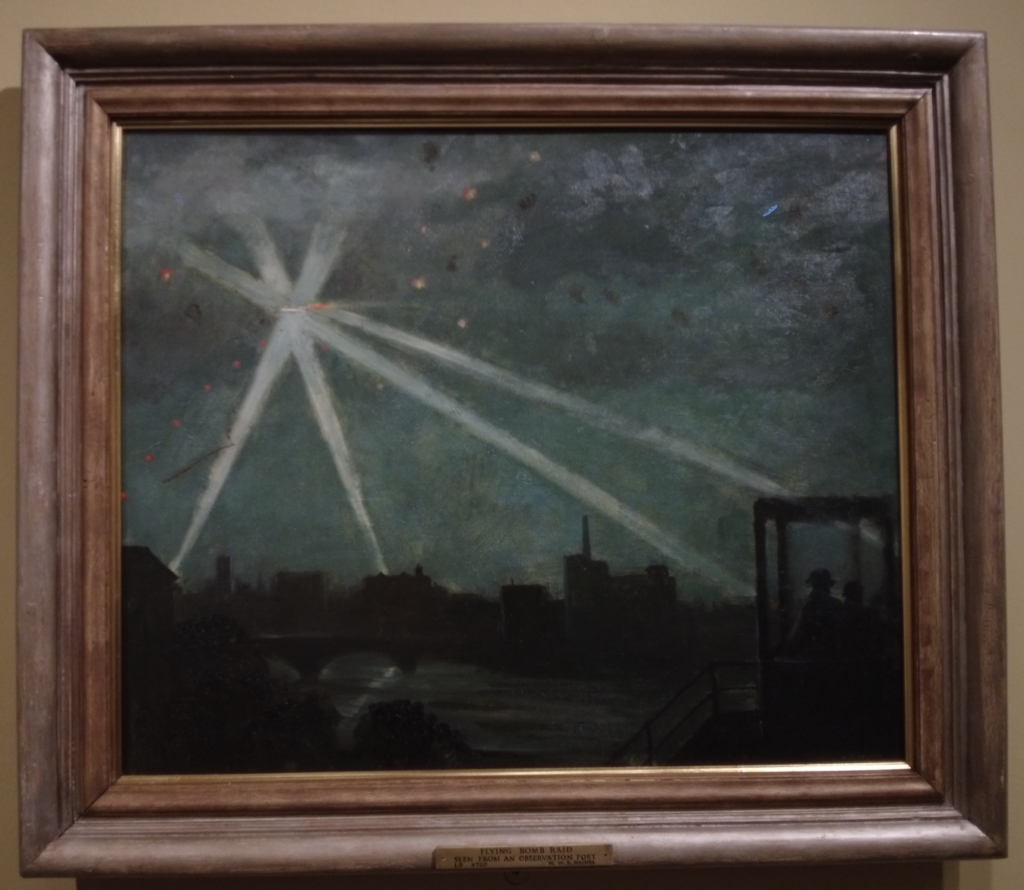
I learnt the reason for barrage balloons, which was very different from what I always believed they were for; I was amazed to read that one in four Bermondsey homes were destroyed, so was equally astounded that the block of flats by The Angel where all my aunts and uncles, plus myself, were born, remained intact and still look good today.
We see paintings of landing craft being secretly built in various London docks in the weeks leading up to D-Day.
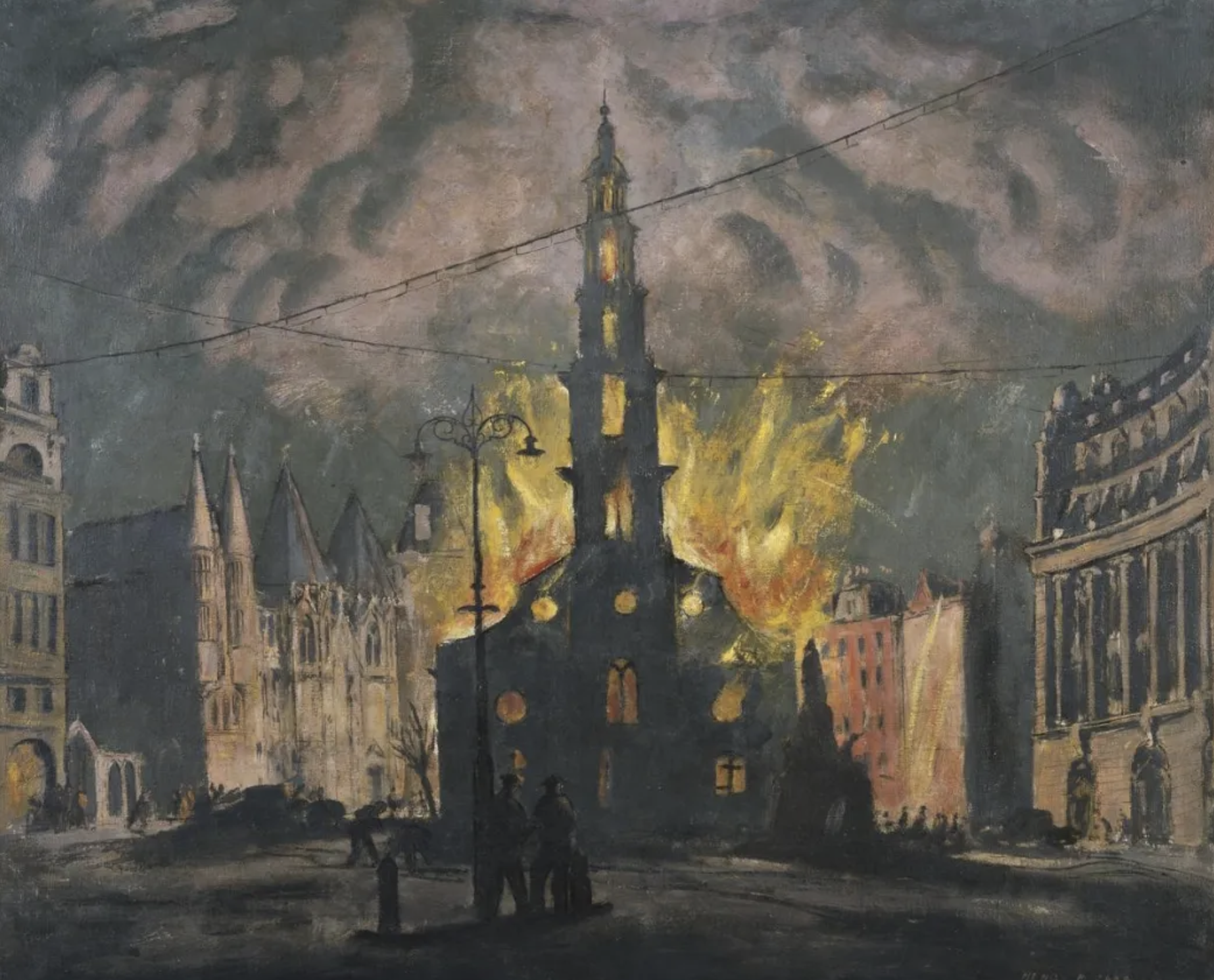
WAAF Officer, Mary Stewart reminds us, ‘St Paul’s, standing blackened but unharmed amidst the ruins, seemed grander and more important than ever.’
There are artworks that show the conflagration, and the brave workers who fought the fires through the night; the locals huddling in cellars and underground stations, and the attempts to keep morale up with makeshift entertainment, before daylight returned and blinking eyes emerged to see the devastation and ruin, never knowing if there was a home to return to. Hospital staff constantly on call are consigned to canvas for all time.
The British government’s War Artists’ Advisory Committee commissioned artists to document how the war transformed the city and its inhabitants. Another reason was because so many artists and writers died in WWI, it was hoped that the new generation of British artists could be saved in this non-combat role. Sadly, not all…
One heart-wrenching tale tells of Wilfred Haines, who served with the National Fire Service. His home was destroyed in the Blitz, which was the catalyst for him documenting the terror with his art in the hours between air raids. Wilfred was killed by a flying bomb, aged just 39.
With letters, toys, bomb-damaged crockery and other ephemera included in this exhibition curated by Rebecca Newell, Head of Art at IWM, a story is told that should be a lesson to all nations that have suffered war and devastation on their streets to end conflict.
I stepped out of the magnificent building, that was once an asylum, and into the spring sunshine and realised that those voted into power around the world to make important decisions do not seem to have learnt anything.
Imperial War Museum, Lambeth Road, London, SE1 6HZ from 20th March – 1st November
10am – 6pm daily. Open every day except 24 to 26 December.
Admission: Free.
Full details: https://www.iwm.org.uk/