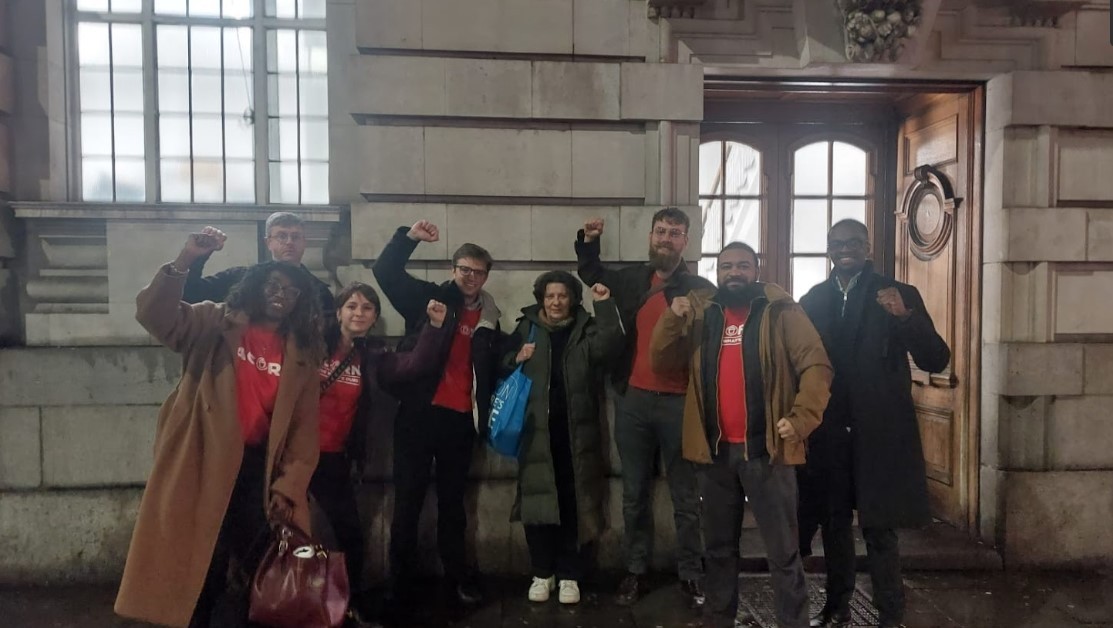
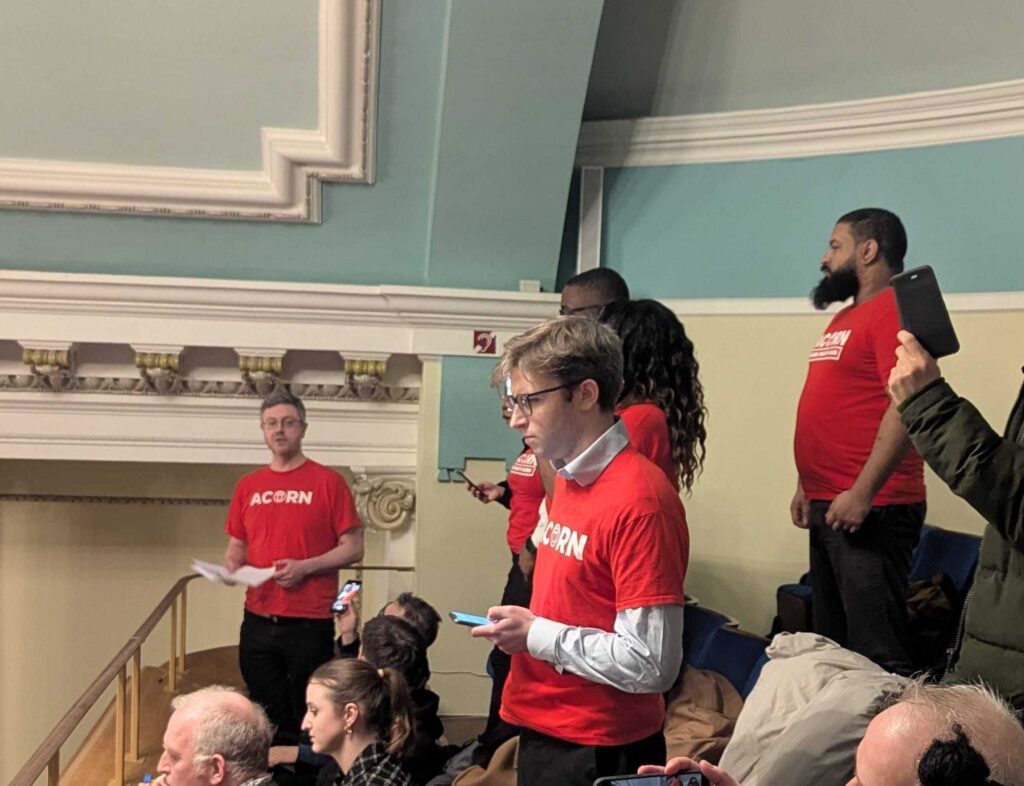
Several protesters disrupted a full meeting of Lambeth Council on Wednesday evening (January 21) as they demanded an end to the local authority’s use of bailiffs to collect council tax from people who have fallen behind on payments.
Members of the campaign group and community organisation Acorn interrupted the meeting within the first hour as they stood up in the public gallery and demanded “a fairer and more humane approach to council tax”.
Claire Holland, Leader of Lambeth Council, had just finished presenting the Cabinet Statement when the meeting was interrupted by protesters, which saw the council’s webcast paused and the meeting suspended for almost 30 minutes.
Acorn’s Lambeth branch said it had tried to contact the council leader twice over the past month, but did not receive a reply. The group went on to state that its members had also tried to write to Claire Holland, but did not receive a response.
A Lambeth Council spokesperson told the Local Democracy Reporting Service (LDRS): “The council is already writing to Acorn in response to their letter, received just before Christmas, setting out the work Lambeth does in supporting people to pay their council tax.”
They went on to say the council’s use of Enforcement Agents are not used to take control of goods to recoup a debt, but as “a last resort to support people in debt to repay”, adding that they are used as an alternative method to engage with residents in recipe of council tax support in order to begin a dialogue with them.
Footage seen by the LDRS shows the group addressing the council chamber as they listed their demands which included more time for residents to address their arrears before the council takes debt collection action, as well an end to imprisonment for the non-payment of council tax debt.
Acorn member Paul Adams told the chamber: “We also want councillors to support Acorn’s call for the Government to explore alternatives to council tax.
“As I’ve said, we’ve made several attempts to contact Claire Holland – she’s ignored us. So we’ve come to the meeting so our members and those people that are being hounded by bailiffs can be heard.”
Chants of “bailiff-free Britain” and “if you hate bailiffs stand up” could be heard as the group demanded a meeting with the council leader and a response from the council while security attempted to escort protesters out of the room.
Acorn later told the LDRS that during their statement, the council leader along with several Cabinet Members allegedly walked out of the council chamber while they were speaking.
A Lambeth Council spokesperson later told the LDRS: “The protest on Wednesday was an unauthorised demonstration which disrupted the Full Council meeting which the Chair then suspended.
“Any groups or individuals are welcome to raise issues of concern at council meetings through established channels and by prior arrangement – for example, through speaking at committees or pre-arranged delegations on the floor of the council chamber at Full Council meetings.”
According to Acorn, 24,108 cases were referred to debt collectors in Lambeth last year. A total of £30million of debt was referred to them, while £4.7million of this was actually collected.
One Lambeth resident called James who was present during Wednesday’s meeting said bailiffs had turned up to his home without prior warning, later allegedly threatening to remove him from his property after he fell behind on council tax payments.
James said he had tried to contact the council over the payments, but said they were almost “impossible to contact” and allegedly weren’t interested in discussing a resolution with him. He said he received threatening letters which caused him to have mental health issues that he struggled to get support for.
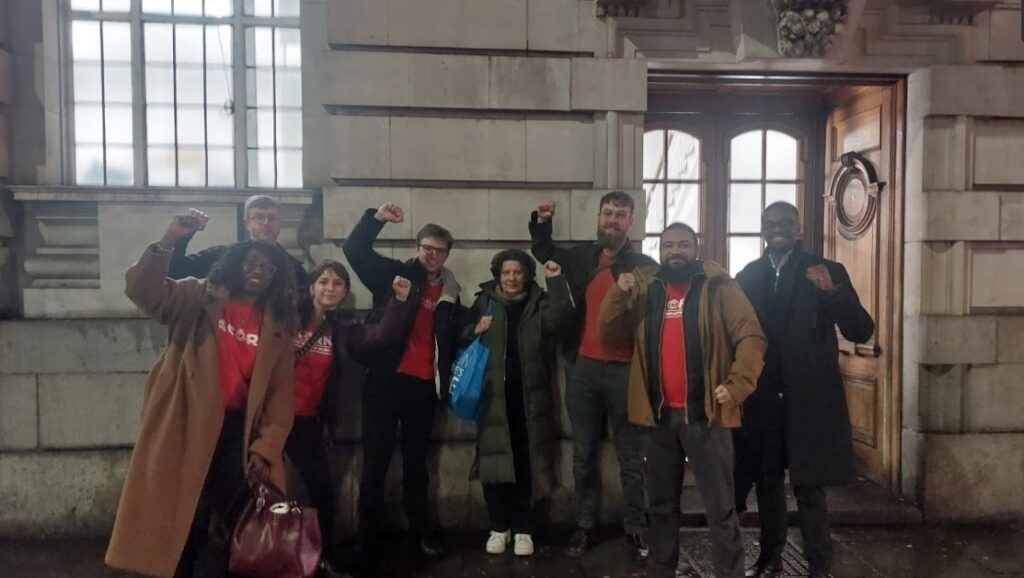
Wednesday’s protest is part of Acorn’s Bailiff-Free Britain campaign, which has seen several council meetings disrupted across England and Wales since last month.
A Lambeth Council spokesperson said: “Council tax is a vital source of revenue which helps fund a wide range of front-line services that our residents – particularly the most vulnerable – rely upon. Lambeth, like all local authorities, has a legal obligation to maximise collection of council tax to fund essential services.
“We have worked with vulnerable people to encourage them to pay and to provide debt advice, support and discretionary payments for those who can’t pay. Some of that contact work is carried out by an external company who contact people by phone or letter if the council has been unable to get in touch with them directly.”