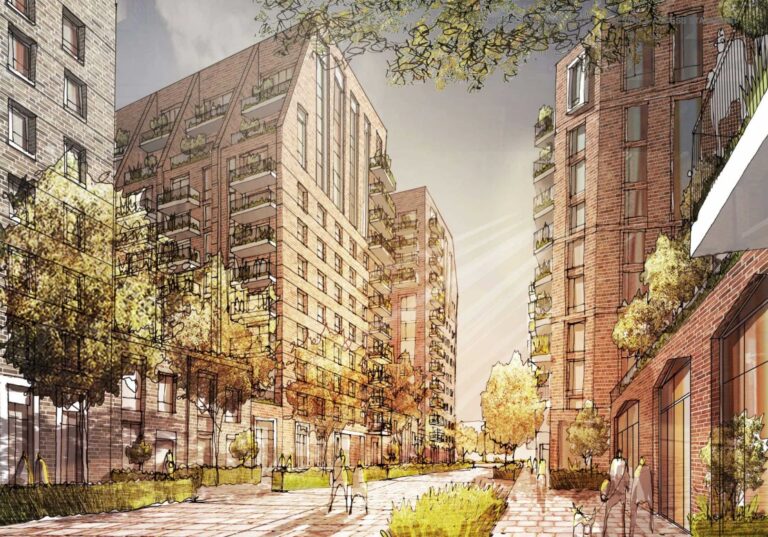
It has been a busy year for Kensington and Chelsea and Hammersmith and Fulham with a raft of major developments being given the go-ahead so far in 2025.
The West London authorities have reviewed and decided on hundreds of planning applications since January. Though many tend to involve minor changes, others have promised to alter London’s skyline for good.

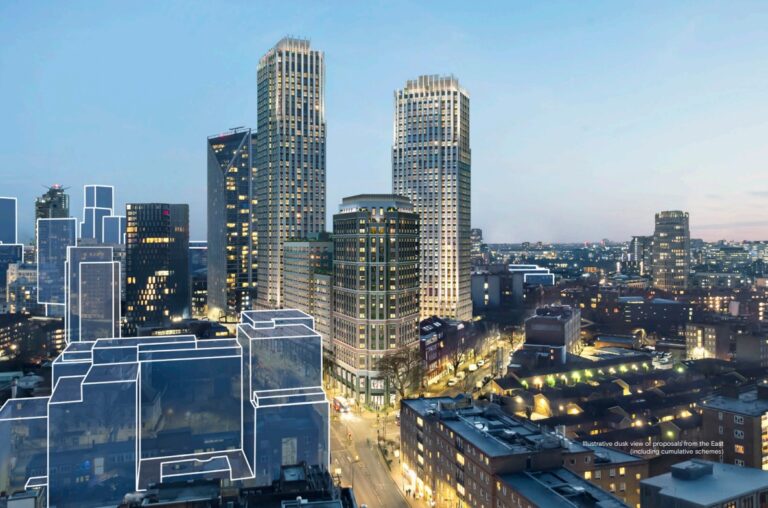
These major developments include a topping up of the Sheraton Park Tower hotel in Knightsbridge with an extra six floors and 24 ‘luxury’ flats along Sloane Avenue.
There are also approved plans for 253 new homes in White City, a 180-bed hotel in a Hammersmith mall plus the transformation of an Art Deco hospital into 140 flats and a care home.
Hammersmith and Fulham Council has also revealed its Civic Campus development, described as ‘Britain’s most exciting’ new arts, cultural and business quarter, is expected to be completed before the end of the year.
Luxury Hotel allowed to build six extra floors
In April, the council speedily approved a proposal for six extra floors above the Sheraton Park Tower hotel in Knightsbridge.

The committee said the public benefit of adding the extra floors and redeveloping the ground floor of the hotel outweighed any harm associated with it, after neighbouring Westminster City Council objected to the plan.
The Sheraton’s multi-million-pound refurbishment includes building eight residential flats – none of which are affordable housing – and a new two-storey podium at ground floor. An underground public car park is being ripped out to make way for the large podium that will act as an entrance to the hotel with a plush first-floor terrace with canopy.
Sheraton also plans to remove a casino on the premises to free up more than 1,000 square metres of space for retailers and a restaurant. The number of hotel rooms will also be reduced from 271 to 240 in a bid to ‘modernise’ the 1970s tower. This includes increasing the provision of accessible hotel rooms from three to 12.
The hotel currently comprises 16 floors with its body measuring 40 metres tall. With the approval granted, the height of the tower will now increase by 15 metres.
253 new homes in the middle of a West London estate
Also in April, Hammersmith and Fulham Council approved 253 new homes to be built on White City Central. This involves demolishing a series of buildings including a nursery and housing office and replacing them with new facilities.
The proposal, which was put forward by the local authority, is earmarked for a site in the centre of the White City Estate and is seen as key to meeting the council’s housing targets.

Half of the 253 homes will be ‘affordable’, including 76 for social rent, with public spaces such as a new all-weather games pitch and children’s play areas also planned.
The White City Estate, located in the north east of Hammersmith and Fulham, is one of the largest in the borough. Built in the 1930s, it consists of around 2,000 homes plus a range of communal facilities.
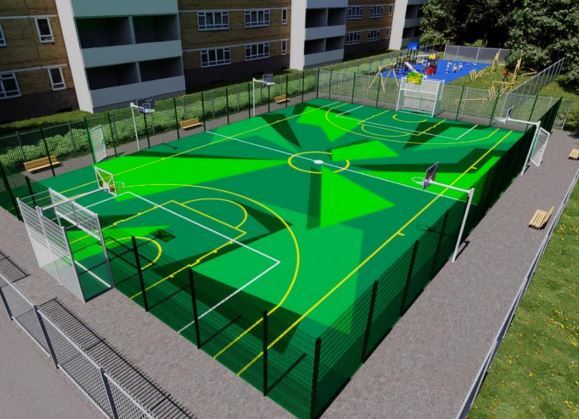
It is situated within the wider White City Regeneration Area (WCRA), which in the borough’s Local Plan is earmarked to deliver a total of 6,000 new homes and 10,000 jobs.
180-bed hotel to be built in West London shopping centre
In June, Hammersmith and Fulham Council approved a 180-bed ‘hub’ hotel in a West London mall. CityHub, a Dutch company specialising in affordable pod-style accommodation, will move into the former WHSmith in the Livat shopping centre in Hammersmith.
The hotel brand, which already operates premises in Copenhagen, Amsterdam, Rotterdam and Rejkavic, is described in planning documents as filling “the gap between a hostel and a hotel without compromising on quality”.
While the space will be run by CityHub the applicant was Ingka Centres UK Hammersmith B.V, which purchased the Livat Shopping Centre on King Street in 2020.
Unit 18, which CityHub will be taking on, was occupied by WHSmith until August 2020. Since then it has been used on a temporary basis by a smaller retailer.
No external alterations will be made under the plans. As well as 89 rooms, including nine accessible ‘hubs’, there will be communal toilets and showers plus public spaces such as a bar and a kitchen.
24 ‘luxury’ flats but no affordable housing in sight
In July, Kensington and Chelsea councillors approved the demolition of a housing block to build 24 ‘luxury’ flats – none of which will be affordable.

Kensington and Chelsea Council’s Planning Committee Chair, Cllr James Husband, said the development was “acceptable overall”, adding the new flats were a marked improvement for Elden House in South Kensington.
In a planning meeting on July 1, council officers said review mechanisms are being put in place to assess the development’s viability at an early stage of construction and at the sale stage. If profit increases, Tribeca Holdings Limited, the developer, will also have to pay more in financial contributions, the officer said.
Tribeca wants to replace Elden House with a six-storey “high quality, sustainable” building replete with 24 luxury residential flats. Plans are currently for 14 single-bed units, seven two-bed units and three large three-bed units.
Art Deco hospital building to be turned into 140 flats and care home
A vacant Grade II* listed Art Deco hospital by Ravenscourt Park is to be redeveloped to deliver a mix of housing, community space and a new care home.
The former Royal Masonic Hospital, built in the 1930s, has sat empty since 2006 when NHS services were transferred to Charing Cross.

Unused and affected by disrepair, the proposal, approved by Hammersmith and Fulham Council in late July, will see a newer, non-listed block demolished and a major refurbishment of the wider site.
A total of 140 homes, 21 ‘affordable’, will be delivered, alongside the community spaces and a 65-bed care home.
The hospital was opened in 1933 by King George V. According to planning documents, it was the largest independent acute hospital in Europe at the time providing low-cost treatment for Freemasons and their families.
The site went through various changes over the years, including when it was leased to the NHS as a Diagnostic and Treatment Centre in 2002 and renamed Ravenscourt Park Hospital.
Since the NHS services transferred to Charing Cross Hospital in 2006 it has remained vacant, and was later added to Historic England’s Buildings at Risk Register.
Applicant TT Group, an investment and development firm, purchased it in 2022. Under the approved plans four of the existing blocks will be converted and extended for residential and community/cultural use.
The fifth, which is not listed, is to be knocked down and replaced with a new building, providing more housing plus the care home.
‘Britain’s most exciting’ arts hub
As well as the projects approved so far in 2025, Hammersmith and Fulham Council has confirmed its Civic Campus development, described as ‘Britain’s most exciting’ new arts, cultural and business quarter, is expected to be completed before the end of the year.
The development will see restaurants, rooftop bars with panoramic views and arts spaces created alongside new homes.
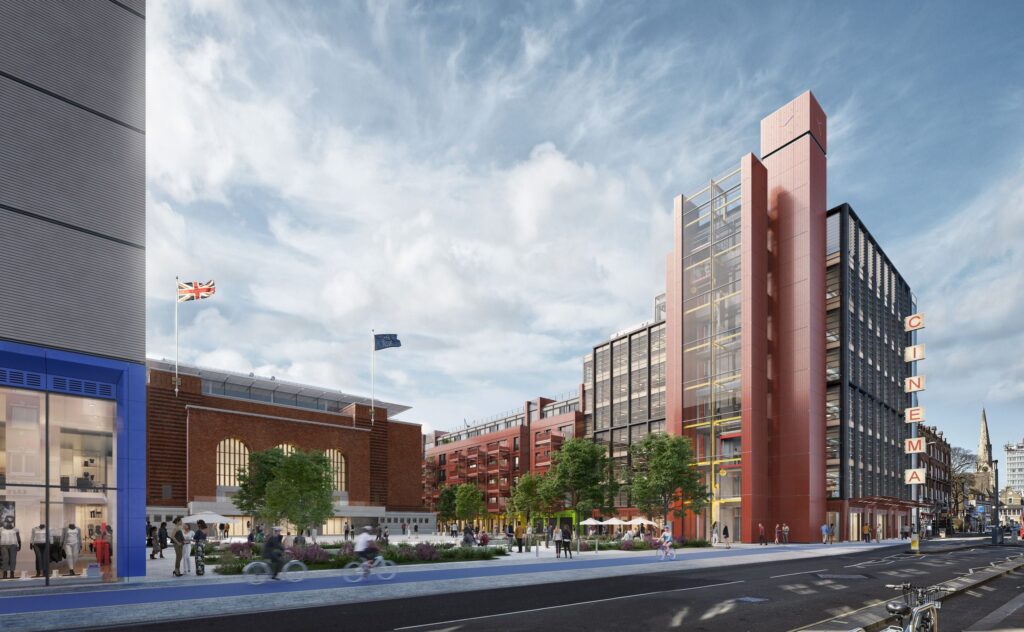
The project, which also includes the redevelopment of Hammersmith town hall and the delivery of work space, was granted approval in 2019. It was anticipated to open in spring/summer 2022 but has been hampered by delays including an accident in 2022 which seriously injured two builders.
The Local Democracy Reporting Service (LDRS) previously reported that Council Leader Stephen Cowan said the incident, alongside pressures such as Brexit, had pushed work back ‘about a year’.
During a recent visit to the Civic Campus, which is on King Street, the LDRS was told by a worker on site that the intention is to have the entirety of the construction done by October.