Complexity of the Brontë Sisterhood
In the show Hamilton, there is a song titled ‘Who Lives, who dies, who tells your story?’ This issue is well explored by ‘Underdog: The Other Other Brontë’, writes Katie Kelly.
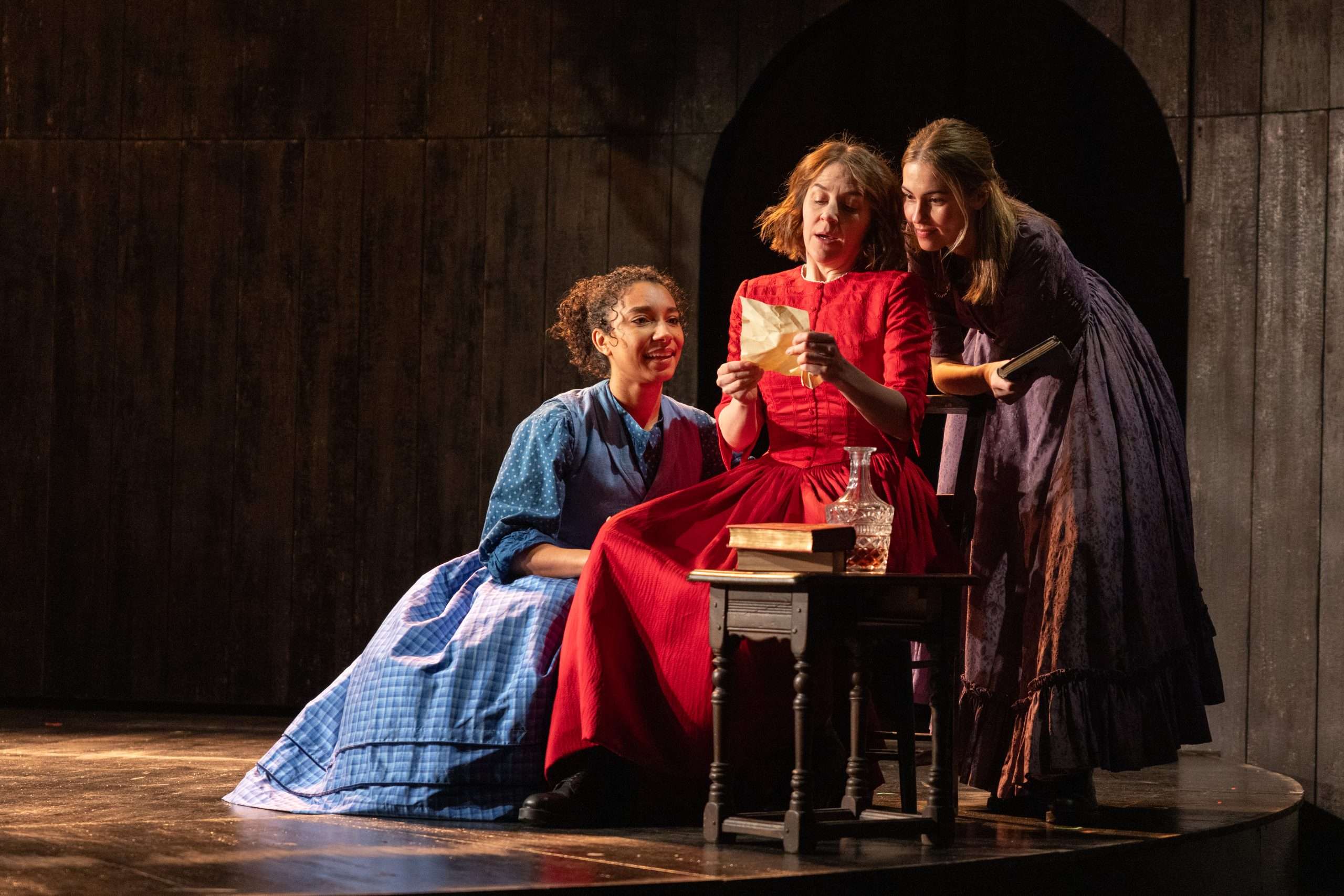
It is a question that torments and motivates Charlotte Brontë throughout this new play by Sarah Gordon. Charlotte was the last surviving sibling of the ill-fated Brontës. The family tree, included in the programme, makes pitiful reading. All six children are killed by TB, or in Charlotte’s case, possibly pregnancy.
Yet this isn’t a tragic play. From the moment that Gemma Whelan, as Charlotte, bursts into the auditorium asking audience members for their favourite Brontë novel, she owns the room. Fizzing with wit and anger, her energy never flags for a moment. She and the other sisters are not for one second portrayed as victims, even cracking jokes on their death beds.
Underdog is a funny play, using both verbal and visual gags to great effect throughout the action, often at moments of emotional intensity. The comic timing and knowing glances of the company are brilliant even if the pace of mood change is occasionally dizzying. There is no question of settling complacently into a familiar tale here.
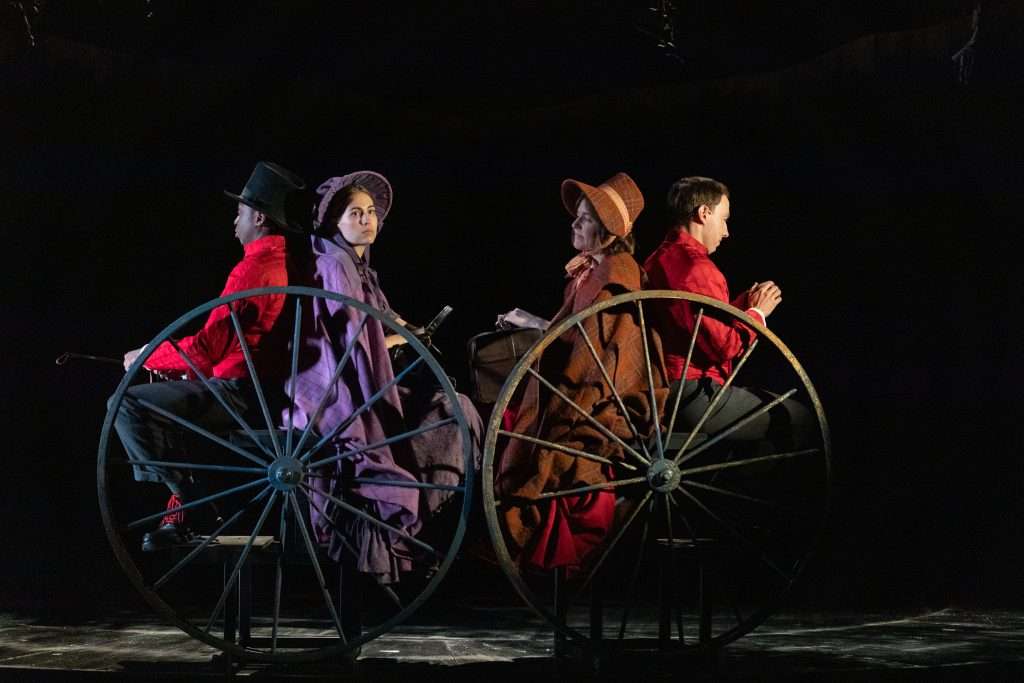
That isn’t to say that there isn’t deep sadness in this story. The fact that life for women in Victorian England was pretty crap(this Charlotte would no doubt use a more robust word), isn’t really news. Three exceptionally talented women were forced to pretend to be men in order to get publishers to read their manuscripts. Their critical reception was completely shaped by their perceived gender.
What lends interest to this tale of injustice is the fiercely competitive relationship between the three women. The sisterhood is complex. Does their rivalry sharpen or deplete them? Let the viewer decide. Charlotte as the designated survivor dominates, and diminishes her sisters by her re-telling of their lives and taking Anne’s work out of circulation. Yet in this version of the story, ‘Underdog’ Anne, ‘the mouse’ to her family, is fascinating and unexpected. This ‘mouse’ has the courage to enter the horror of being a governess in order to put food on the table, and she writes a revolutionary novel exposing the issue of domestic violence to a scandalised public.
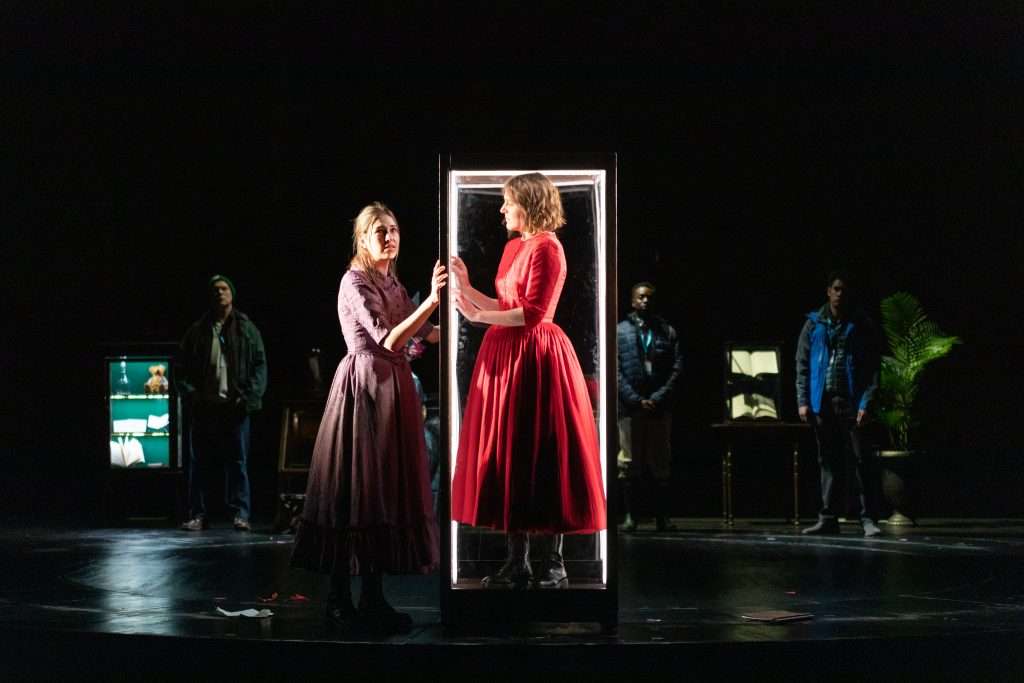
In the end, in one of many brilliant moments from the set, Charlotte herself is encased in a display cabinet, no longer able to control the narrative but the work of all three sisters continues to speak.
Dorfman Theatre, National Theatre, South Bank, SE1 9PX until May 25th.
Times: Mom – Sat 7.30pm; Wd & Sat matinees 2.30pm. Admission: £20 – £65
Booking: www.nationaltheatre.org.uk