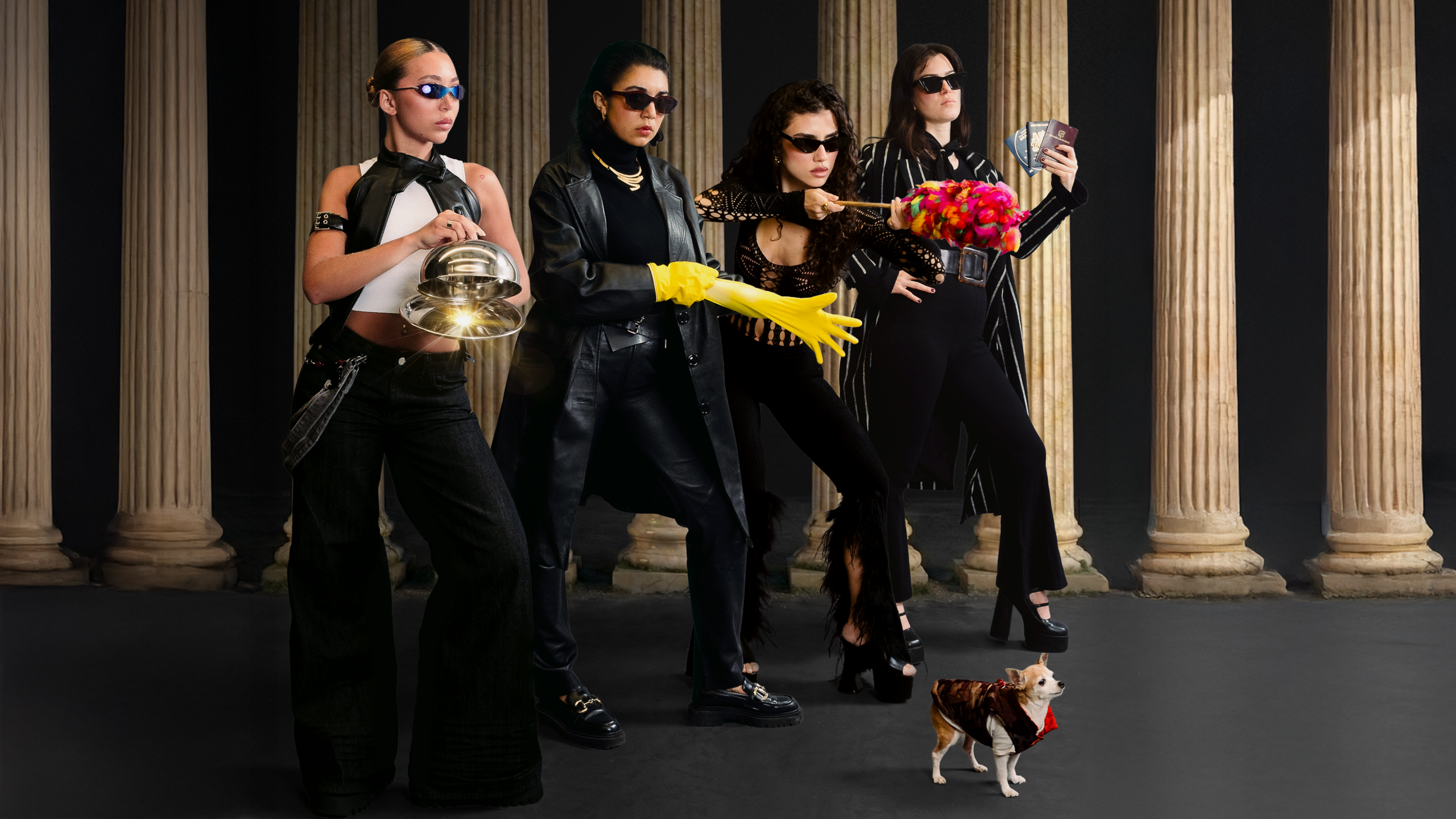
Heist play hopes to right some wrongs
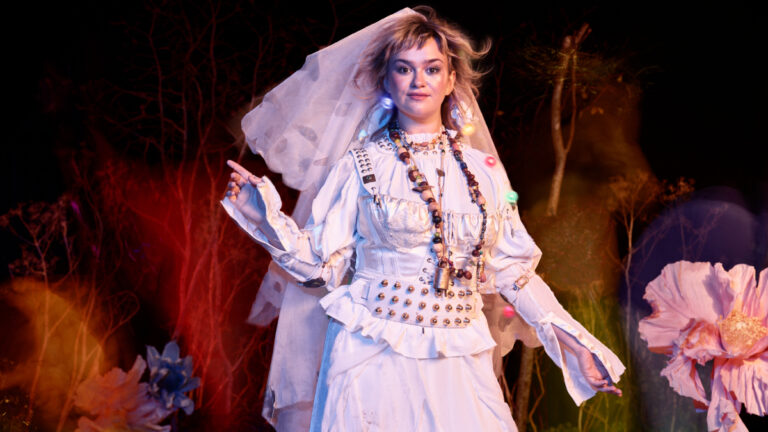
My Uncle Is Not Pablo Escobar was written out of necessity. It is a play created by Valentina Andrade and Elizabeth Alvarado about their real lives and experiences of growing up as Latinx in Britain today, and co-created with Lucy Wray, Tommy Ross-Williams, and Joana Nastari. I couldn’t interview all five, so Elizabeth Alvarado stepped up, writes Michael Holland.
What made you decide to write this play?
‘My Uncle Is Not Pablo Escobar needed to be written. More than a choice, it was a necessity. The Latin American community in London is one of the city’s fastest-growing communities, with an estimated population of more than 100,000. Society enjoys our food, music, and culture, and yet we are not truly seen or represented. Our ethnicity does not exist on the census. Every single time we tick an ethnicity box, we must choose ‘Other’. My Uncle was written to give our community a voice, and for young people to see people who look like them on stage and know that they are worthy of being seen and heard. Especially young Latin American girls, because Latin American women are often seen as objects and something provocative rather than capable and intelligent individuals. This play was written to inspire and to empower; we demand to be seen.’
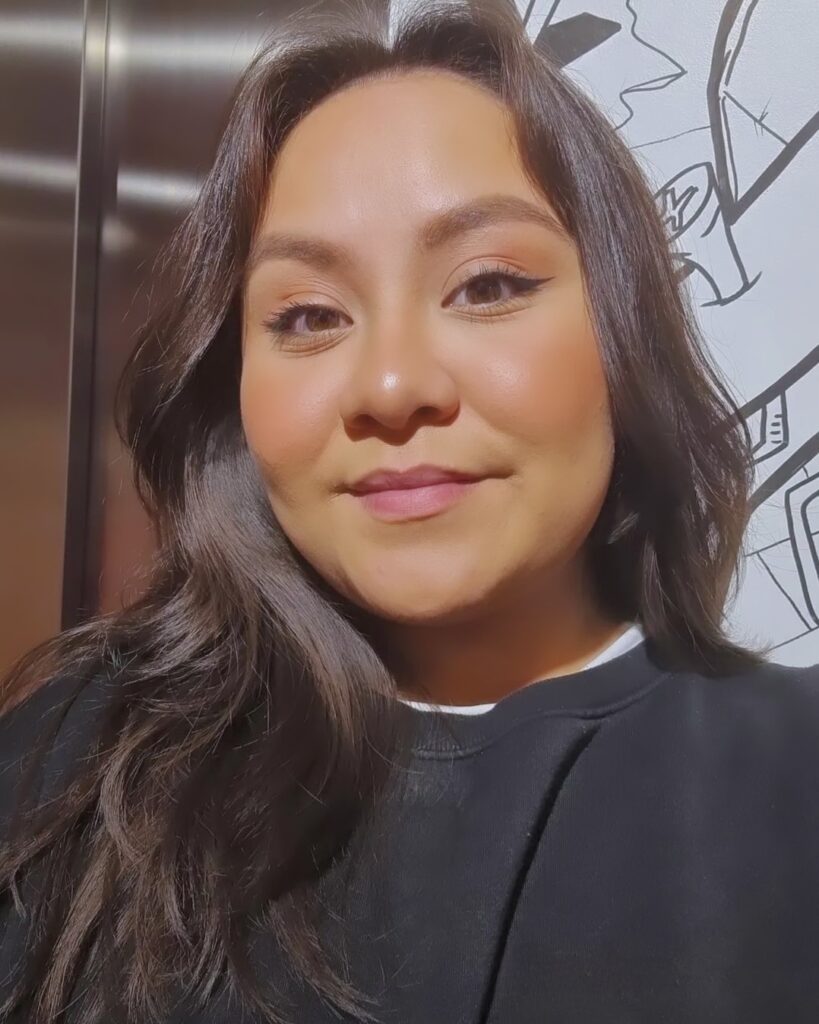
I sensed a community who were angry and wondered how they voiced their concerns other than through the stage.
‘Our campaigning arm is through our LatinXcluded campaign. Successes we have had include securing an ethnicity box for Latin American students at King’s College London. Valentina Andrade was a student there when she asked whether her university had any data about herself and her Latin American peers. KCL had no data, and a report was created, led by one of our actors, Cecilia Alfonso-Eaton, to procure and present data on how many Latin American students attended King’s College University and how data collecting through an ethnicity box could help our community and these students. Another win we procured was when Arts Council England agreed to create and implement an ethnicity box for us, the inclusion of which I personally requested from CEO Darren Henley during a lockdown Zoom meeting with him and other Latinx creatives. When Bloomsbury published our play, we realised they too didn’t have an ethnicity box for our community. Working with us encouraged them to recognise this lack of representation and to create a box for us too. Even when we were not actively advocating, our work does it for us.
Our hopes are for the Office for National Statistics (ONS) to implement the same changes to the next census in 2031. If institutions such as KCL, Bloomsbury, and ACE can do it, what is stopping them? This is one of the longest and biggest campaigns our community has been fighting for, and one we hope to see win when the next census is created. The first wave of migrants from the 80s and 90s began this campaign before us; it has been over 30 years of activism for this change to be implemented. Why are we, the new generation, still having to fight for this? The ONS argument is that the change is too complex for such a big institution to make, which is why our wins with KCL, Bloomsbury, and ACE are so important. And for those who wonder why data collection is so important, it is because it allows for improved public services, targeted policy making, and the reduction of socioeconomic inequalities for us.’
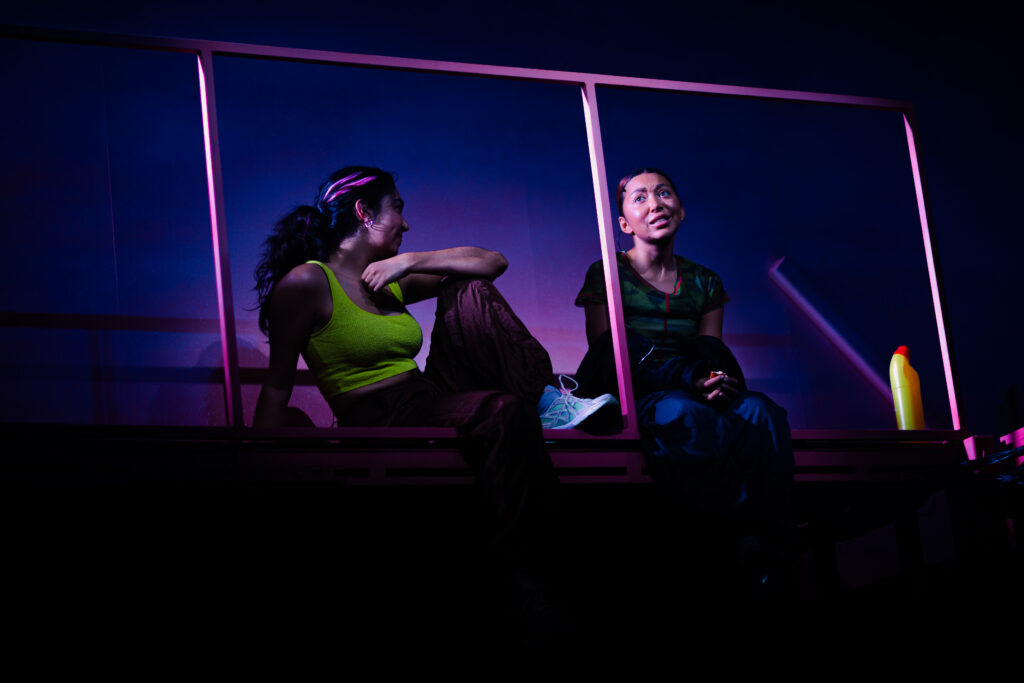
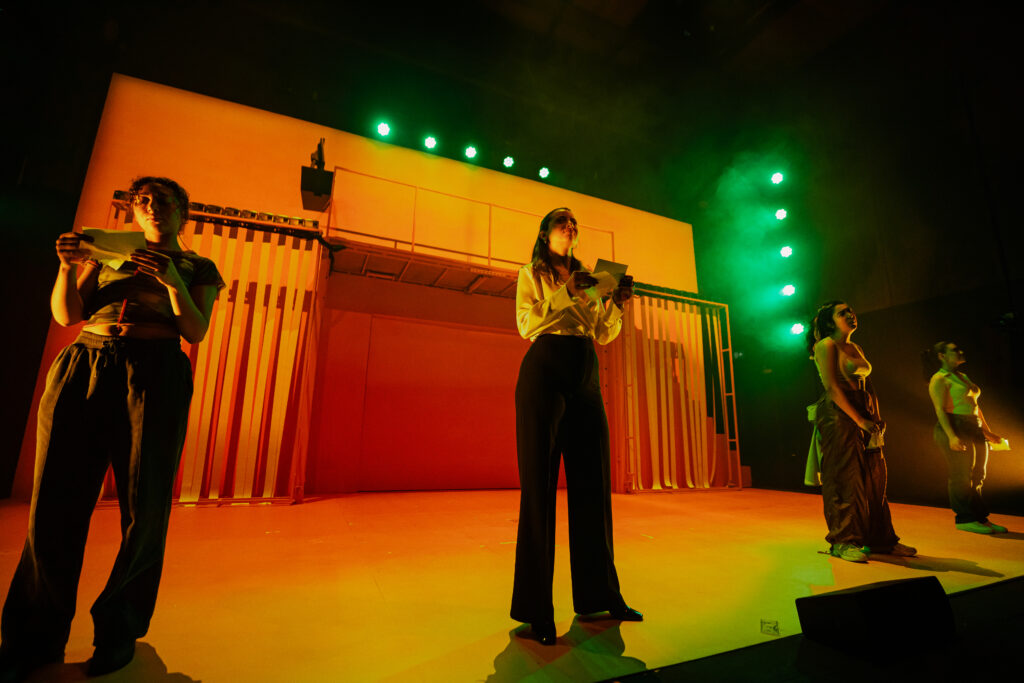
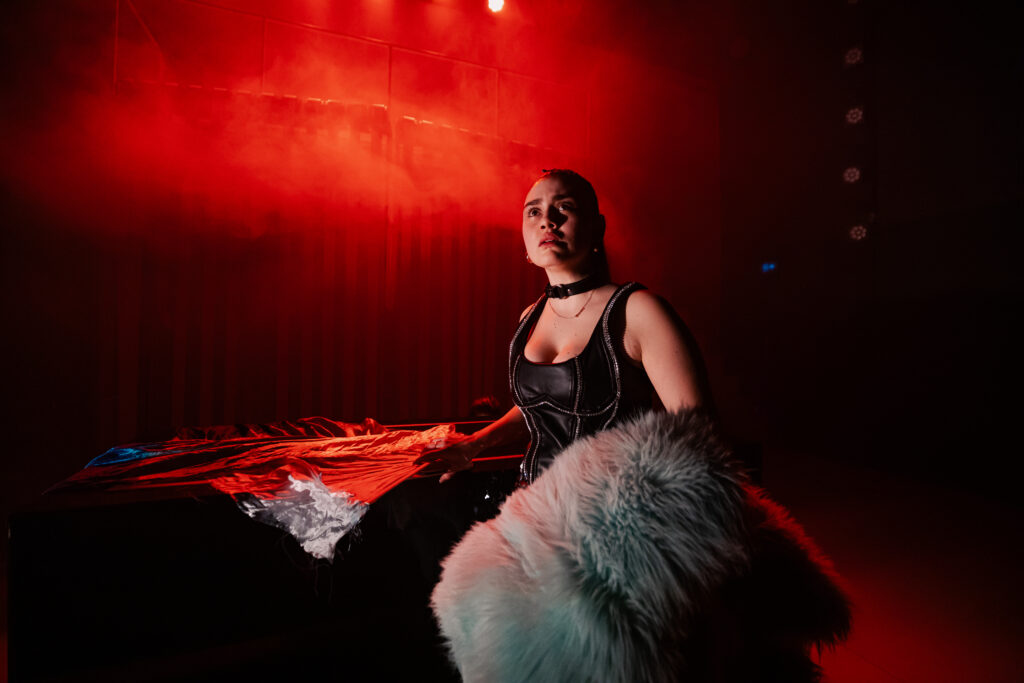
As a writer, I cannot comprehend not writing alone. I needed to know how and why five writers came together to write one play.
‘How we all came together was a slightly long, but natural process. I met theatre maker Tommy Ross-Williams while completing my fellowship in The Advocacy Academy (TAA) and reunited with Valentina, a childhood friend, during her fellowship at TAA. When the three of us started the process of making a show based on our experience, Tommy invited Lucy Wray, a theatre director and writer colleague who spoke Spanish, to join us. Joana Nastari – a British Brazilian creative – is another incredible writer known for her work for diversity in the arts. We knew Jo would be able to understand dual identity and already felt as passionately as we did about our community, so Jo joining us was a natural addition to our team.
The why is a beautiful question, and I can gladly say that Tommy and Lucy have been the best allies our community could have. They are as passionate as we are in creating visibility and representation for our community. It was important for us to not lose the Brazilian representation within our community because Brazil too forms a huge part of our community and we want to celebrate that.’
Was it lots of compromise or each sticking to their specialist area of knowledge?
‘Compromise and collaboration are a huge part of the process. There have been many times when Valentina and I didn’t agree and the same happened between Lucy and Tommy, but together we have developed a process rooted in trust that means we resolve conflict, continuously learn from and with each other, and create the best work possible. Eventually, Lucy became keeper of the script, and Valentina a keeper of the politics. This way we were able to stay on track and highlight the necessary things when working on this year after year.’
The title does grab the attention, but it’s not about Escobar. So?
‘The title came from a conversation between Valentina and me about the stereotypical things people said to us in school because we are Latin American. The one thing that kept coming up was “Pablo Escobar” … “Is your uncle Pablo Escobar?” or “Are you related to Pablo Escobar?” or “Does your family sell drugs?” So, as a reclamation and final answer to these experiences, we came up with ‘My Uncle Is Not Pablo Escobar’. We knew not everyone might agree or even like this title, but it spoke true to our experiences, and we chose it because we knew it could provoke the exact same people who asked us those questions as teenagers to come and watch the show.’
There appears to be justified outrage on many levels, so who is the target for the collective anger in the play?
‘The issues that stem from growing up with a dual identity are explored in our play. I, for example, am a London-born Ecuadorian. Valentina migrated here as an infant but grew up in London from an early age. We target the issues of being “too British” to be Latin American, or “too Latin” to be considered British. We also target the stereotypes people throw at us without understanding who we are and where we come from.’
Who comes out looking good in the play?
‘For me, I admire the characters we created because of who they are and the sacrifices they are willing to make in order to tackle a huge corporation such as The Bank. The characters we created are inspired by real people such as Vicki Alvarez who fought for the salvation of Seven Sisters Village, and Indigenous activist Nemonte Nemquimo who fights against the displacement and violence in the Amazon, Ecuador because of corporations benefitting from oil drilling, dam building, and land appropriation. These inspirations and many more created the traits and personalities of our characters, mine and Valentina’s lived experiences included. These four women are personal to us. So much of ourselves and other people has been written into each character and storyline, but we were also able to create characters that could do so much more, as an inspiration and empowering concept for our community and ourselves.’
Who comes out looking bad in the play?
‘The questions we want the audience to ask are “Why did this happen?” or “Why do corporations benefit from the violence in our countries?” We hope to question the narratives that we are sold and the assumptions people grow up with about our community and our countries back home. Why do people jump to make drug jokes when they find out we are Latin American? How is money laundering legalised internationally? Why are we still considered an ethnic minority when we are a global majority?
This play is created to provoke the audience to think about these things, to ask questions they might never have thought about. It confronted me too; I thought about the ways in which I might have perpetuated stereotypes my community faced through certain behaviours or ideologies.’
Is it a thriller or a diatribe against the racist stereotypes the play confronts?
‘Our play is both. It is a thriller; entertainment is needed to captivate audiences. We used the tropes of heist movies to create our fictional narrative: assembling a charismatic crew of diverse characters who each have specific expertise, meticulous planning followed by unforeseen complications, and an audacious infiltration of an elaborate event at a high-security institution.
However, it is also a diatribe against the racist stereotypes we have faced that we confront through art in our play. Our characters are all flawed individuals, but they’re also a group of powerful Latin American women succeeding in their fight for justice – they are something we haven’t seen before. We were inspired by movies such as Oceans 8, but whilst heist movie protagonists are normally thieves or criminals who use the proceeds of the heist to increase their wealth and fulfil their personal dreams, in our story we chose to highlight criminality within the international banking system, basing our story on the real-life HSBC money laundering scandal, with our protagonists fighting for large-scale economic justice and reparations, rather than individual wealth.’
What are the writers’ hopes for the play’s impact on society and change?
‘Our hopes are that young people – especially young Latin American women – see themselves on stage and feel inspired and empowered. We hope they know they can do remarkable things. We hope that the wider society will see this show and realise the implications of their stereotypes and prejudgements. We hope this causes more allies to join our cause, and to help us in the longer campaign we have of asking the ONS to create ethnicity boxes for our community, not just Latin American, but Afro-Latin American, Indigenous, and many more categories.’
Anything you’d like to add?
‘I would like to note that we are not victims. Many times, when we have been asked to write about our community and the issues we face, the assumption is that we are victims. This could not be further from the truth. The more we continue talking about our community and how we can be supported through solidarity, the more visibility we create and the more we tackle the lack of representation we face today. We don’t speak about our issues to be pitied; pity does not create change; we speak about our issues to be seen, heard, and understood. Through our words, we can create solidarity, community, allyship, and momentum. If by reading this article or seeing our show someone learns one new thing about our community, joins our fight for the 2031 census, or questions whether their finances could be with a more ethical bank, then we are doing what we have set out to do. The Latin American community is diverse, powerful, proactive, creative, and passionate. Society already enjoys our contribution through our food, music, and culture; we only ask that they support us – the people – too.’
I’ll be doing my bit by going to see this exciting piece of theatre and spreading the word.
Brixton House, 385 Coldharbour Lane, Brixton, London, SW9 8GL from 7th April – 3rd May
Booking and full details: https://brixtonhouse.co.uk/shows/my-uncle-is-not-pablo-escobar-2026/