Sustainability in Somerset House
For many years, Somerset House was the Public Record Office and held the country’s birth, marriage, and death certificates, plus storing much of the nation’s important history and past in its many governmental departments. For the past 40+ years, though, it has evolved into a centre for arts and culture where great old master and impressionist paintings are held and exhibited in the Courtauld Gallery that occupies the North Wing. In the South Wing, however, there is a much more down-to-earth exhibition – literally – I went along to actually eat soil in the Museum of Edible Earth, an exhibition that looks to the future, Michael Holland.
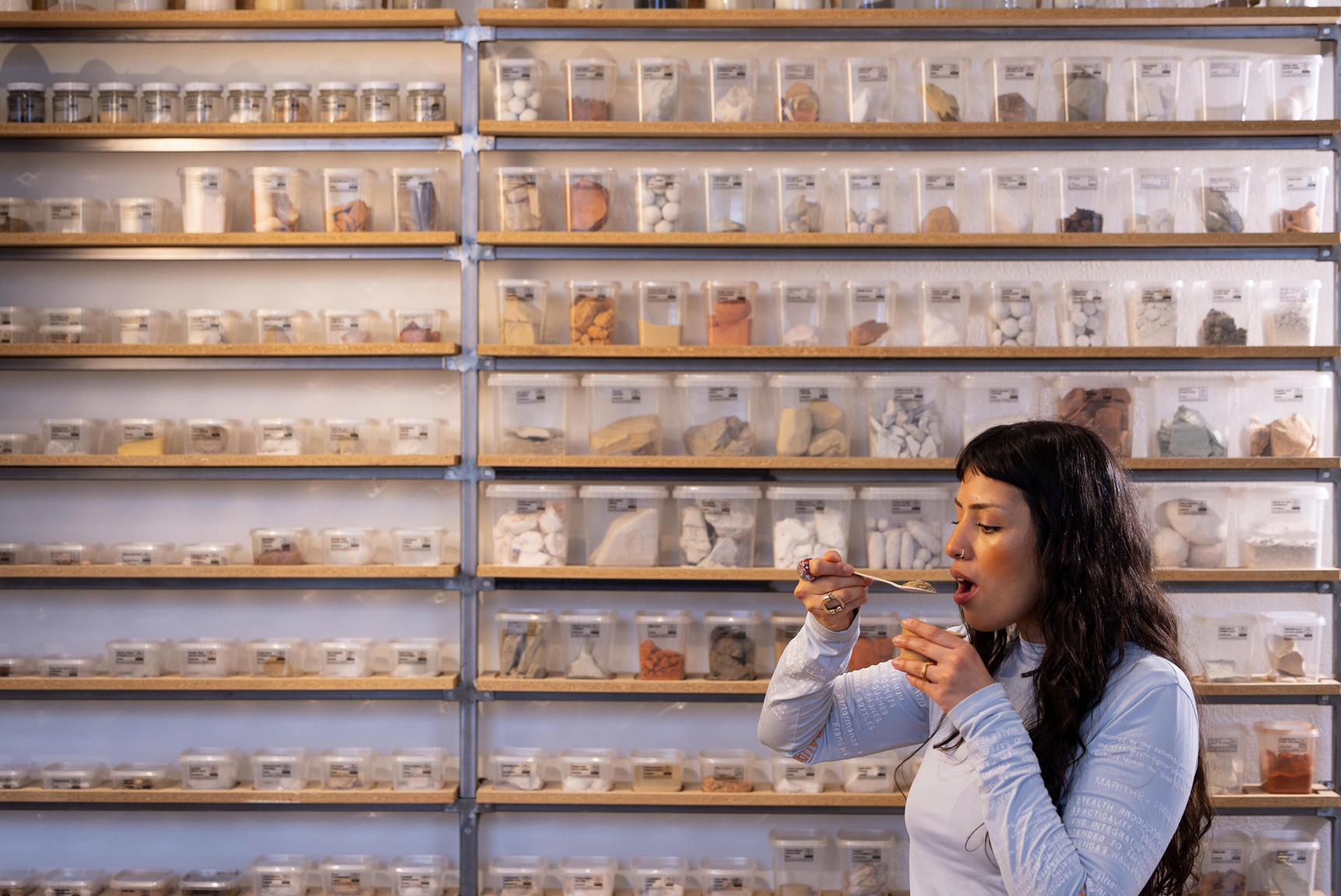
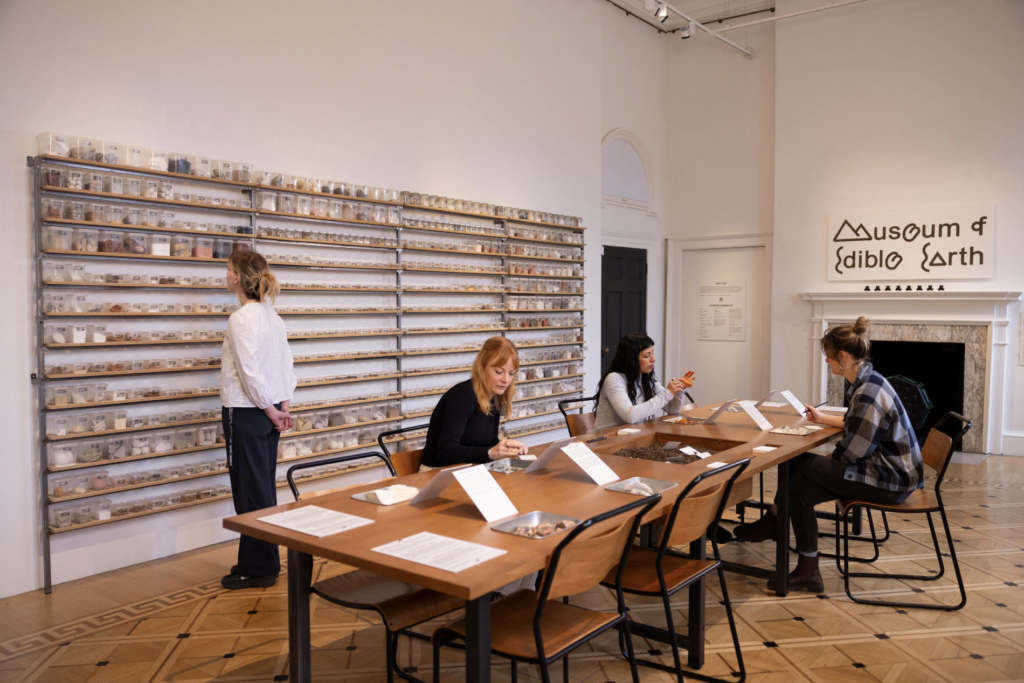
Some people would cry away from such strange behaviour. And there were several at the ‘tasting session’ who did just that, standing away from the dining table, clutching their necks with one hand and filming proceedings on their phones with the other.
The Museum of Edible Earth has been touring the planet more or less since its 2013 inception, surveying the globe for edible soils while exploring how different places use earth as nourishment, healing, ritual, and cooking. This is its first time in the UK.
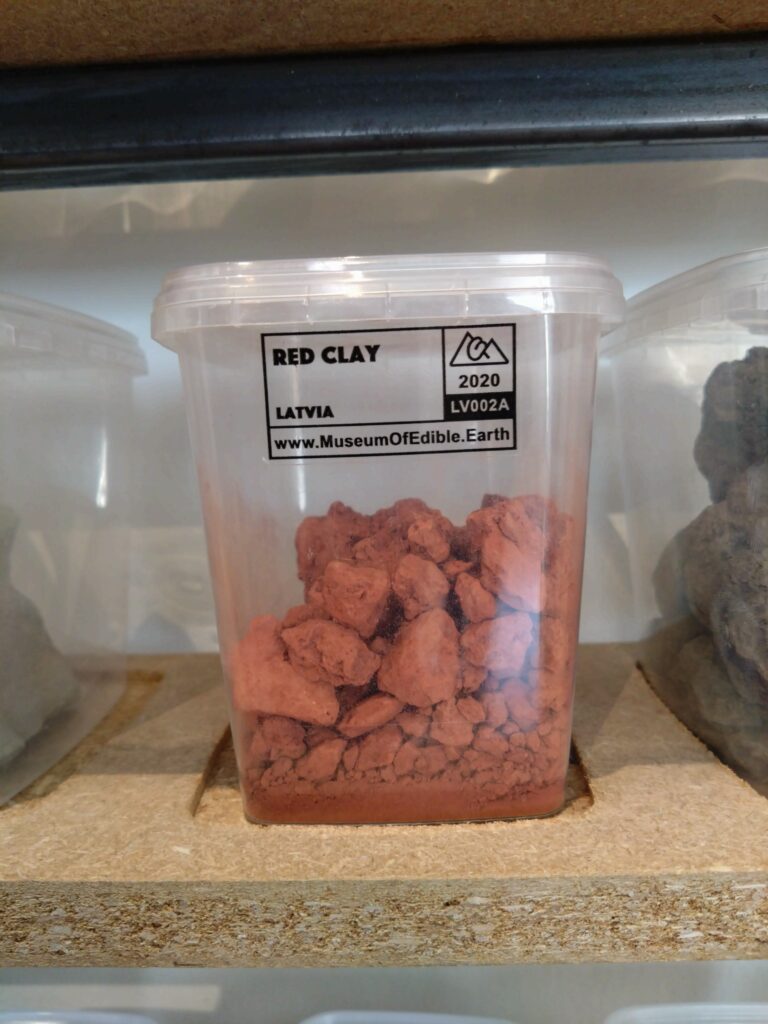
The exhibition displays a wide selection from over 600 samples it has collected from 44 countries. Britain’s inclusion in this worldwide study is its Cambridge Chalk. Each day, guided sessions take place where visitors can taste some of the earth that they live on.
On the menu when I visited was Luvos Healing Earth, made exclusively from glacial loess (sediment) deposited in the last Ice Age and widely used in German naturopathy for digestive support. The loess contains calcium, potassium, iron, magnesium, copper, and zinc. It had a good crunchiness that did not overwhelm taste-wise, which means it could be added to many dishes to add texture, as well as the health benefits, and you would not know it was there.
The second course was Diatomaceous Earth from Mexico, composed of the fossilised remains of aquatic organisms. Over millions of years, the silica-rich skeletons accumulated in lake beds to form a porous deposit that can be crushed into a fine powder and eaten with just about anything.
On its own, however, it quickly clogs up the mouth and palate, but is easily washed down with a few sips of water.

One of Somerset House’s missions is to champion sustainability and be environmentally friendly. Hence the Edible Earth exhibition. But outside in Fountain Court is Dana-Fiona-Armour’s Serpentine Currents, a 3D, three-part sculpture of an endangered sea snake. Its mesh LED surface is animated using historic and predictive ocean data from the British coastline, with patterns and luminosity shifting in response to rising sea temperatures and decreasing salinity. Serpentine Currents mirrors the movement of tidal waters, turning scientific research into a living, responsive form.
It looks very much at home amongst the ever-changing water spouts that catch the sunshine and flash out their own personal rainbows, but at night time the serpent comes to life in its own light.
Somerset House, The Strand, WC2R 1LA until 26th April. Sun–Wed 10am–6pm; Thu & Fri 12–8pm; Sat 10am–8pm. Admission: Free – Pay What You Can
Full details: https://www.somersethouse.org.uk/