The greatest Estonian artist of his generation
Unlike fellow European artists, Estonian Konrad Mägi did not have the luxury of indulging in a ‘grand tour’ viewing Parisian avant-garde works nor the classical art of Italy. Instead, the former furniture factory worker went to Norway in the summer of 1908 with his friend Aleksander Tassa, writes Barbara Buchanan.
They took their brushes, sketch pads, a violin, and had just five krone (£4), between them. With nowhere to stay, they camped out in the forests, surviving on blueberries. Despite their tough circumstances, the Norwegian landscape ignited Mägi’s spirituality and a lifelong homage to nature.
Born in 1878, he lived through the Russian Revolution of 1905 and the birth of an independent Estonia in 1918. With art the property of the elite, when Mägi was young, there were few public exhibitions. However, he still developed a thirst for it and took advantage of his time at St Petersburg’s Stieglitz Art School to study symbolists such as Mikhail Vrubel.
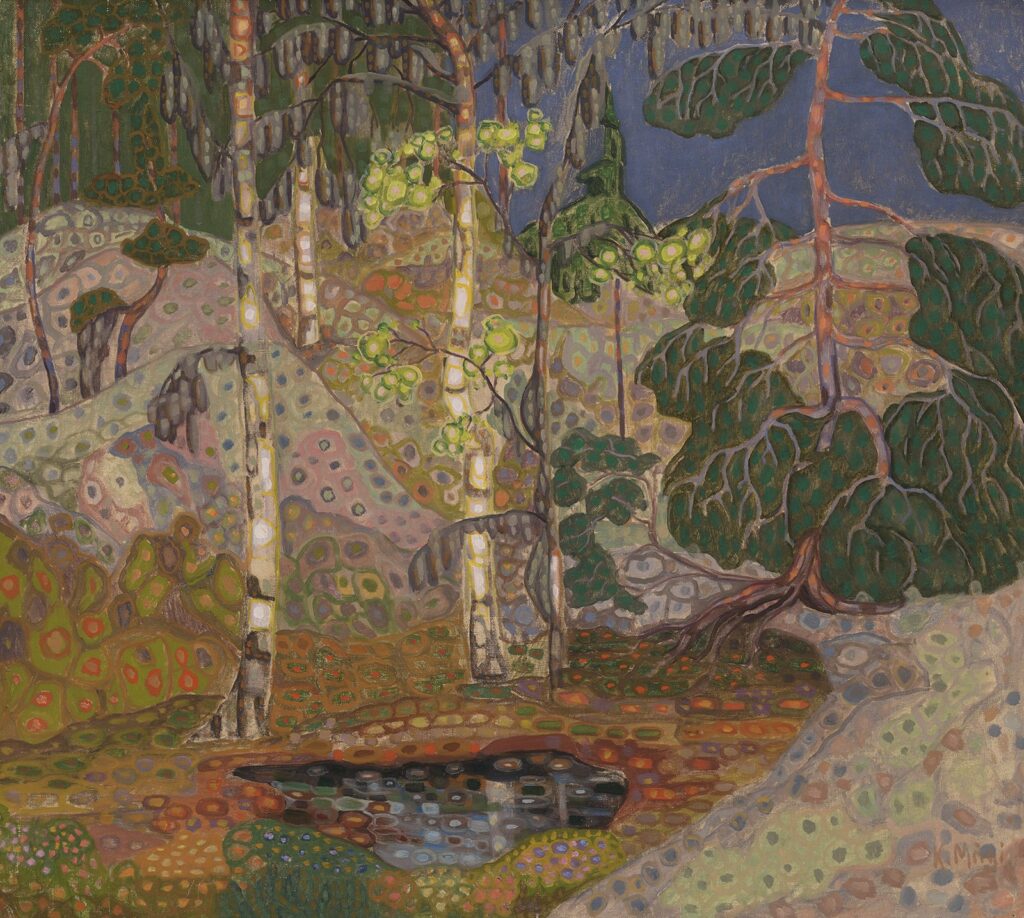

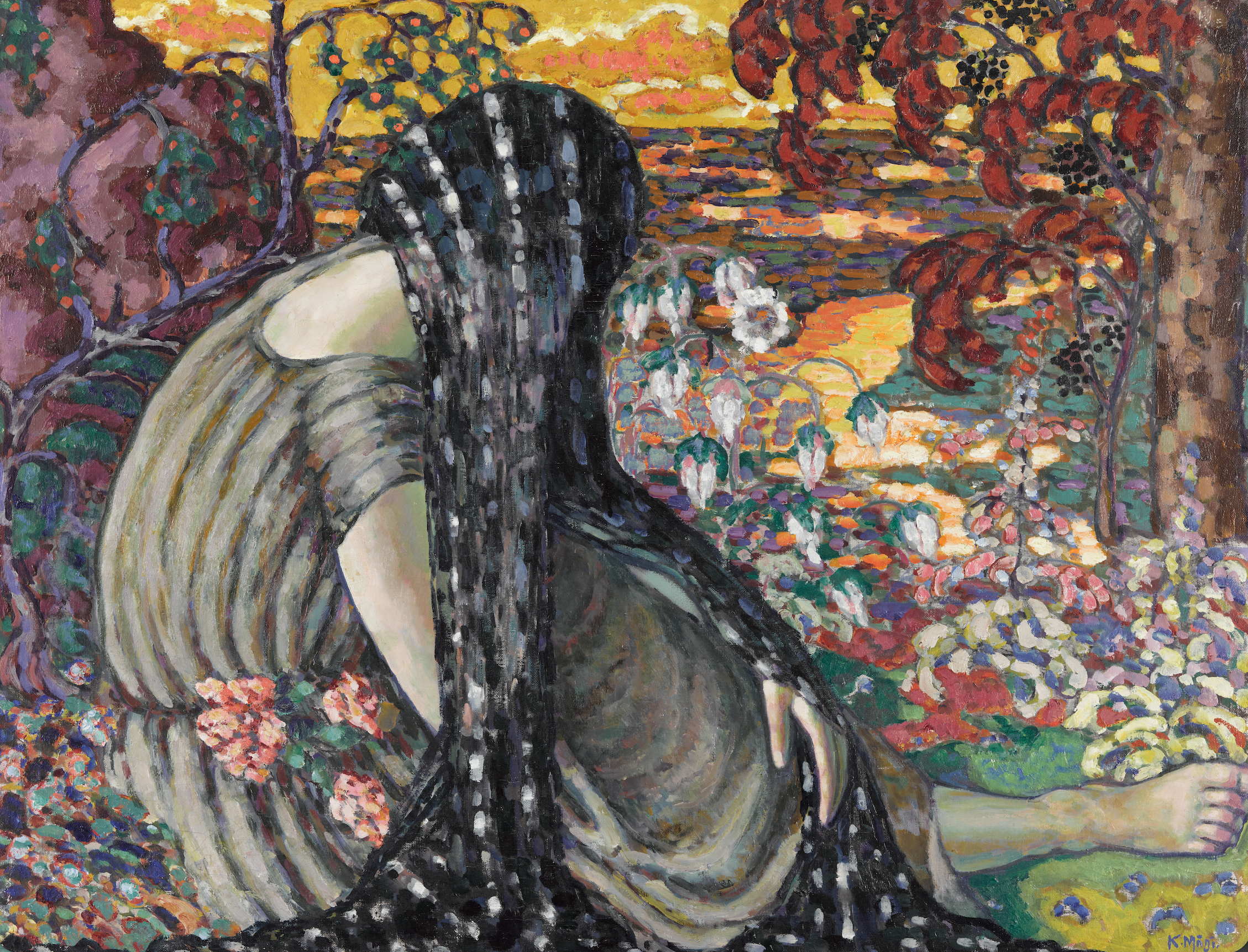
Mägi’s work doesn’t give exact dates nor locations to his work as he was more interested in rhythms, structures, and the forces that make up the essence of things and phenomena. Despite his radical leftist views in his youth, he became interested in yoga, Buddhism, and theosophy. His painting Meditation shows a young woman seated on a hill deep in thought against a psychedelic landscape.
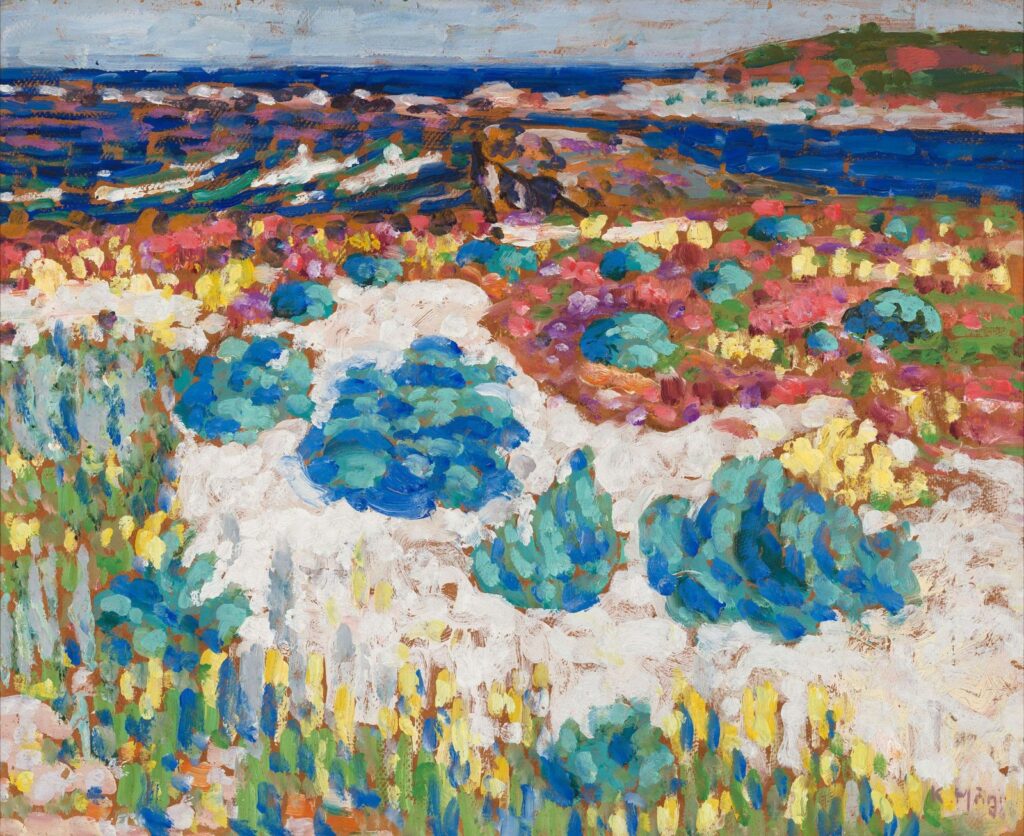
His use of colour to create form is apparent in his paintings of Saaremaa and Vilsandi islands in the Baltic Sea off the west coast of Estonia. Sea Kale on a pebble beach at Saaremaa illustrates an abundance of robust, hardy plants bathed in light.
Contemporary artist Kristina Öllek’s installations in the gallery’s mausoleum build on Mägi’s seascapes. A string of translucent salt panels highlighting oxygen-depleted dead zones in the Baltic Sea hang in the circular crypt. Green and yellow panes illustrate the toxic algae bloom which has developed in the sea through excessive nutrients.
Mägi’s work towards the end of his life, when he was struggling with mental illness, has a dramatic quality, with foliage, grasses and skies in bold primary colours and tumultuous clouds. The paintings hint at his inner turmoil and struggle with illness and depression.
He died when he was just 46 after being admitted to a psychiatric hospital in Tartu, following a bout of psychotic episodes. Yet he achieved a lot in his life, setting up Estonia’s first higher artistic education college, the Pallas Art School in 1919. He lived in Paris for several years, joining the Beehive colony of artists which included Marc Chagall, Amedeo Modigliani and Diego Rivera. In his home country, Mägi is considered the greatest Estonian artist of his generation.
Kathleen Soriano’s curation insightfully charts his journey from the Norwegian landscapes to commissioned portraits. This is a rare chance to see over 60 of his works, showing the influences of Cubism and German Expressionism on a largely self-taught artist who maintained an independent approach.
Dulwich Picture Gallery until 12 July 2026.
Booking and full details: https://www.dulwichpicturegallery.org.uk/