An awakening against oblivion
Zineb Sedira propels you into a world where cinema was more than entertainment but a tool of resistance for African states emerging from colonialism, writes Barbara Buchanan.
She has transformed Tate Britain’s neo-classical Duveen Galleries with its lofty ceilings and cool marble floors into a more intimate space of a cinema and a 1960s-style Parisian café.
Sedira, in a red jump suit, shimmies around the black-and-white photos of African filmmakers, actors, and poets from the ‘60s and ‘70s in her film Cinema Speaks. “I felt the urgency to tell stories, to pass on teachings, and keep the knowledge alive before it disappears,” says Sedira, 63, who the Tate commissioned to reveal African cinema of this epoch.
In her film, animator Boudjema Kareche shares his experiences as director of Cinémathèque Algérienne in the 70s. “I immediately understood that cinema could greatly help educate young people,” he says. Now 85 years old, Kareche has lost his eyesight but not his insight into why Cinémathèque was a creative lightning rod. During his watch, the 300-seat cinema was packed, attracting 1,500 people a day, drawing in acclaimed filmmakers and spawning an arts magazine, Les 2 Écrans. “It was a place for meeting and intelligence. And it was a place of freedom,” he says.
African dissidents would base themselves in Algiers, meeting at the film institute in Ben M’Hidi Street and hanging out at the nearby Parisian-style café Brasserie des Facultés. Kareche points out that Cinémathèque was not about militant liberation but about convincing people through beauty. “My politics was the defence of art, particularly of cinema. Cinema as a weapon. That was what the Cinémathèque was about.”

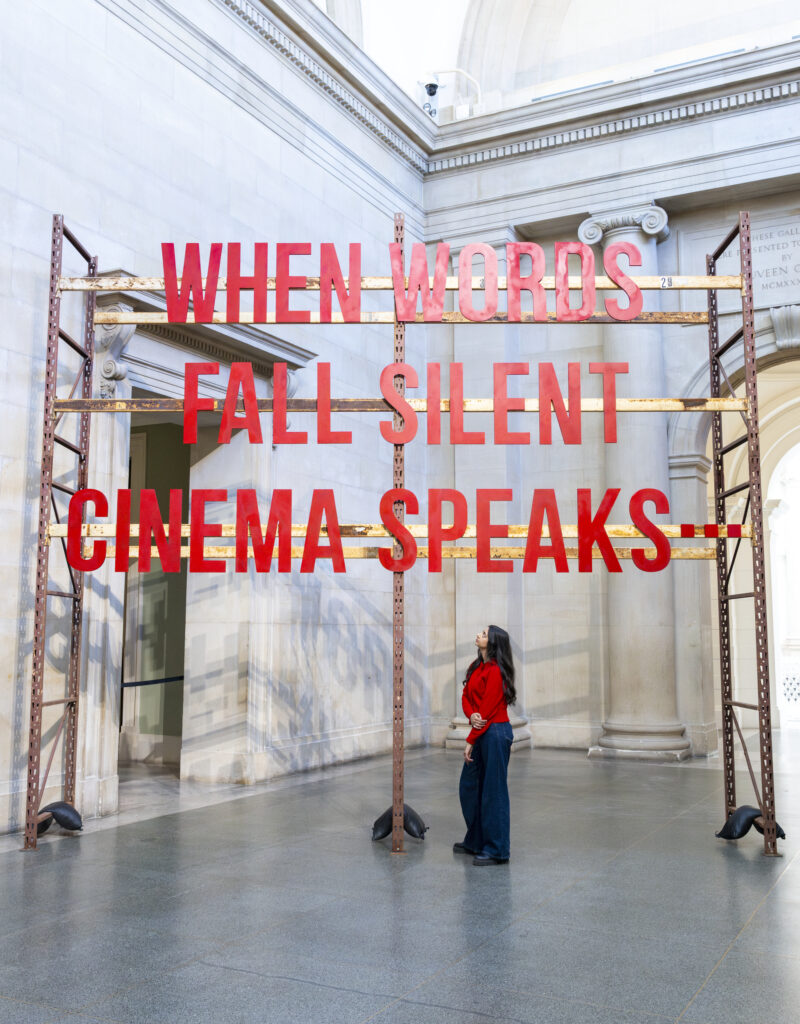
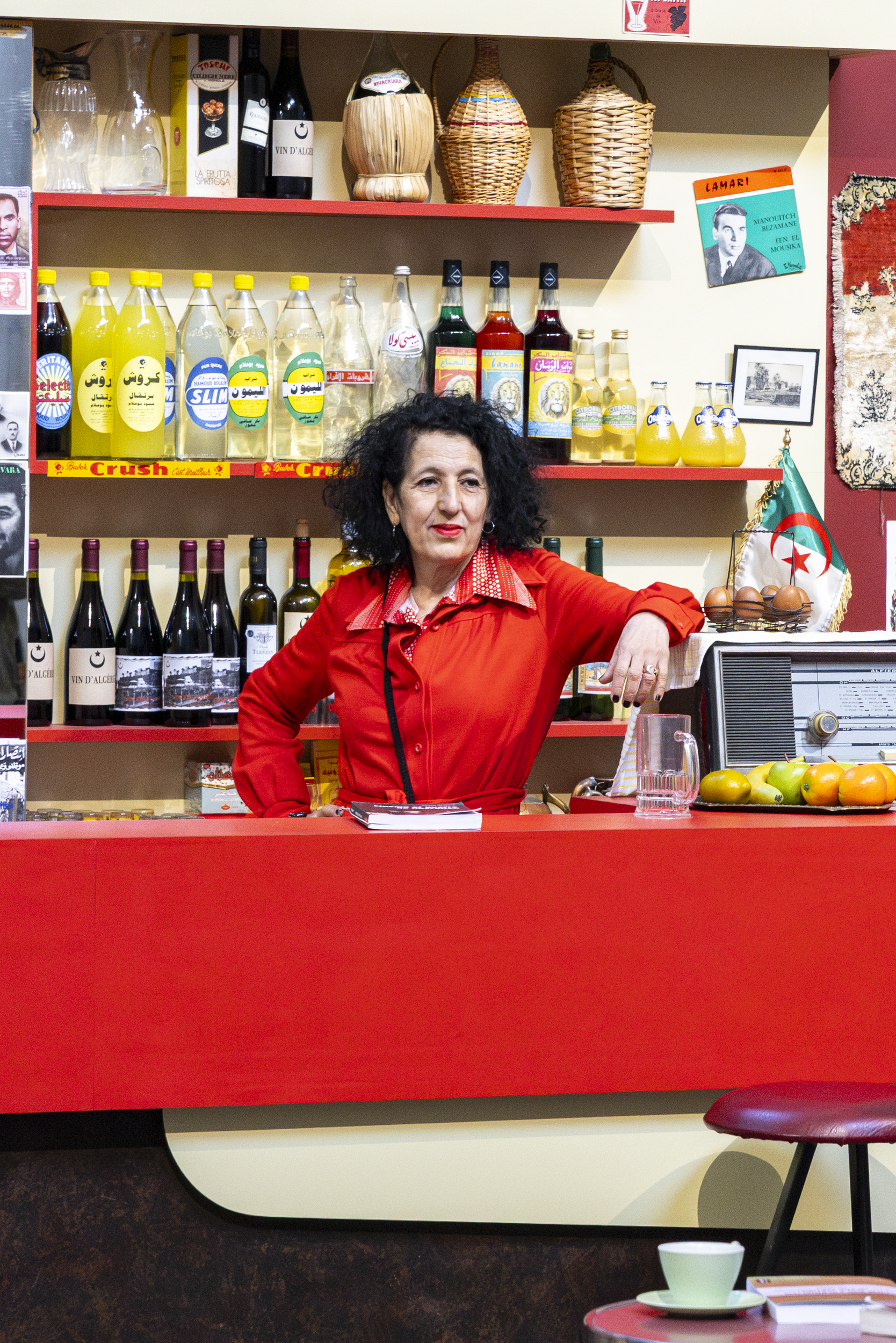
Sedira has reframed this, describing cinema as “an awakening against oblivion”, recreating the café where her father took her as a child. It is adorned with family photos and evocative props such as the French aperitif Suze, a Ricard anisette jug, and a shisha smoking vessel.
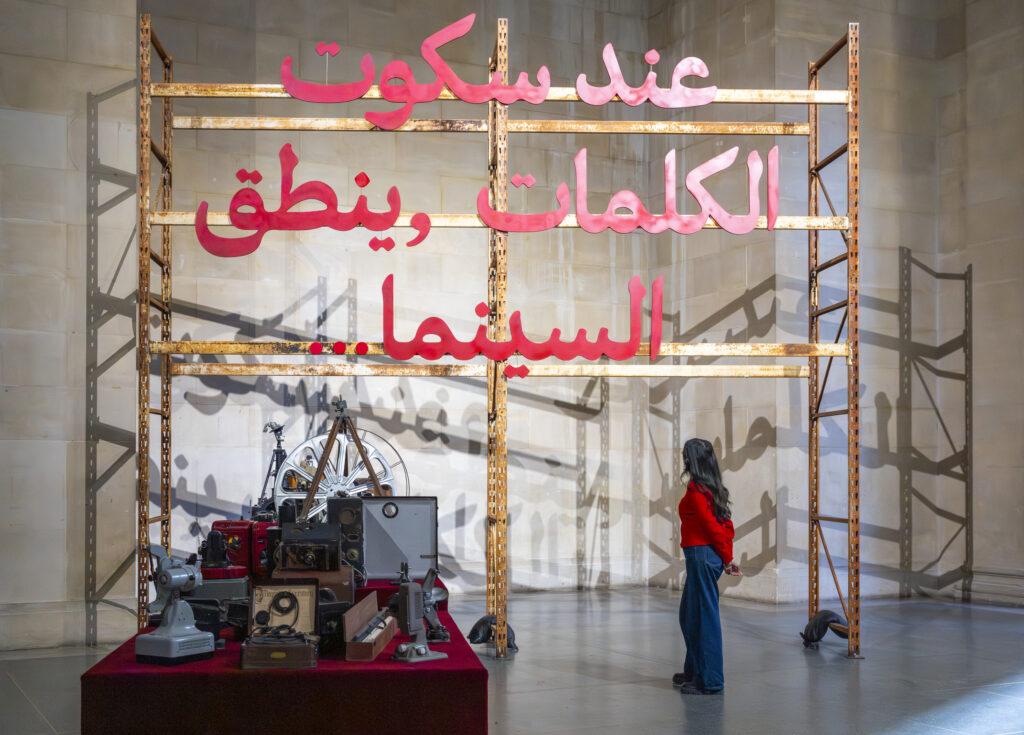
Nearby is a sculptural display of vintage equipment illustrating the material presence of film, with a neon Hollywood cinema-style sign in Arabic as a backdrop.
Further on is a campervan used by the French army in the ‘50s and ‘60s to screen films about the benefits of French rule. It is stuffed with film reels, a vintage film camera, a splicing device for editing, speakers, and an Anglepoise desk lamp.
When Algeria gained independence in 1962, the vehicles were transformed into Ciné Pop vans bringing film to people in rural areas. Film director and critic Ahmed Bedjaoui, in Sedira’s Narration in Motion interview, explains why film was a lynch pin in Algeria’s fight for independence: “In August 1956, there was a major congress with Algerian resistance leaders. They met and decided weapons were no longer sufficient. They had to reach public opinion. So, they turned to image, to cinema. They created a film school.”
This show requires curiosity and perseverance to absorb and unpack the list of facts in Sedira’s films. The café, cinema ticket booth, and theatre drew me in, but I would have felt more engaged with clearer direction and signposting. Clips of seminal films from this era rather than Sedira’s noticeboards with collages of photos and posters might have achieved this.
Tate Britain until 17th January 2027
Full details: https://www.tate.org.uk/visit/tate-britain