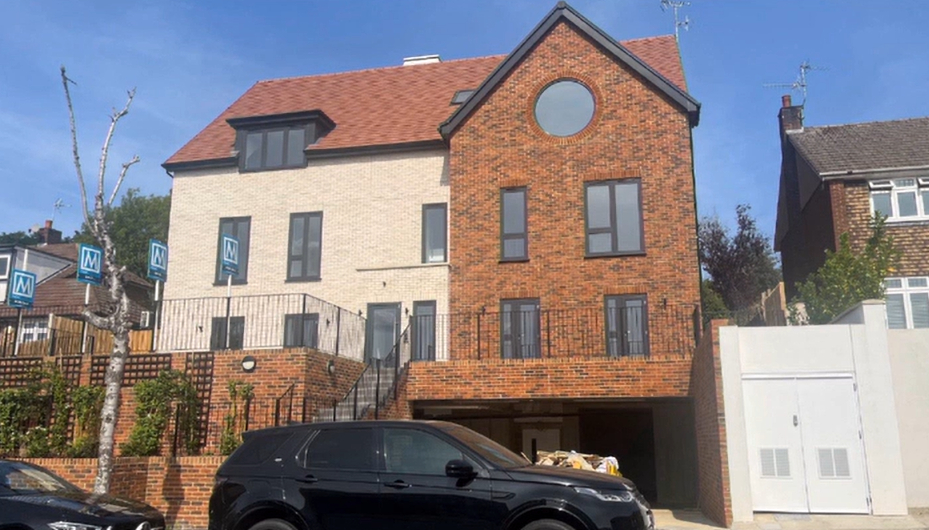
Croydon Council has approved retrospective planning permission for changes to a block of flats which critics say have made it almost entirely different from the original plans.
The block of eight flats in Coulsdon was first approved in 2022, but neighbours say changes have meant the building now dominates the area and threatens their privacy.
During a planning committee last week (July 23), local councillor Luke Shortland asked the chamber: “It does kind of beg the question: what part of the application was in fact built to plan?”
The controversial planning application centred on changes made to 25 The Grove, near Coulsdon Town.
Formerly a single, two-storey detached family home, the building was demolished and rebuilt as a larger block of eight self-contained flats following planning approval in 2022.
However, changes made by the developer, resulting in what councillors described as a “materially different” building, meant retrospective planning permission was required to bring the development into compliance.
A key concern for residents is that the changes have led to direct overlooking of the private gardens and rooms of neighbouring properties, particularly 25A The Grove.
Speaking in opposition to the application at the meeting, neighbour David Boyd-Bell asked members: “How would you feel opening your curtains and finding people looking directly into your dining room? This is now our reality.”
The privacy concerns were brought about by the increase in the height of the building and the addition of first-floor balconies without privacy protections for neighbours.
“Without these measures, people on the balconies would be able to look us in the eye from only a few metres away,” David added.
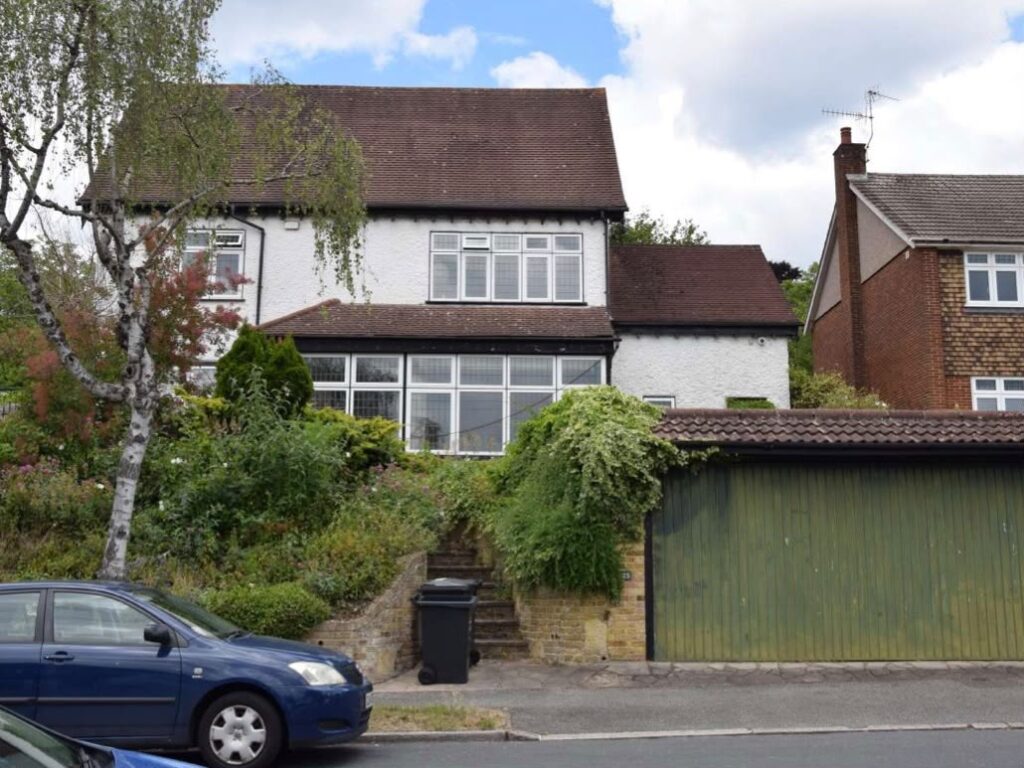
Coulsdon Town councillor Luke Shortland told the committee the developer had also not delivered the protections originally promised in the 2022 application.
He told the Local Democracy Reporting Service: “Since being built, neighbours have suffered because the application was not built to plan, for example, not building the promised vital balcony screening which would have lessened the impact of overlooking.”
David also told the committee how the new development lacks proper boundary fencing to protect them from a ‘dangerous drop’ around the perimeter of the site.
He said: “We have five young grandchildren who visited regularly before this development and they could play safely in our garden. They no longer can.”
The committee also raised concerns over the appearance of the building, with many suggesting the changes to the building and its landscaping had made it look more dominant from the street. “From the front, it’s absolutely huge,” commented Conservative councillor Mark Johnson.
“Looking at it, I think it’s an absolute monstrosity,” he added. Councillors also lamented the loss of front landscaping from the building, which they believed harmed the ‘street scene’.
The development also includes one fewer parking space than originally approved, leaving just five for the eight flats. Mariano Hyozoda, another resident of The Grove, told the committee this would have a knock-on effect on the road, which he said was already “severely overcrowded” with cars using the unrestricted on-street parking.
Despite this, Emily Munro, speaking in support of the application, told councillors that “the alterations are minor and will not substantially alter the approved scheme.”
She also added that the development still continues to provide “a positive contribution to the housing needs of the borough”.
While committee members were vocal in their criticism of the application, they also acknowledged the difficult position they had been put in, as they were only able to approve the changes put forward in the application and not the differences from the original 2022 permission.
Labour councillor Rowenna Davis summarised their position, saying: “We are not here to decide whether this planning application is as close as we’d like it to be to the old application, because if we were here to decide that, I think we would all agree it would fail.”
The committee approved the retrospective planning application and gave the developer three months to act on its recommendations. The requirements include installing opaque privacy screens on balconies and obscured glazing in side windows, boundary fencing, and delivering measures such as solar panels and wildlife-friendly lighting.
The applicant must also pay £12,000 towards local transport improvements and sign a legal agreement preventing future residents from obtaining on-street parking permits.
Despite their concerns, Cllr Davis felt that by approving the application the council would gain some level of scrutiny and oversight over the development, rather than letting it stall.