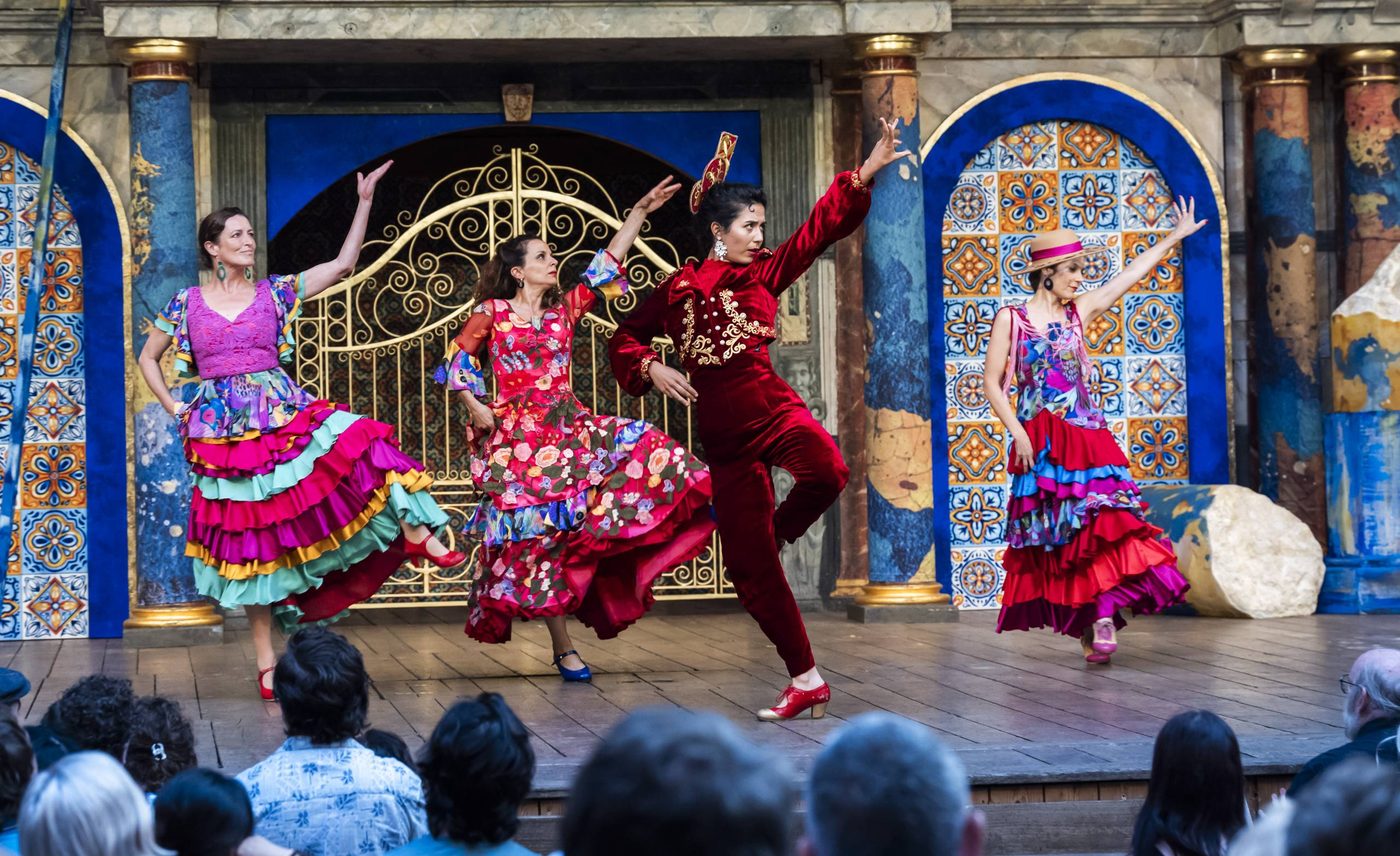
Flamenco heightens the flirtation, rivalry and youthful impulsiveness
Love’s Labour’s Lost is one of Shakespeare’s most elusive comedies. Often dismissed as one of his “problem plays”, it has never produced the iconic characters or enduring archetypes of Hamlet, Macbeth, or Twelfth Night. It also exists in the shadow of mystery. Many scholars believe it was written as a companion piece to the now-lost Love’s Labour’s Won. Without its counterpart, Love’s Labour’s Lost can sometimes feel like half of a conversation, writes Leo Dunlop.
The premise is delightfully absurd. The King of Navarre and his three companions swear an oath to devote themselves to study, renouncing the company of women. Shakespeare wastes no time undermining their lofty ideals. The arrival of the Princess of France and her ladies immediately throws the men into romantic chaos, prompting disguises, misdelivered letters, and an endless stream of dazzling wordplay.
This Globe production embraces the play’s inherent silliness rather than trying to manufacture greater emotional weight. Relocating the action to a world infused with flamenco dance, it finds a visual and rhythmic language that suits Shakespeare’s exuberant comedy perfectly. The dancing does more than decorate the action. It heightens the flirtation, rivalry, and youthful impulsiveness bubbling beneath the text.
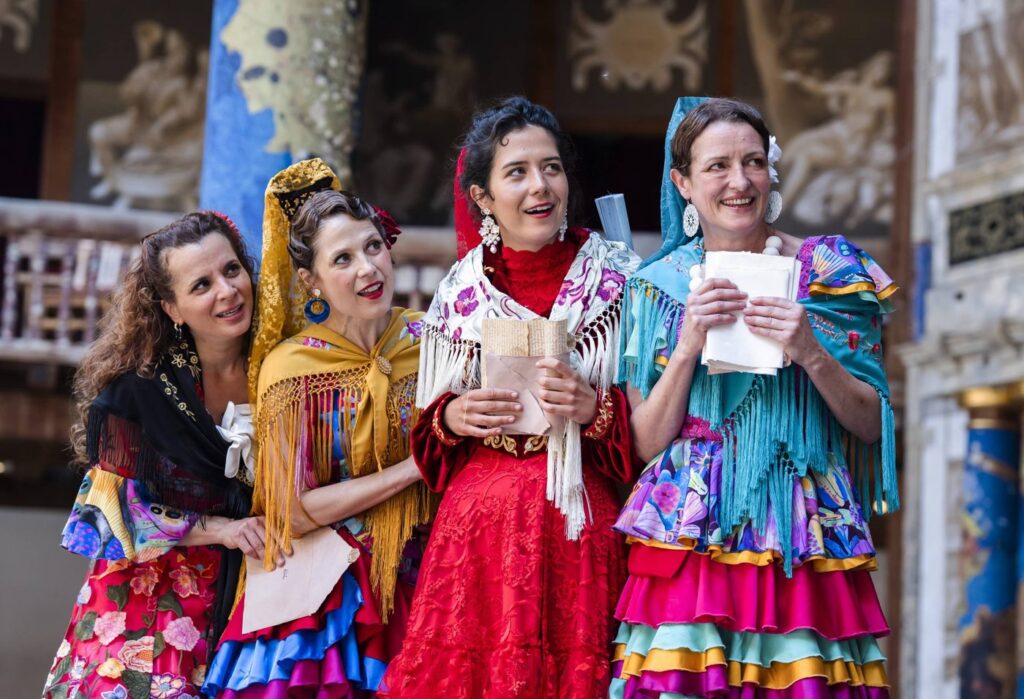
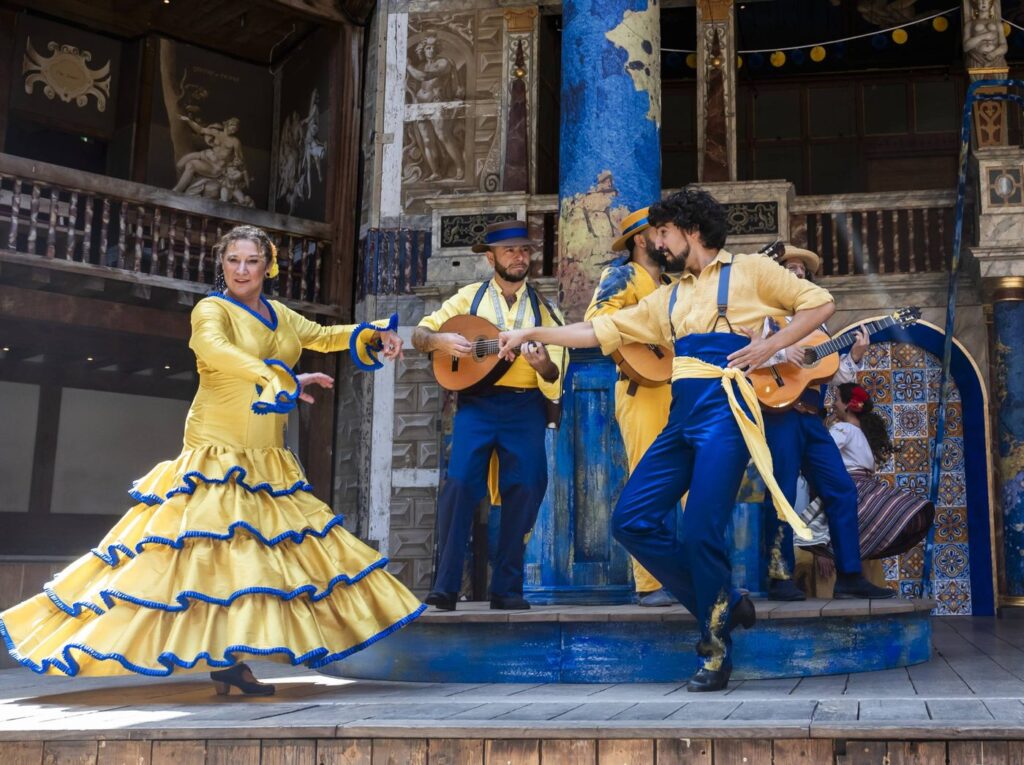
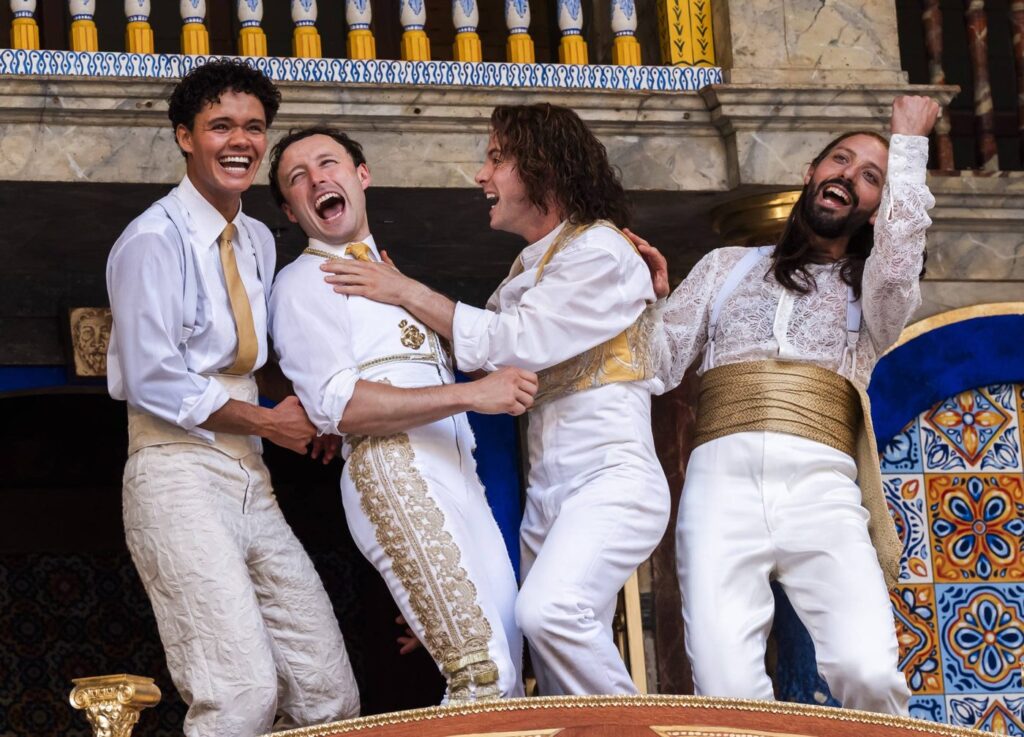
The choice feels particularly apt because Love’s Labour’s Lost is one of Shakespeare’s most musical plays. Much of the dialogue is written in rhyming couplets, giving the language an almost percussive quality. Flamenco’s sharp rhythms and sensual energy become a natural extension of the verse. Even when the Elizabethan wit threatens to outrun modern ears, the movement carries the joke. The audience often laughed as much at the rhythm and physical comedy as at the words themselves.
The production also embraces contemporary flourishes. Pop tracks make their way in when Shakespeare’s dialogue is performed to the tunes of Bad Bunny and Despacito. Traditionalists may bristle, but the music is used with such confidence that it never quite reaches the levels of gimmicky. Instead, it reinforces the production’s atmosphere of youthful excess as it attempts to bring the story to modern audiences.
The performances match the production’s infectious sense of play. Katy Stephens steals the scene as Holofernes, sporting sunglasses and a beach hat with delicious comic self-importance, while Ned Costello makes a wonderfully petulant King of Navarre, forever teetering on the brink of abandoning both his oath and his dignity.
The evening reaches its comic peak before the interval, as each of the men attempts to woo his beloved in secret, only to overhear the others doing exactly the same. The sequence blends intricate choreography with pitch-perfect physical comedy. Joyous in the simplicity of its premise and astonishingly precise in its execution, I ended up with tears of laughter streaming down my face.
Yet the production cannot entirely escape the play’s greatest weakness. For all its linguistic brilliance, Love’s Labour’s Lost lacks the emotional depth of Shakespeare’s finest comedies. The central obstacle is entirely self-imposed. Four young men simply need to abandon a rather foolish promise. Compared with the emotional stakes of Much Ado About Nothing or Twelfth Night, the conflict feels slight.
Perhaps that is enough. Shakespeare does not leave us with profound heartbreak or hard-won wisdom. Instead, he revels in puns, verbal games, and comic invention. This flamenco-infused production wisely leans into those strengths, giving fresh life to one of Shakespeare’s least celebrated plays. It may never be one of his greatest comedies, but in the Globe’s hands, it proves to be a wonderful night out at the theatre.
Directed by Indiana Lown-Collins
Shakespeare’s Globe until September 13th.
Booking and full details: https://www.shakespearesglobe.com/whats-on/loves-labours-lost/