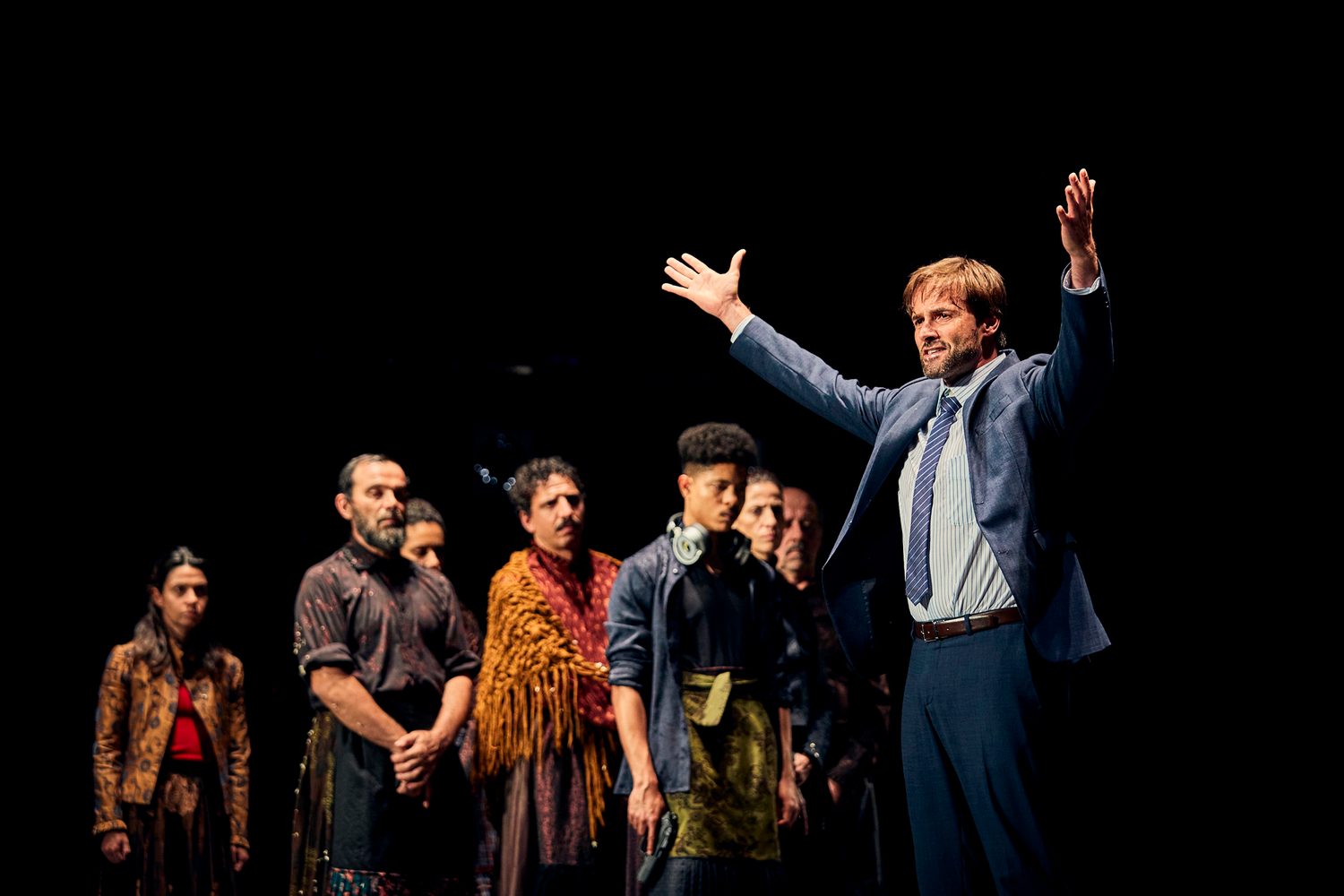
Every year, a family gathers in Southern Portugal; they drink wine, eat pig trotters and, when their palates have been sated, they kill a fascist, writes Frankie Jenner.
The tradition carries generations of family lore, following the death of Catarina Eufémia in 1958 at the hands of a policeman during a strike by rural workers in Southern Portugal. Catarina Eufémia’s killer becomes the first fascist to have been killed by the family. In commemoration, the family gathers every summer in the same house for what they call a “day of celebration, a day of beauty and death.” But when the gun is bestowed upon Catarina, she falters: “I cannot kill.” Her refusal to shoot ruptures the family’s tradition as she begins to question: What is a fascist? What role does violence play in creating a more just society? Can we violate the rules of democracy when we seek better ways to defend it?
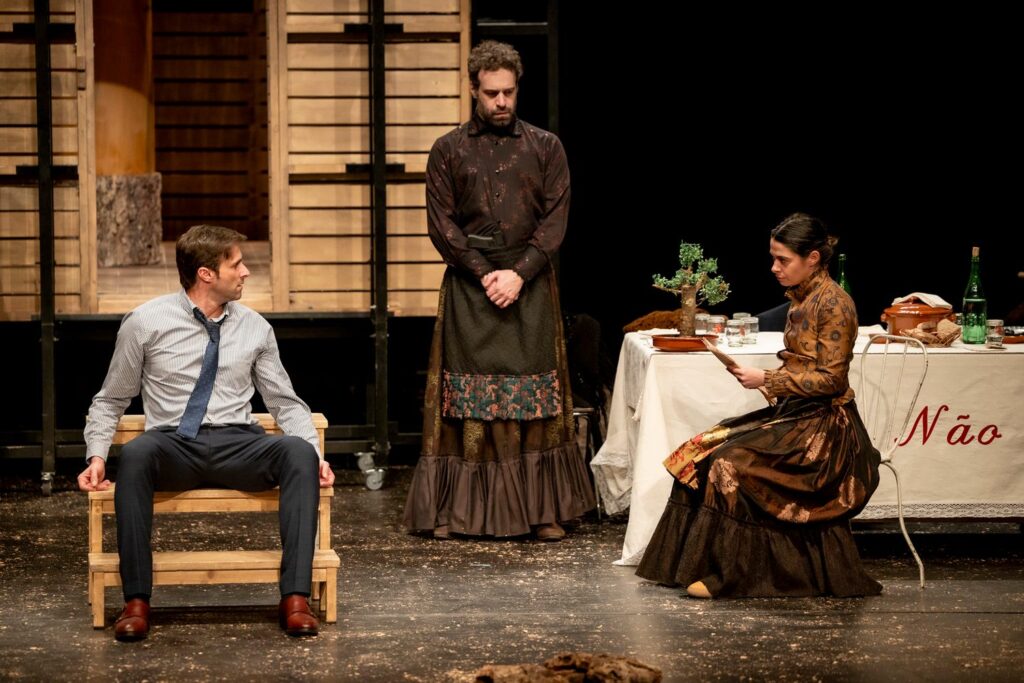
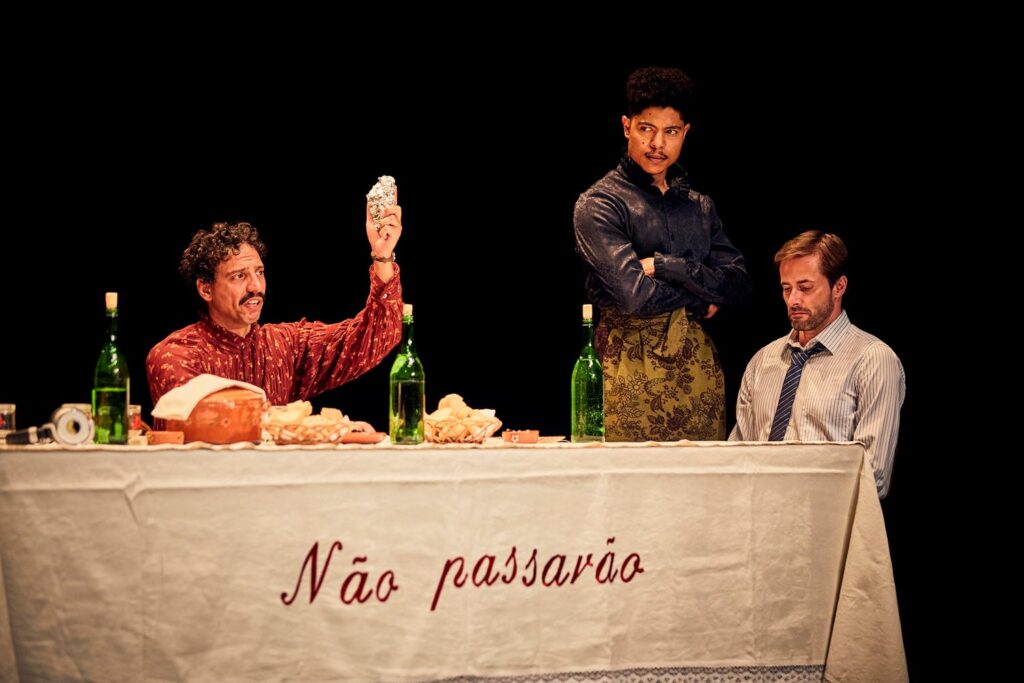
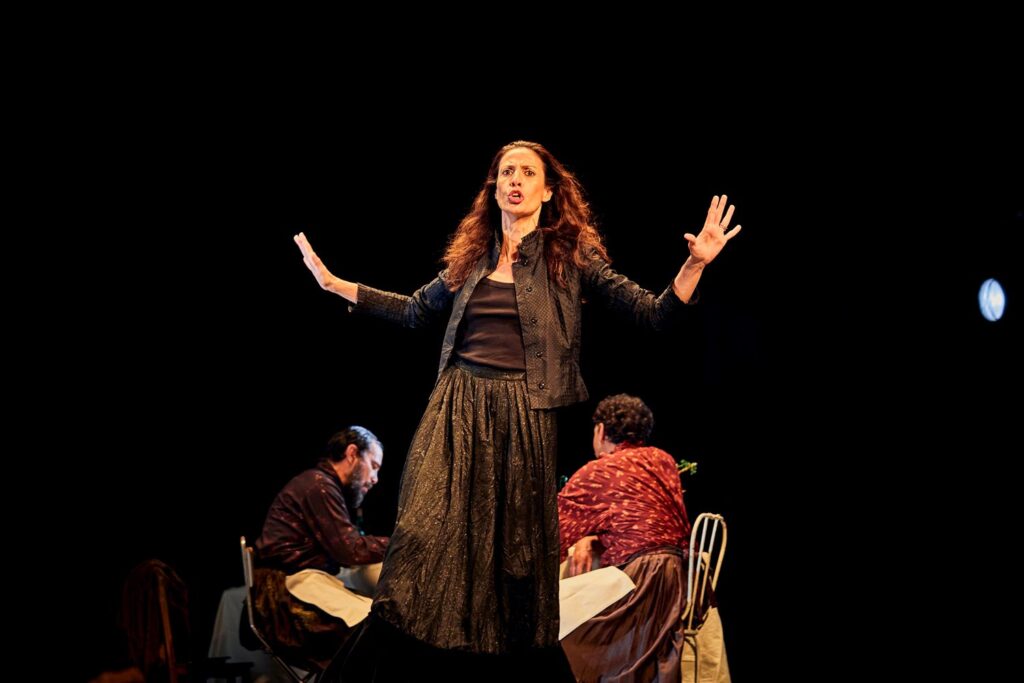
Set in 2028, Tiago Rodrigues’ script abstracts itself somewhat from our current political moment, allowing itself to become an allegory that has successfully migrated across borders, political contexts, across regimes globally. Since its premiere in Portugal in 2020, the fascist’s 20-minute-long monologue at the end has incited audiences from Montreal to Austria, Lisbon, Paris, Switzerland, Lithuania and beyond. In February, the play made headlines during its German premiere, when the actor impersonating the fascist politician was pelted with fruit, shouted down and subject to an attempted stage invasion. Audiences have sung revolutionary, anti-fascist anthems to drown out the actor’s voice, with Portuguese audiences opting for Grândola, Vila Morena – José Afonso’s song of the 1974 Carnation revolution – and Italians favouring Bella Ciao. It’s been explosive to the point of damn near creating a riot.
But on its opening night at the Dorfmann Theatre, the play’s final provocation left Londoners rather shy. As the kidnapped fascist delivered his monologue – spewing hate speech against migrants, condemning minorities, and attacking women’s rights – the silence was palpable, bar a few sneers, awkwardly projected chuckles and a handful of walkouts. The audience sat patiently and waited until his speech had finished to politely jeer him off the stage.
On the face of it, this reaction was recognisably ‘British’. But perhaps it signals something more than that, a point of departure. Writing about the play for e-Flux in 2025, Maria José de Abreu noted that its visceral reception has often illuminated the typical liberal-left reflex, which is to say that far-right rhetoric is often met with disdain, unworthy of real engagement and therefore reduced to denunciation or violent insult. But this tendency to answer provocation with insult does little but feed into, and somewhat mimic, the insult-driven rhetoric of the right. Instead, a more restrained reaction acts as an interruption, a neutralisation of this pattern, as opposed to a mirroring.
Whether you decide to boo and throw insults in the closing act, I’ll leave that to your discretion, but if you’re lucky enough to have secured a ticket, don’t take in a large drink, unless you’re very confident in your bladder… It’s two hours and thirty minutes without an interval.
Catarina and the Beauty of Killing Fascists is on for a limited one-week run at the Dorfmann Theatre until 26 September. Text and direction by Tiago Rodrigues. English translation by Daniel Hahn. Performed in its native Portuguese with English surtitles.
Booking and full details: https://www.nationaltheatre.org.uk/productions/catarina-and-the-beauty-of-killing-fascists/