‘It opened so many doors, but also my mind’
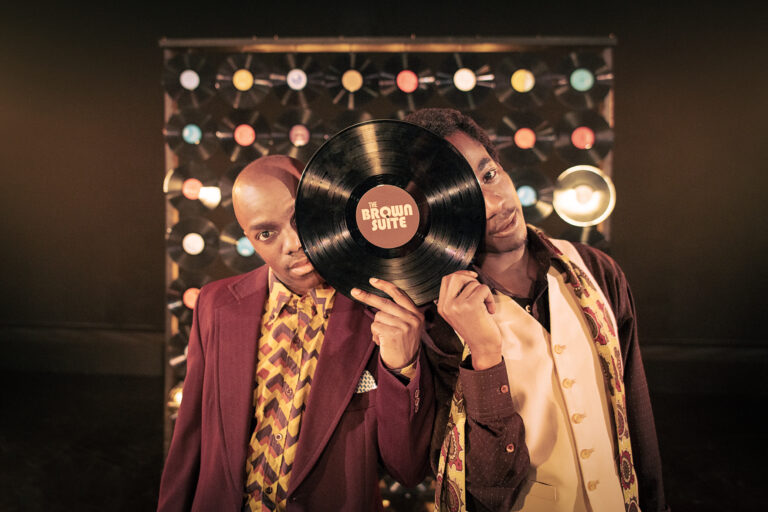
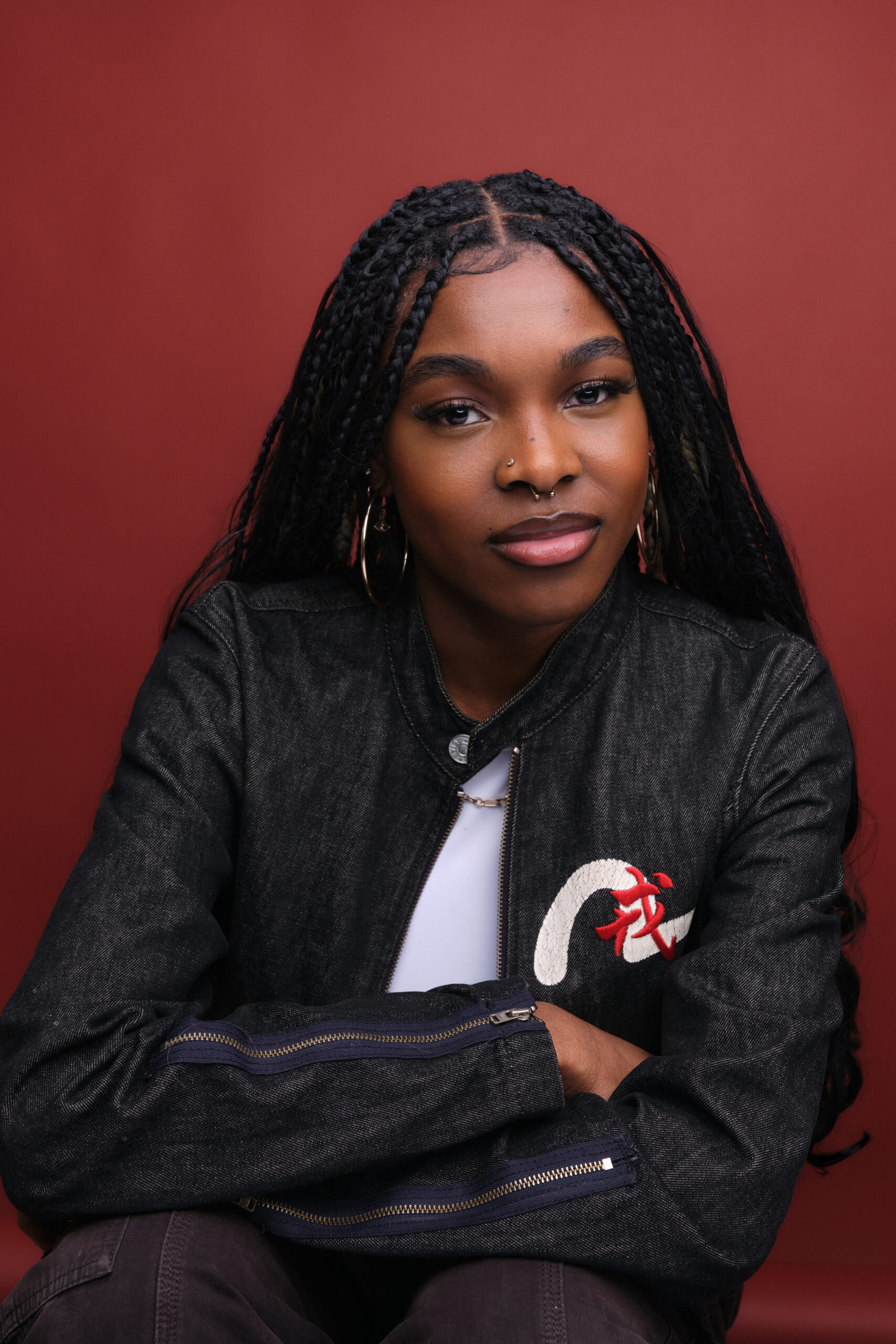
A to B is a new play written by award-winning playwright Tia-Renee Mullings. The author, who is from SE London, spoke to her favourite local newspaper to talk about the process and how she came to make her voice heard, writes Michael Holland.
Being from SE London is important to this young woman: ‘I’ve lived in New Cross, Hither Green, Catford, Blackheath, and Greenwich. I think New Cross shaped me the most, though!’
Tia-Renee grew up in a house where education was paramount: ‘I was taken to libraries, museums, and galleries from a young age,’ she recalls, ‘so learning was never just something that happened at school. It was part of everyday life; my family always encouraged my curiosity.’
That upbringing led to a History & Politics degree. I asked how. ‘I’ve always been a bit of a history nerd. My mum has collected historical objects for as long as I can remember, so I grew up around things that made history feel tangible and alive. Black history was also really emphasised at home, and I carried that interest with me all through school. Then I started doing youth advocacy work, which really informed my love for politics.’
As is often the case, there was ‘an amazing teacher – Shout out Mr Choudhury – who taught History and Politics and really encouraged me. Those ended up being my two best subjects, so studying them at university felt like a natural next step.’
But it was not an ordinary step because Tia-Renee went to Cambridge and came away with a First! ‘Cambridge was intense! It was a massive culture shock in a lot of ways, and there were definitely moments where I felt very far from home. At the same time, it was also one of the best and most formative times of my life. I met some of my best friends, learnt so much about myself and my subjects… Cambridge stretched me, challenged me, and sometimes overwhelmed me, but it also gave me so so much. I miss it, and I’m really grateful for it, but I’m also very happy to be back in my ends, with my peopledem.’
I wanted to know if she took the South London girl to Cambridge: ‘I definitely tried! I think wherever I go, South London comes with me in how I speak, how I see the world, what I find funny, and the communities I feel accountable to. Cambridge was such a different environment, culturally as well as geographically, so this was a way of staying grounded and reminding myself that I didn’t have to leave parts of myself behind in order to belong there.’
Being awarded a First is an achievement on many levels for anyone. For Ms Mullings it was not just the culmination of three years of really hard work: ‘There was something deeply satisfying about reaching that goal and knowing the work had paid off. It also meant a lot to my family. As a Black Caribbean person from a working-class background, even being in that space felt significant, so leaving with a First was hugely symbolic. It gave me a sense of, “I did it, and no one can take that away from me.”.’
So how did a First in History & Politics turn into writing plays?
‘I’ve always gravitated towards writing in some form, whether that was novels, short stories, poems, or scripts. As a child, I was always presenting a new play, TV show, or musical I’d made up to my parents. The problem then was that I never finished them, but the love was always there.
‘After my A Levels, I suddenly found it really difficult to digest thick novels, so I started reading plays instead. It was partly just to keep my brain engaged, but I ended up absolutely falling in love with them. I think this also coincided with me going to the theatre more on my own terms and discovering it beyond the West End. I also had a passion for spoken word, but I didn’t fully understand how closely poetry and theatre could speak to each other until then.
‘When I got to university, I decided to try writing my first full-length spoken word play – Little Angela Davis. More than anything, I challenged myself to actually finish something. That same year, I submitted it to the Alfred Fagon Award and the Mustapha Matura Award, not really expecting anything, but wanting to push myself. I was really surprised to win the latter, and I think that opened so many doors, but also my mind.’
Winning the award gave Tia-Renee a different feeling than the degree. She says, ‘It wasn’t so much the end of something as the beginning of something else. It was an open door, and a vote of confidence at a point when I was just starting out as a playwright. To have that kind of recognition so early really encouraged me, and still does… The First affirmed the work I had already put in, and the Mustapha Matura Award gave me confidence in the work I was yet to do.’
Cambridge also offered Tia-Renee the opportunity to make proper theatre: ‘Cambridge theatre is kind of its own entity, and being part of it gave me a real respect for the form. I got to experience what it meant to be on a production team, to collaborate seriously, and to make work that people actually paid to come and watch.’
Do the degree and the playwriting go hand-in-hand together? ‘I definitely believe so! History is, in so many ways, about storytelling: whose stories get told, whose are left out. Studying it made me think a lot about narrative, power, memory, and perspective, which are all things I’m drawn to as a writer. It also made me interested in the gaps: the people, communities, and experiences that don’t always make it into the official record.
‘Politics is just as central to my writing. I believe all art is political, even when it doesn’t announce itself as such, because every story makes choices about who matters, what is visible, and what kind of world we are being asked to imagine. My passion for politics underpins not only what I create, but why I create.
‘Both have also been avenues for exploring my love of Caribbean people, culture, and community, and for feeling more connected to that history and inheritance.’
What inspired A to B?
‘I knew I wanted to write a Black-British love story. Rye Lane had come out the year before, and as one of the many loves of my own life, South London naturally became the setting for my play.
‘At the same time, I was in the thick of my friends telling me endless stories about dates gone terribly wrong, so I was thinking a lot about modern dating, vulnerability, embarrassment, and the strange comedy of trying to connect with someone. I wanted to write something hopeful, rooted in young Black British lives, and unapologetically British-Jamaican.
‘Unapologetically, because I was (and still am) most inspired by the richness and vibrancy of the Caribbean community I grew up around.’
Any last words? ‘I’d just add that I feel really grateful to be telling a story like this right now. My hope is that it can offer a bit of hope in times that can sometimes feel a bit hopeless, romantically or otherwise. I hope audiences have as much fun watching it as I did writing it.’
A to B is on at Soho Theatre until July 3rd.
Booking and full details: https://sohotheatre.com/events/a-to-b/?