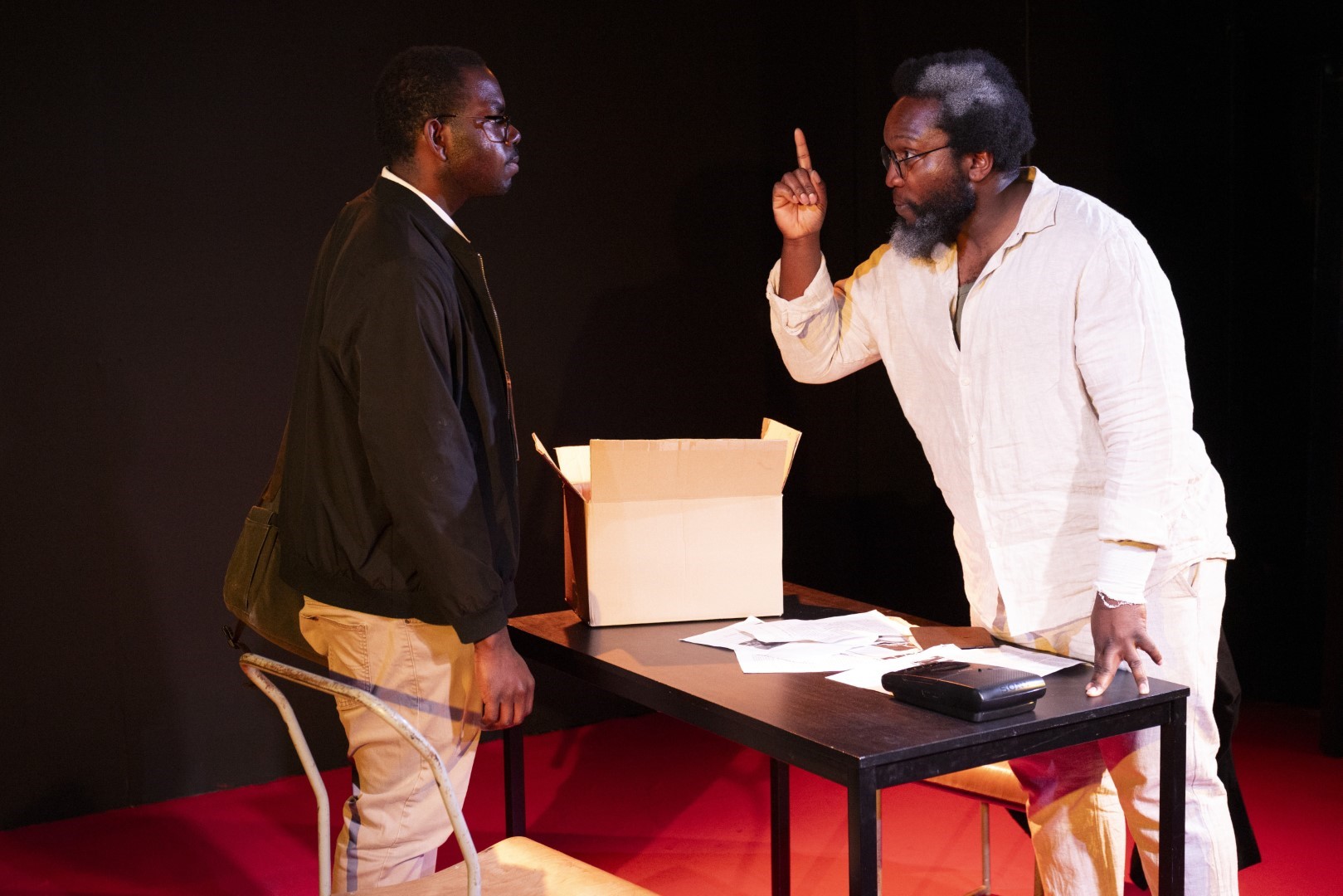
Both actors handle the intense exchanges adeptly
A uniquely American scenario and solidly American two-man cast under an American directorship (Nathaniel Brimmer-Beller) await the audience: a Black prisoner locked up on death row – a deadly punishment to be meted out for misdeeds – not a fate that anyone in the UK has had to face since the Sixties, writes Eleanor Thorn.
Set in the early 90s, The Last Black Messiah is post-Black Panther, pre-Obama, pre-George Floyd killing and its subsequent Black Lives Matter movement explosion. The rights of Black people in America have fluctuated. Issues remain as current as ever. In the eyes of visiting Howard University alumnus, Asante (Kenneth Butler), prisoner Dr Oko (Emeka Agada, actor and playwright) is the leader of a community – the Messiah of the title (I wonder why ‘The Last’?) – with a legacy, but we learn there is a more complex motive to Asante’s visit than first meets the eye. We learn too that this Messiah, for all his strengths and intellect, is a man given to weakness: drug use to which he again succumbs.
Several times, I see a similarity with legal wranglings going on now in London, one in which passionate peace campaigners having resorted to direct action are being tried in the highest courts, with the Government pressing hard for a guilty verdict. “How far will you go for what you believe?”, asks Asante. Dr Oko was ‘taking matters into his own hands’ and was caught: the play opens with sirens, helicopter overhead, a cinematic off-stage police raid. Execution is around the corner. Dr Oko’s off-white shirt and trews, to our eyes resembling a lightweight linen suit, are actually standard attire for death row prisoners.
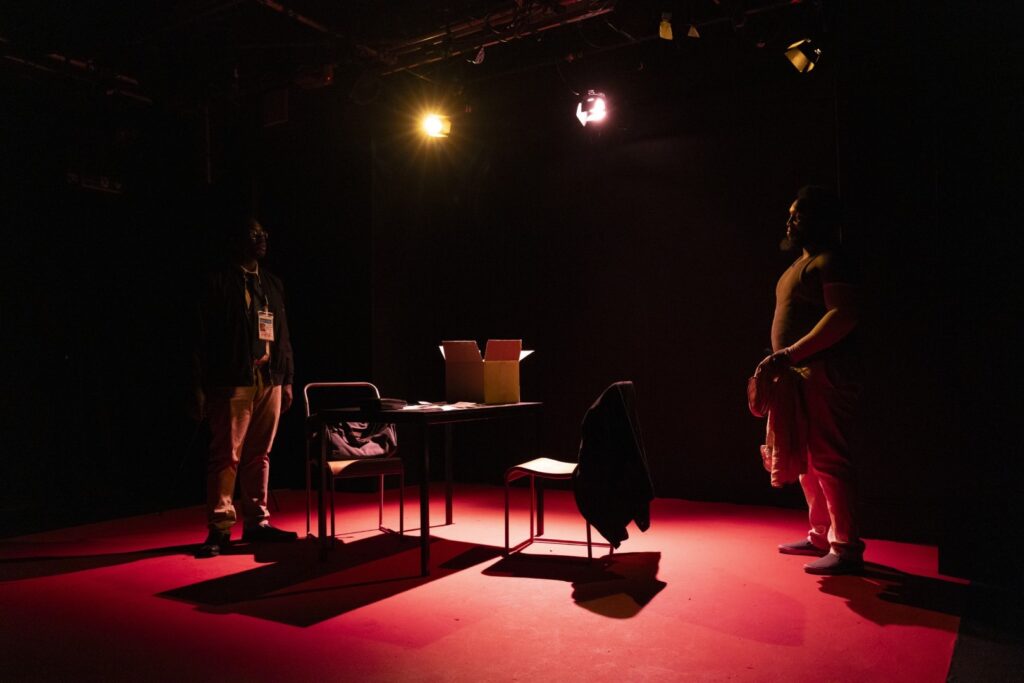
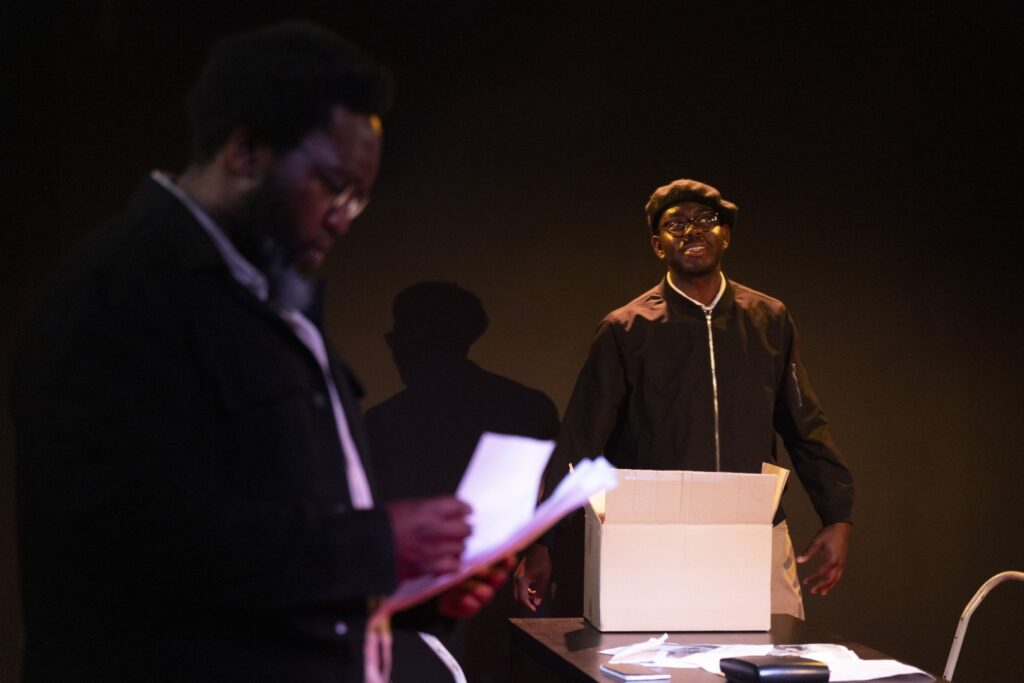
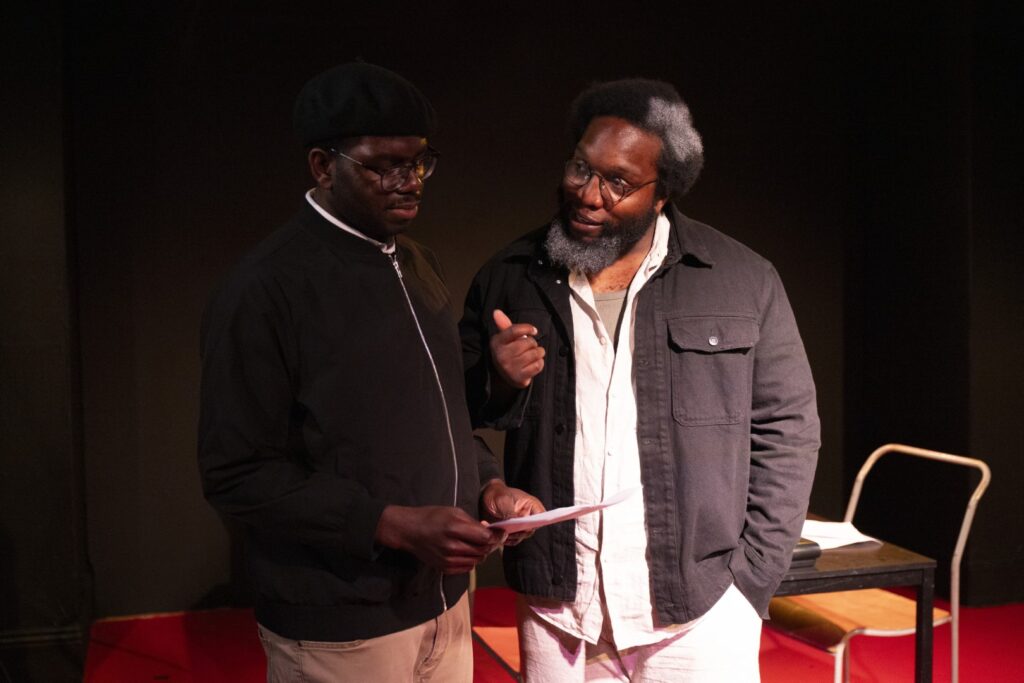
Asante is set on recording the professor’s last words. Once a “difficult” student, he comes bearing the accoutrements of achievement: a press pass and family photos. The professor’s teachings changed his life, instilling a sense of pride. Dr Oko, though initially joyful, is distrustful of Asante’s motives and his gifts, quick to get angry and doesn’t leap to cooperate. Their discussions are loaded with references to Black history – “How many people know about the Black genocide on US soil?” – and interjected with flashbacks to when Marxist-leaning Dr Oko was in full Pantheresque fist-raising inspirational revolutionary stride. His mission has been to dismantle the system, the system that colonised Africa and that today continues to foster discrimination and inequalities.
Asante’s questioning becomes more probing, but we have already understood, with the professor off-stage, that he has become a pawn in the system, ensnared by some manipulative power-that-be that calls in Hollywood-style, blackmailing him… By the time Asante reveals his hidden mic to the professor, it is too late: he has spilt beans that incriminate himself.
Coming from a world of academia, as the characters do, the conversation content is cerebral and demands full attention, interesting in its pertinence to global Black Lives Matter activism and wider Human Rights issues. Both actors handle the intense exchanges adeptly, and I say that with authority: my companion for the evening was an American actor, director, and acting coach, who remarked this would make a great play for radio.
Brockley Jack Studio Theatre, 410 Brockley Road, London, SE4 2DH until 16th May.
Box office: www.brockleyjack.co.uk or 0333 666 3366 (£1.80 fee for phone bookings)
Tickets: £17, £15 conc., 14+.
Running time: Seventy minutes with no interval