A portrait of one man’s creative crusade against tyranny
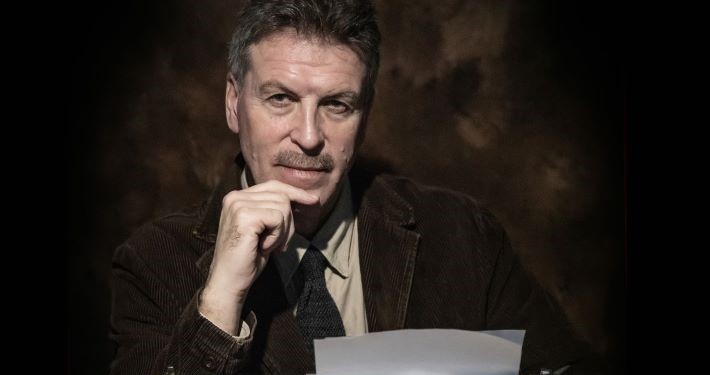
George Orwell, beloved by curators of English Literature curriculums worldwide, was seriously committed to his research process. ‘The Road to 1984’, a one-man show starring Mark Stratford and directed by Guy Smith, tracks the writer’s tumultuous life. From his days in the repressive enclave of British boarding school, his time as an officer in colonial Burma, his voluntary tenure among the downtrodden and homeless, and a near-death experience in the Spanish Civil War; this play covers it all, writes Melina Block.
‘The Road to 1984’ paints a portrait of a particular kind of Englishman. Eager to explore a world beyond his upper-middle-class upbringing, he purposely seeks out novel experiences in exotic lands (including acts of what we might now call poverty tourism). Rather than embedding in him a greater sense of superiority, however, these are clearly formative in shaping the themes of Animal Farm and 1984, his modern classics decrying the dangers of totalitarianism and fascism.
This is essentially an ode to one of the 20th century’s most important – and prescient – writers. As such, the less flattering details of Orwell’s life, namely his treatment of his wife, are quickly glossed over. Orwell’s fears around the rise of fascism and discontent at institutional manipulation and oppression of the populace are disturbingly relevant, though, something which Stratford makes wry reference to.
As a portrait of one man’s creative crusade against tyranny and the contexts which allow such tyrants to flourish, ‘The Road to 1984’ is perhaps more timely than ever.