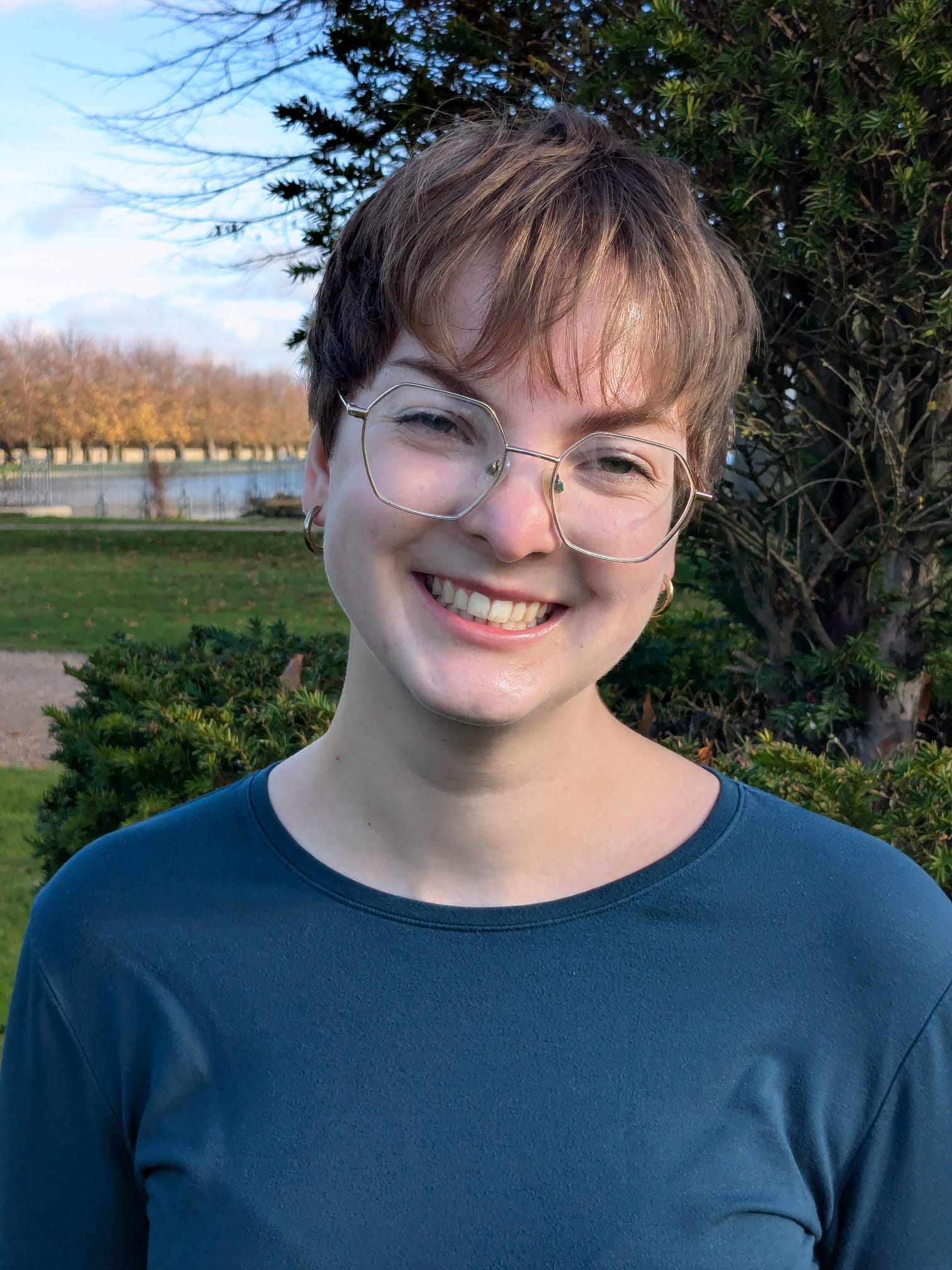
From searching for fairies to navigating funding applications, director Martha Baldwin discusses the journey behind new play Lulla, writes Melina Block.
A dream-play written by Ben SantaMaria and showing during the 30th anniversary of 96 Festival – an annual celebration of the first Pride Party on Clapham Common – Lulla delves into the mind of a queer teenager, with Baldwin taking the reins as director.
Twitter was the perhaps unlikely meeting ground for Baldwin and SantaMaria, who connected via the social media platform in a pre-Elon-Musk’s-X, pre-lockdown world. Freshly graduated, Baldwin responded to the playwright’s callout for directors to read the play.
“I had just left university and I read the play, loved it, and then thought – I don’t know if I’m quite ready yet,” she said, explaining that she decided to put it on hold until a couple years later when they did another callout for directors.
Having spent some time out in the world developing as a person, Baldwin felt she had grown enough in herself and her practice. After rereading the play and meeting with SantaMaria, she felt ready to take it on: “I think as a queer woman I wanted to get to a point where I felt, in myself, that I was comfortable enough in my own expression to then start exploring a character’s or someone else’s.”

In Lulla, the character’s expression in question is Marin, a 16-year-old queer teenager exploring her sense of self, desire and fear. Elements of folk and fantasy are laced throughout the show – familiar concepts for Baldwin, both personally and professionally: “This establishment of themes in the real world, and then this journey into something much more fantastical and strange and surprising and imaginative, I think that is a common thread throughout my work.”
The director explained how, growing up, she would frequently holiday in Wales at places which hold a deep folkloric history. Baldwin fondly recalls the Arthurian myths she heard as a child, as well as a special book which guides the reader on how to find fairies. “Especially in Wales, places and stories go hand in hand, and that’s something that me and my family always were very connected to.”
With fantasy and folklore often used to articulate more abstract ideas and elements of the human experience, Baldwin highlights how she brings this into her work on Lulla: “It’s an interesting thing to come back to, and to reflect on as a way to explore the experiences we have as people through these more fantastical surreal stories, because they just access something a little bit unspoken and take you out of normal life and into a place where you can explore all these feelings in an exciting and new way, and I think that’s really precious – and it’s fun!”
Creating an atmosphere in Lulla that feels like an exploration of the subconscious rather than a replica of a dream is key to Baldwin. “Obviously we’re working within the boundaries of physics, so that’s not always possible to take to the furthest point, but it involves total sensory experience and things shifting and changing and melting together, without too much explanation.”
She emphasises that she wants the audience to be immersed in Marin’s experience throughout the show, rather than filtering out any of the more surreal or extreme elements.“When it’s sexy, it’s really sexy; when it’s scary, it’s really scary.”
This refusal to soften the edges of the story has been central to Lulla – both creatively and practically. While discussing the funding of the show, it is clear that there was never any attempt at diluting the themes or ideas. “We presented the play very honestly and very truthfully, and I think it is really amazing to see that pot of funding go towards a show that is exploring these themes, and explores queerness and youth at a time when queerness and youth is in conversation in a way it hasn’t necessarily been for a little while.”
Although Baldwin is clearly grateful that they have been successful in receiving government arts council funding, she admits that the funding of Lulla was often the most challenging part of the project – a challenge which other artists may be unable to even embark on, let alone reap the rewards of.
“There are so many that I know would not be able to put that time into a funding application because they have other things going on in their life, they have kids, they have several jobs, they are making it work. I fitted it in around my various jobs that I have.”
With various creative workshops and Q&As with LGBTQ+ charities taking place during the show’s two week run, Baldwin states that the show will, ultimately, be used as a vehicle for connection and community engagement, as well as entertainment. “We are offering something really interesting to the community, at the Omnibus, during their festival celebrating 30 years since the first Pride on Clapham Common; it’s a momentous occasion and we feel like we’re slotting into that, and there’s a wider context we’re slotting into there.”
Omnibus Theatre, 1 Clapham Common Northside, London, SW4 0QW from 30 June – 10 July 2026.
For booking and full details: https://www.omnibus-clapham.org/whatson/lulla-show