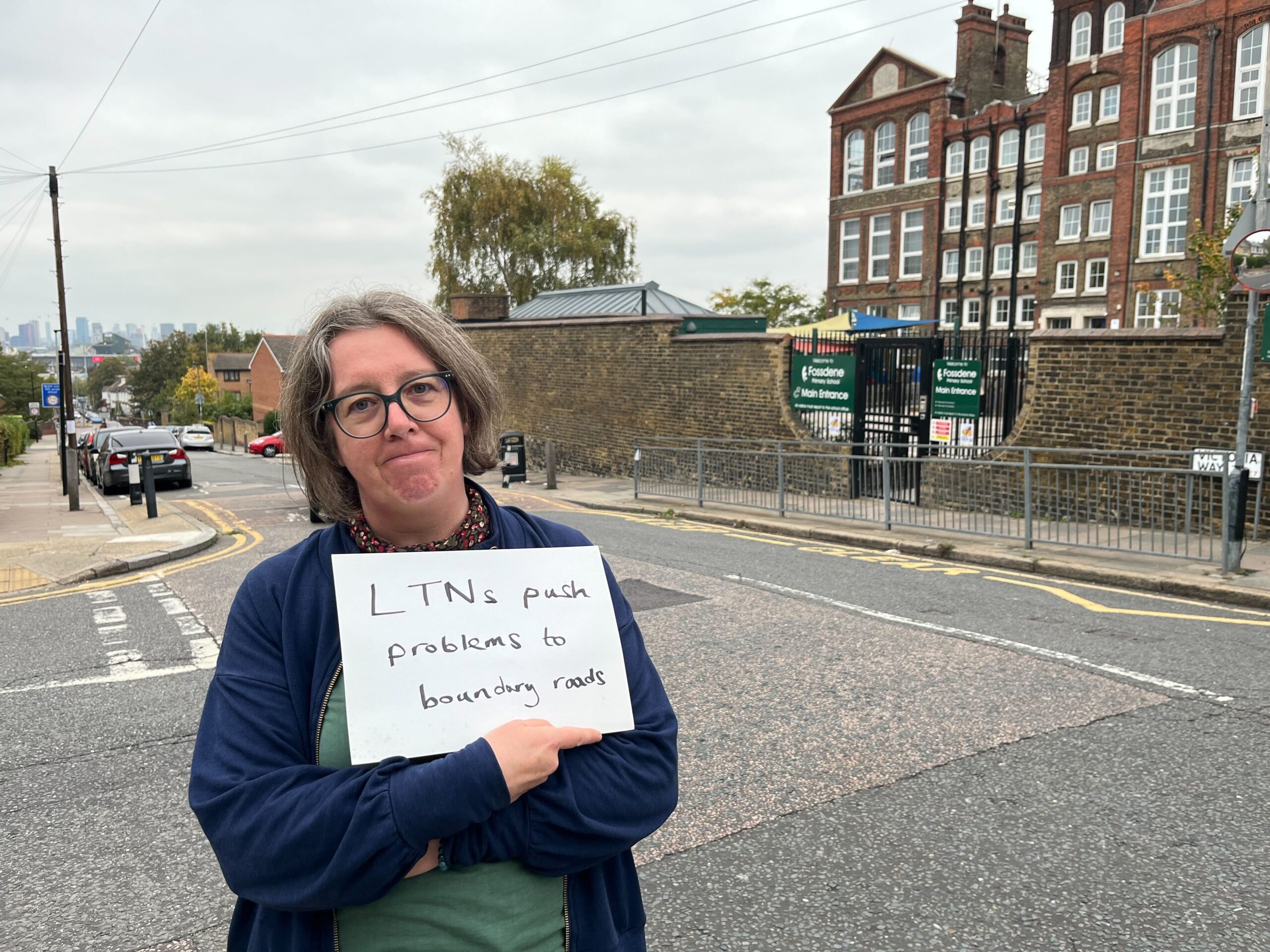
Greenwich Council has denied claims it “airbrushed” evidence of public opposition in reports concerning a contentious Low Traffic Neighbourhood (LTN) scheme.
The South London authority also firmly rejected the notion that the consultation for the West and East Greenwich Neighbourhood Management scheme was “biased, undemocratic or secretive.”
The council implemented the first stage of the LTN scheme in November 2024, trialling the project in an attempt to reduce traffic and improve air quality in two residential areas in Greenwich.
The scheme uses camera enforced filters to prevent cars from travelling within the two areas between 7am to 10am and from 3pm to 7pm on weekdays. Penalty Charge Notices (PCNs) are issued to drivers picked up by the filters.
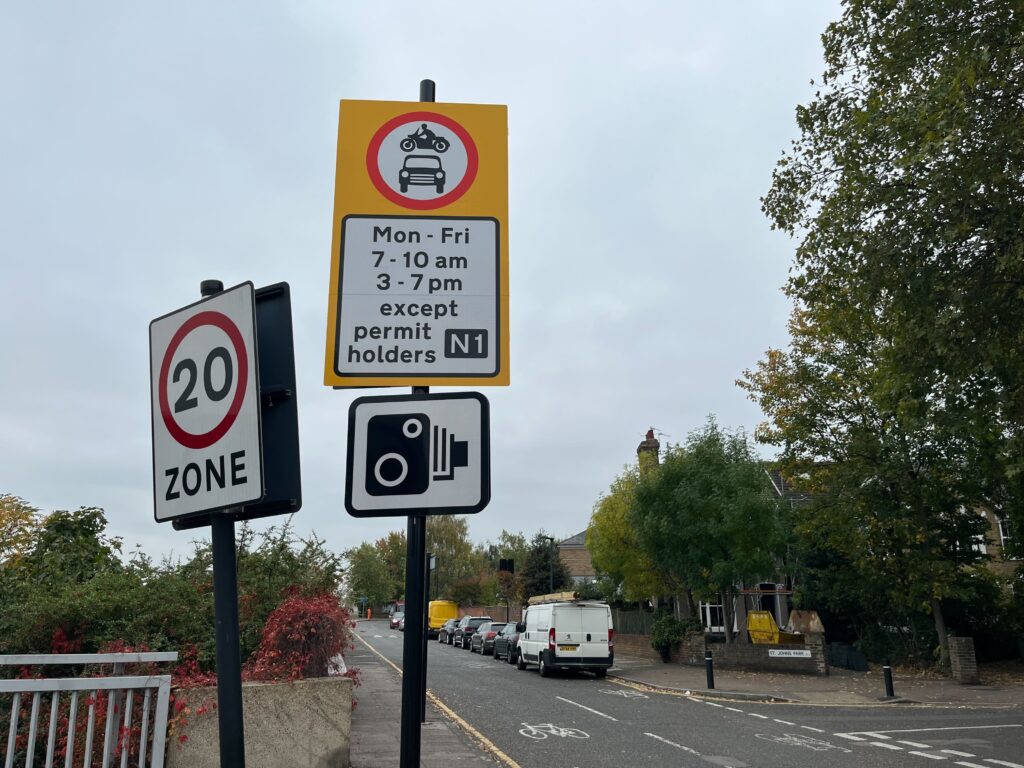
Greenwich Council moved to make the scheme permanent last October after it found the scheme decreased traffic throughout the entire area by 6 per cent and air quality in the LTN areas had slightly improved. The approval decision was called in by two councillors for further discussion at a scrutiny committee in November where several residents both for and against the scheme spoke.
Those in favour were generally residents living within the LTN areas who felt the scheme has made roads safer for pedestrians and cyclists. Those opposed tended to be residents who lived outside the scheme areas, particularly in Charlton, who believed the traffic restrictions had just pushed the traffic onto their roads instead.
Despite the call-in, the scheme approval decision was allowed and the West and East Greenwich Neighbourhood Management scheme progressed to the statutory consultation stage. The statutory consultation ran from December 3 to January 7.
Greenwich Council has now published the consultation results in a lengthy 66-page document with a view to make the Traffic Management Order (TMO), which is necessary to make the West and East Greenwich Neighbourhood Management Scheme permanent.
Council presented ‘comprehensive summary’ of consultation
Within the document, the council addresses concerns that it “selectively reported, omitted or airbrushed” key elements of public feedback, calling this inaccurate and stating that all reports “presented a comprehensive summary of all formal representations received, including petitions, open comments, and consultation data”.
Greenwich Council also denied that it did not provide “clear and cogent reasons” for why the LTN scheme was approved and that the scheme prioritised roads based on affluence, with it instead being aimed at “managing traffic and improving safety and air quality across the whole network”.
Another major concern raised in the consultation was that a petition that gained over 5,700 signatures opposing the scheme had been omitted from published materials and was therefore allegedly not given due consideration. Greenwich Council said the petition did not follow its established procedure for submission which is why it was not directly referenced in reports.
However, council officers felt the concerns listed in the petition—such as traffic displacement, air quality impacts, emergency service access, accessibility for Blue Badge holders, and the adequacy of consultation—had already been raised throughout earlier stages of the consultation process and had therefore been taken into consideration.
For example, the council increased Blue Badge exemptions to the LTN scheme to two vehicles per eligible person following initial rounds of public engagement.
The report also states that Greenwich Council firmly rejects any notion that the consultation’s analysis and reporting was ”biased, undemocratic or secretive” and that all findings and conclusions drawn were set out transparently.
The council said it presented a “comprehensive summary of all formal representations received, including petitions, open comments, and consultation data” within its reports, as well as setting out the rationale behind the decision to approve the scheme.
Targeted Charlton measures ‘will be subject to funding availability’
The concerns raised about traffic displacement on boundary roads were also addressed in the 66-page document. The council did acknowledge that certain roads in the Charlton area, specifically Victoria Way and Eastcombe Avenue, have experienced an increase in traffic.
A specific problem area that concerns residents is a narrow intersection between Victoria Way and Eastcombe Avenue outside Fossdene Primary School which they say has become a pinch point due to motorists avoiding the LTN areas.
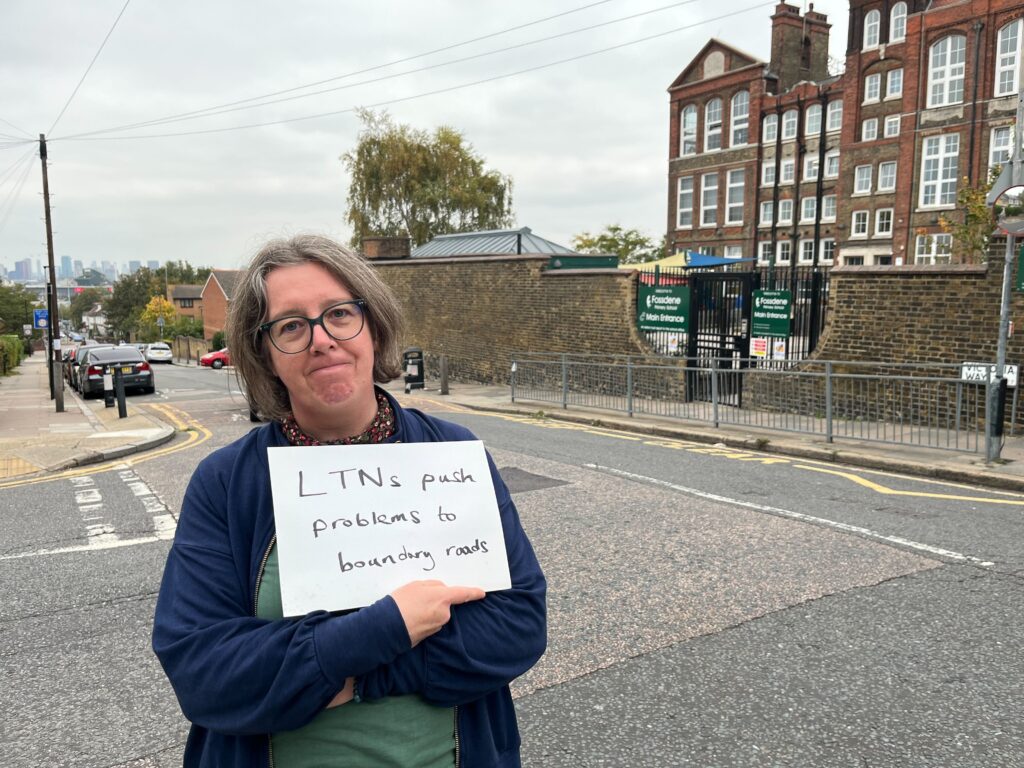
They fear this could endanger school children, but Greenwich Council said: “Collision data collected during the trial has not indicated any significant adverse safety impacts at or near Fossdene Primary School.”
As it has previously stated, the council has committed to exploring targeted mitigation measures—such as turning restrictions, junction improvements, traffic calming interventions—to alleviate localised problems such as the ones in Charlton. However, the report also said that these measures “will be subject to funding availability and statutory processes.”
The report also said that the council acknowledged concerns that traffic displacement could worsen air quality in boundary roads, its monitoring did not indicate a “widespread worsening of air quality.”
The TMO that will make the West and East Greenwich Neighbourhood Management Scheme permanent will come into place on February 17 if no councillors call in the decision. As of today (February 12), no councillor has done so.