An uplifting and riotous musical
“Haven’t you lot got enough problems of your own?” an onlooker shouts at Mark Ashton, a 24-year-old, tired of Thatcher’s government. The lot in question is a socialist group gathering at Gay’s the Word, an indie bookshop providing a safe space for the queer community. In an era of homophobia, unemployment, and paranoia, is it possible to look beyond our own struggles so that we may rise by lifting others, writes Eugenia Sestini.
An unlikely union is at the heart of Pride, a musical adaptation of the 2014 film that follows a group of queer activists who join forces with coal miners during the strikes of 1984 and 1985 – a true story about transformation and growth, about the power of human kindness and community. Stephen Beresford and Matthew Warchus, writer and director of the film, join forces with composers Christopher Nightingale, Josh Cohen, and DJ Walde to bring this moving piece of history to the stage.
Sick of the homophobic attacks on the gay community and on the bookshop, Mark Ashton (played by a magnetic Jhon Lumsden), the leader of the pack, is determined to make a difference. Hungry for respect and equality, he has a lightbulb moment after the 1984 Pride march: he’ll fundraise to support Welsh miners who are struggling financially, as they too are oppressed by the government. He enlists his friends: an equal-parts terrified and fearless Jonathan (Samuel Barnett), flamboyant Reggie (Jordan Shaw), underage and not-quite-out Bromley (Lewis Cornay), quiet Mike (Matthew Durkan), the reluctant Gethin (Chris Jenkins), and outspoken Steph (Courtney Stapleton), the only woman in the group. Together they become Lesbians and Gays Support the Miners (LGSM).
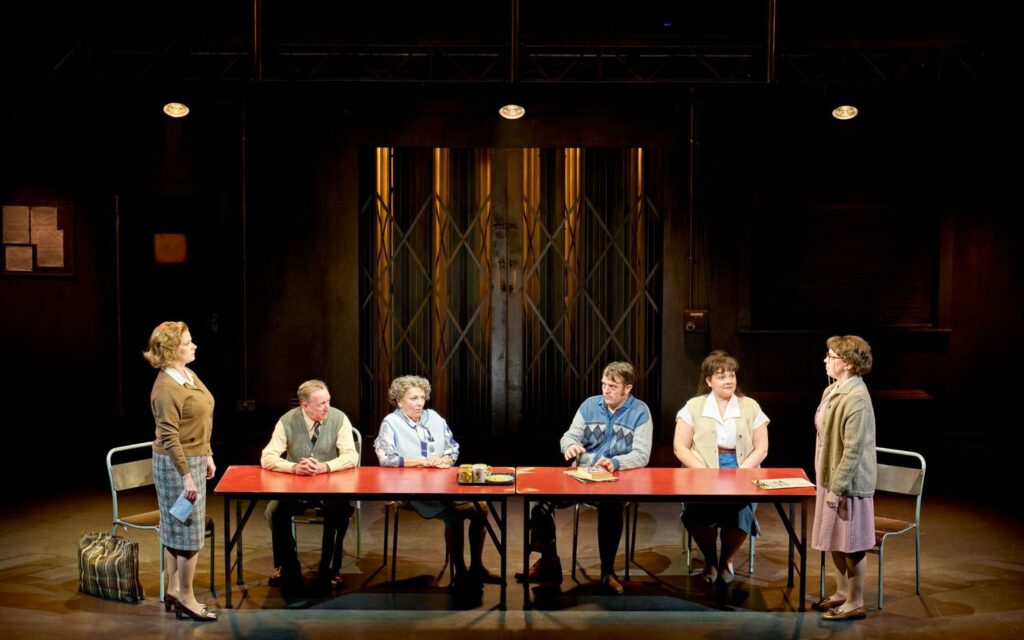
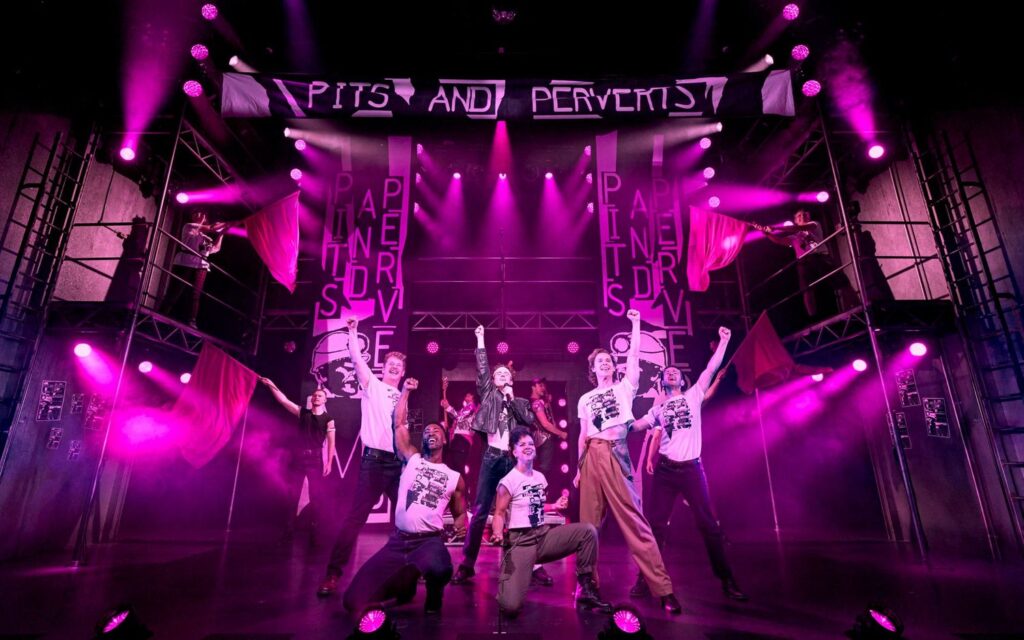
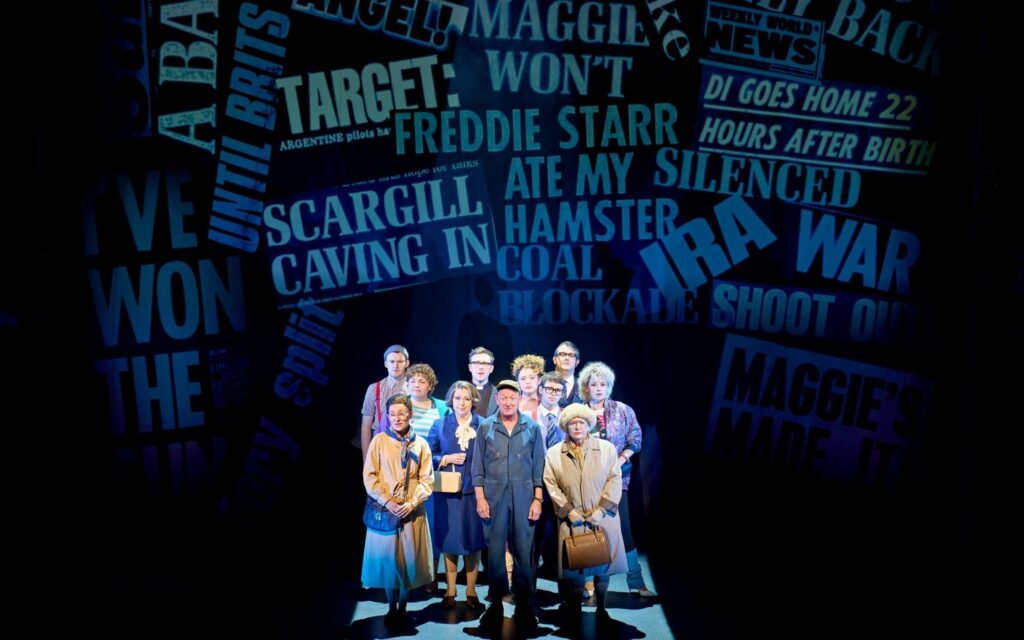
They have issues of their own: Jonathan is living with AIDS, Bromley won’t come out to his parents, Gethin hasn’t spoken to his family for over a decade, Gwen wants more representation for women. And Mark refuses to get tested for HIV. We are rooting for them as they start raising thousands of pounds.
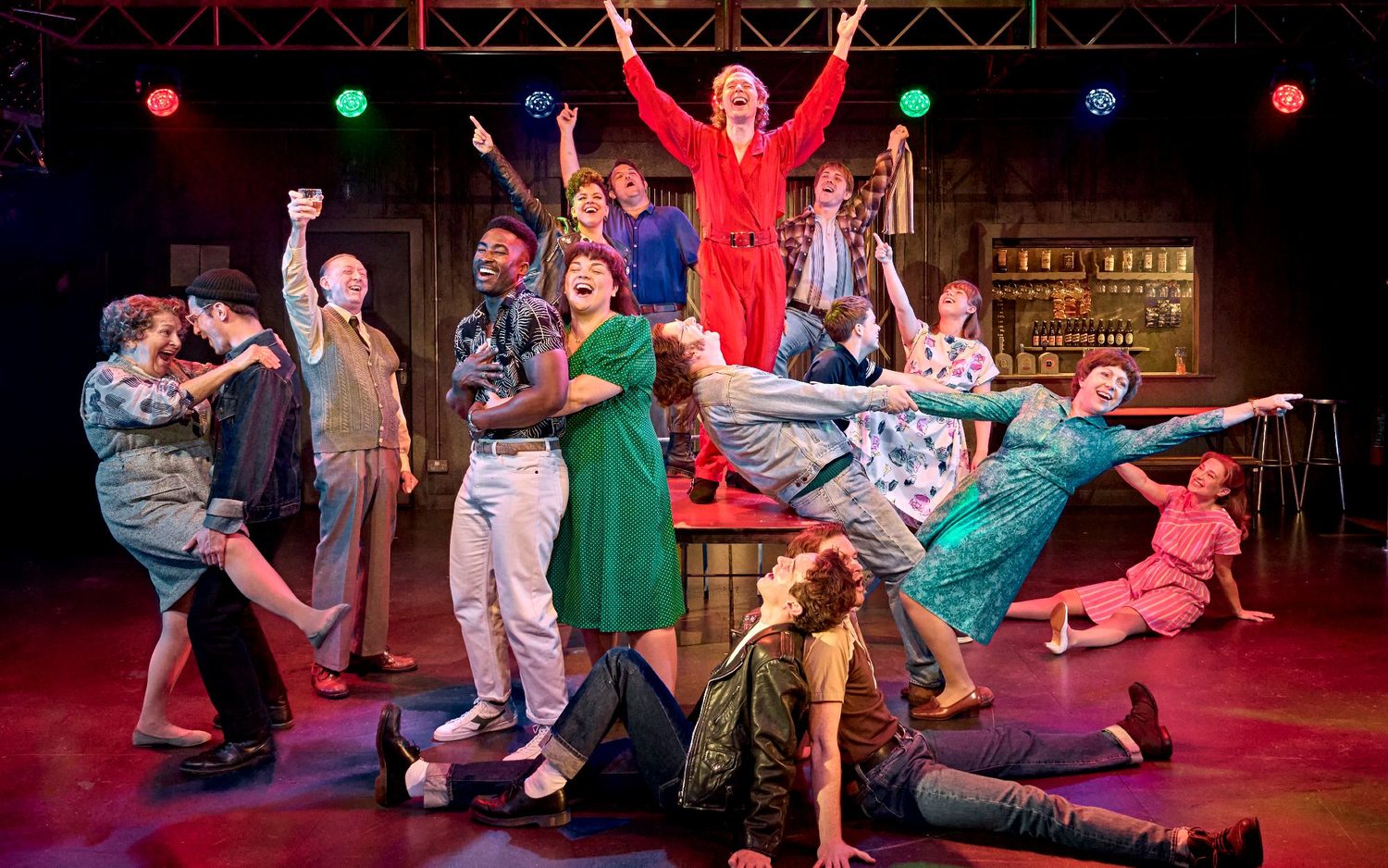
But the miners don’t want to hear from LGSM. Mark is determined to hand them the money, so they drive from London to Wales, where the story really comes to life. Dancing helps break the ice and the Welsh community slowly warms up to the young activists, disco balls above the audience light up the room and everyone starts wriggling in their seats, wishing they could get down and boogie.
In the interval, the woman next to me asks if I have tissues: she has heard it will get very emotional. And she is right: if feelings ran high before the interval, now they go up to eleven. The soundtrack’s eclectic combination of disco, rock, and Welsh choral music brings the audience through a rollercoaster of emotions. We see bolder and more intentional choreography, more feathers and glitter, more pink and more glamour, all against the backdrop of spending cuts and the AIDS epidemic. The virus looms throughout the last hour of the show as a dark, heavy cloud, but the pop and disco musical numbers bring joy to the characters and the audience.
The pared-down stage and scaffolding echo the austerity of the period and allow the actors to take up space with every song. Oscillating between hope and frustration, between solidarity and caution, the energy of the show grabs hold of us and we can’t let go. Siân James (Sarah Pugh) finds her voice as a young mother turned activist. “You Stood By Me”, sung by miners’ leader Dai (Matthew Woodyatt), leaves no heart unmoved. “You Might As Well Live”, sparks laughter and tears in equal amounts, and “Bloody Good Night Out” sets the auditorium on fire.
Ultimately, Pride is not a story about hardship; it’s a hymn to solidarity which proves that life can be meaningful not in spite of our struggles but because of them.
The show is almost entirely sold out, but it is not to be missed.
Dorfman Theatre until 12th September.
Booking and full details: https://www.nationaltheatre.org.uk/productions/pride/