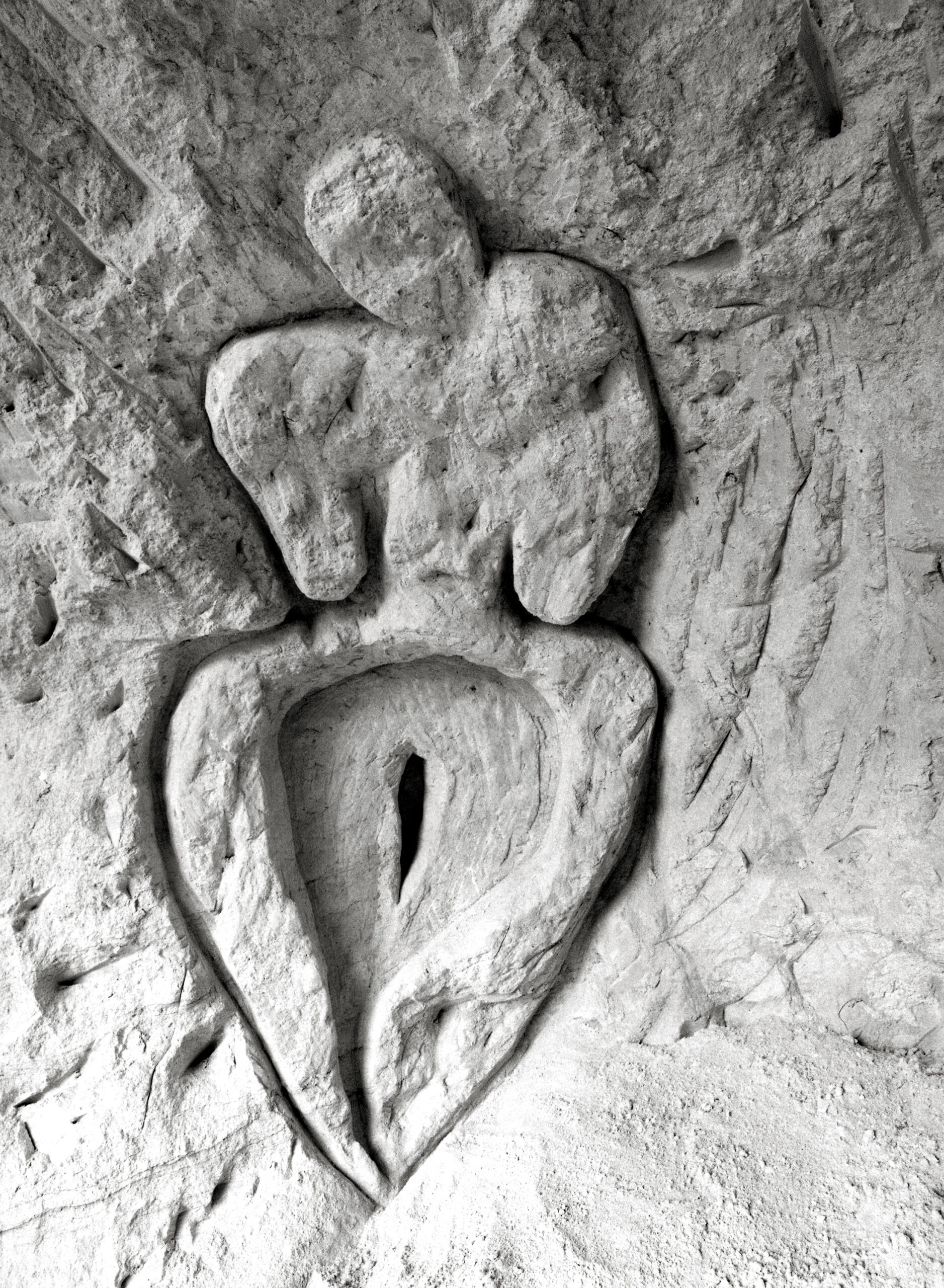
“I left the exhibition inspired by Mendieta’s vision”
The exhibition unfolds within the cavernous galleries of the Blavatnik Building, whose sharp concrete geometry proves an unexpectedly sympathetic setting for Mendieta’s work, writes Leo Dunlop.
Much of her practice was made outdoors, etched into earth, traced in sand or composed from leaves, fire and blood, so the exhibition must therefore confront a difficult question: how can works rooted in ephemerality be authentically translated into the fixed and permanent space of the gallery?
It is a curatorial puzzle that the exhibition embraces rather than trying to shy away from. Refusing a chronological journey through the exhibition, the works are instead arranged around recurring ideas, allowing motifs and materials to echo across decades and millennia.
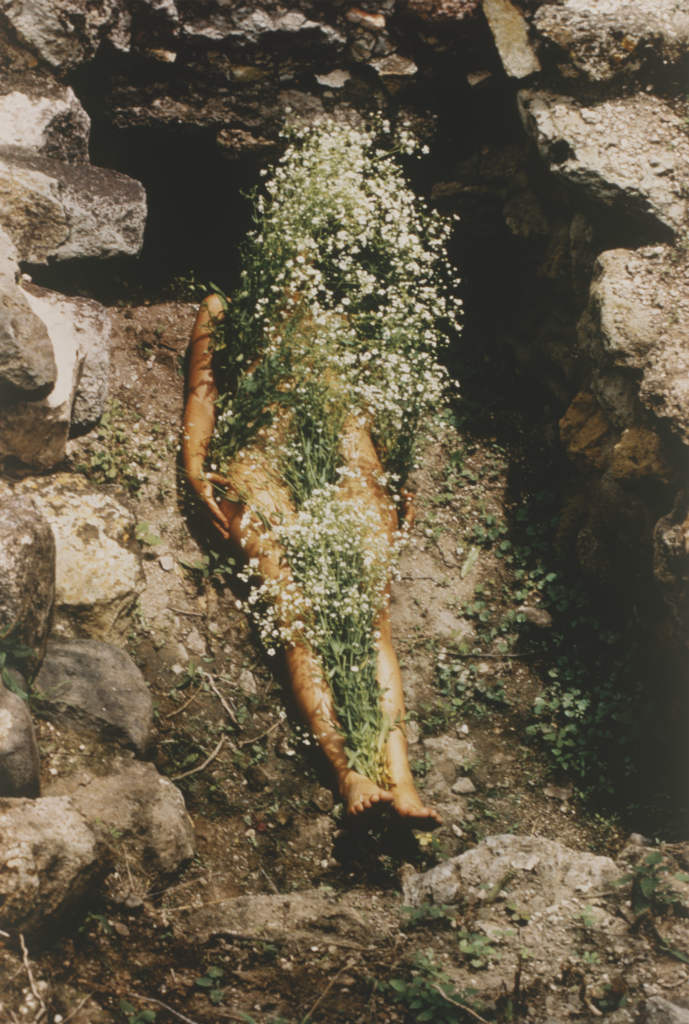
Much of Mendieta’s work no longer exists in its original form. Earth-works have eroded, leaves have withered and fires have long since burnt out. But what remains are photographs, films, and now in this new exhibition, carefully reconstructed installations. These records become works in their own right, preserving moments that were always intended to disappear. Throughout the exhibition there is a compelling tension between the permanence of the photographic image and the transient, elemental materials from which the works were first made. Rather than attempting to resolve that tension, the curators foreground it, inviting us to consider not only how these works should be displayed, but whether the museum can ever fully contain an art so dependent upon landscape and place.
Seen together, the breadth of Mendieta’s practice is remarkable. She scratches delicate lines into leaves, redraws the contours carved by geological time, moulds silhouettes from mud and fire, and returns repeatedly to the simple outline of the human body. The Silueta works are striking precisely because of their simplicity and economy. Their anonymous forms resist becoming portraits of a particular person and instead become something more universal: the trace of humanity itself, stretched across time. These forms become their own language with Mendieta translating them into different materials and contexts. Art at the very core of human-ness.
The exhibition also explores Mendieta’s profound spiritual sensibility. Her Catholic upbringing, intertwined with Afro-Cuban beliefs and an enduring attachment to the natural world, transforms earth, water, trees and fire into sites of ritual. Nature is not simply represented but consecrated; a communion with the environment around her.
The Blavatnik exhibitions, I think, can so often be overlooked in favour of Tate Modern’s blockbuster displays, but this exhibition deserves to draw visitors across the Turbine Hall. It is not just a survey of Ana Mendieta’s art, but a thoughtful meditation on how we bring this artist’s works into the present space and time. I left the exhibition inspired by Mendieta’s vision, and saddened that her life was cut so short. Yet what remains is a body of work that has been presented here with great care and tenderness by Tate Modern’s curatorial team.
The exhibition will run from 15 July 2026 – 17 Jan 2027.
Tickets available at tate.org.uk