‘I was concussed three times playing hockey in Holland – twice as a spectator!’
Frank Clough-Turner was born at 3, Balaclava Road in May 1939. Not the Balaclava Road down The Blue but the one in Glais, a small village that straddled the borders of Swansea and Glamorgan. It would be later that Frank became a Bermondsey Boy, writes Michael Holland.
His arrival rounded off the family of Hannah, his mum, Ann, his 10-year-old sister, and a father employed by London, Midland & Scottish Railway as a Ganger Platelayer responsible for the track in the Ystradgynlais area. He sadly died in 1953.
Frank attended the local youth club, the local chapel, and, of course, the local school where he obtained a scholarship to Dynevor Secondary Grammar School in Swansea. From that establishment, he achieved GCEs in Welsh and Geography.
Like most villages in Wales, there was a rugby team: ‘The primary school had a good team,’ Frank remembers, ‘I never played but I do follow rugby as a sport.’
Welsh chapels once had a strong influence in the Valleys, and Glais had a Church and a Welsh Methodist Chapel, but Frank was baptised into the Peniel Welsh Baptist Chapel at the age of 15. ‘There would be Whitsun parades in Glais, followed by a service,’ he says. ‘They provided days out for the congregation.’ Frank recalls annual visits to Mumbles, by a double-decker tram ‘running on the oldest passenger rail system in the UK – in its earlier form, it was drawn by horse,’ he adds. There would also be trips to either Barry Island, Porthcawl, or Tenby, but those would be by coach.
Living in a small village meant going to the theatre was a treat: ‘Each Christmas we would visit Swansea to see the pantomime at the Grand Theatre, or variety shows at the Empire Theatre.’
Summers were spent helping out on the local farms: ‘One of the jobs was to ensure that bottles of cider were placed in the hedgerows for the farm workers to drink whilst gathering the harvest. I also helped the local farmer on the Saturday milk round.’
On leaving school, Frank began as an office boy at Burgess & Co Ltd, a shipping agency whose main trade was with oil tankers – ‘with a wonderful reputation’. Within six weeks, this enterprising young man had been promoted to the Marine & Customs Department. Frank remembers, ‘Here I dealt directly with the ships’ captains and officers.’
During the Suez Crisis of 1956, ‘we were looking after the needs of fifteen vessels that were ready to sail to war if needed; these ships were loaded with every kind of war supply.’ In quieter times, the teenage Frank would be dealing with the Blue Funnel Line and the Ellerman Group of Shipping Companies.
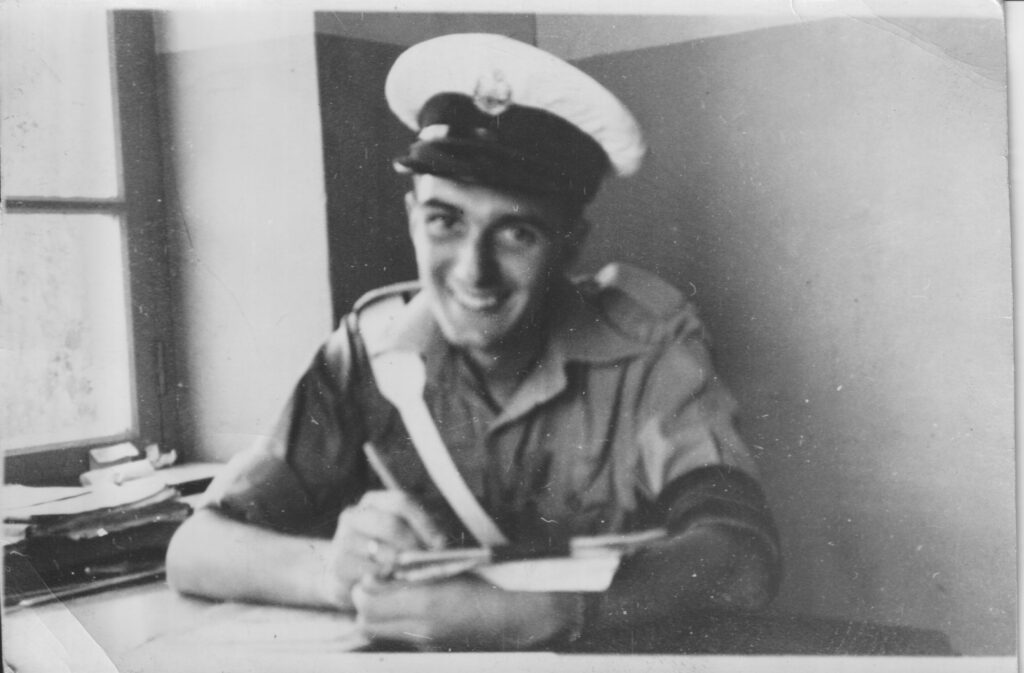
But this seventeen-year-old saw National Service on the horizon, and having his fill of boats, he volunteered for three years instead of the obligatory two, in order to get into the RAF. ‘After initial ‘square-bashing’, I trained as an RAF Policeman.’
What followed was a posting to RAF Wilmslow, a Basic Training Camp, then to RAF El Adem in Libya, and then to Royal Army Service Corps HQ in Tobruk. ‘I was there until April 1960.’ Looking back, Frank says that if he had been posted elsewhere, and not as ‘security for “The Tank Farm” where aviation fuel, petrol, and diesel was stored, I may have stayed in the RAF.’
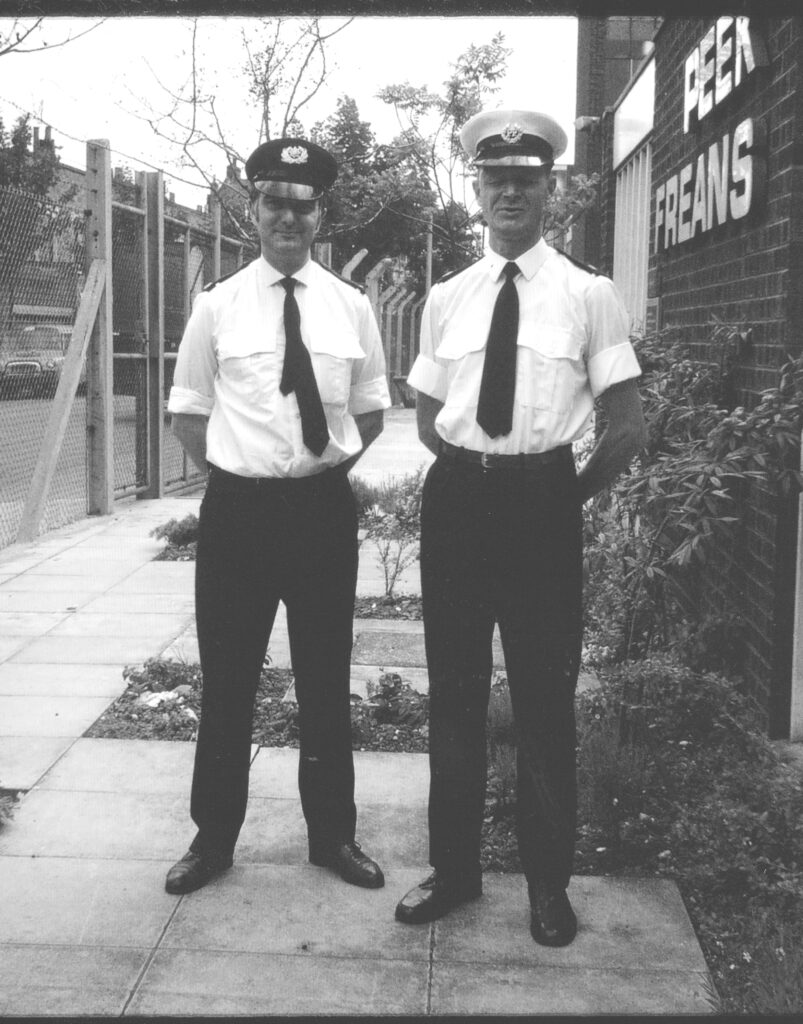
Soon after leaving the armed services, Frank joined the staff of Peek Frean’s as one of the 22 Works Policemen on the biscuit maker’s Bermondsey site. His first home was in Fort Road, then Cadbury Way.
During the firm’s reorganisation in 1965, when the security detail was reduced to just nine gatekeepers, Frank transferred to the company’s Fire Brigade. He remembers that ‘it was a little difficult because of having to learn the complicated water supplies systems.’ But learn them he did and Frank eventually became Chief Officer.
In his years at the iconic Bermondsey firm, Frank took advantage of the many sports and social activities the company was famous for providing for its staff. ‘This included playing badminton, hockey, running marathons (Frank ran in the very first London marathon),… I was concussed three times playing hockey in Holland – twice as a spectator! On the other occasion, because I was wearing a face mask, my life was saved but I still suffered a broken nose and a fracture of the cheekbone.’
Such was the camaraderie and friendship with the Dutch hockey team, Frank had his retirement and 80th birthday parties in Holland. (Southwark was twinned with Deventer, in the Netherlands)
Plus, there was socialising closer to home: ‘When possible, I would join some of the evening shift workers in a Friday visit to some of the local pubs, including the Blue Anchor, Foresters, The Concord, The George, The Fort, and The Samson, amongst others.
But all good things must come to an end, and Peek Frean’s closed in 1989. ‘On leaving,’ he begins, ‘I was recruited to serve in the newly formed Fire Protection Engineering Department of London Underground – created after the devastating Kings Cross Underground fire of 1987.’ And this is where Frank stayed until his retirement in 2004.
But life stayed just as busy for the man who had been working since he was a boy. ‘I’ve always enjoyed travelling overseas. I’ve been to China three times; America nineteen times, New Zealand, Hong Kong, Singapore, Norway, and the Netherlands (initially to play hockey but now to visit friends), and I have been a member of the RAF Police Association since 1984.’
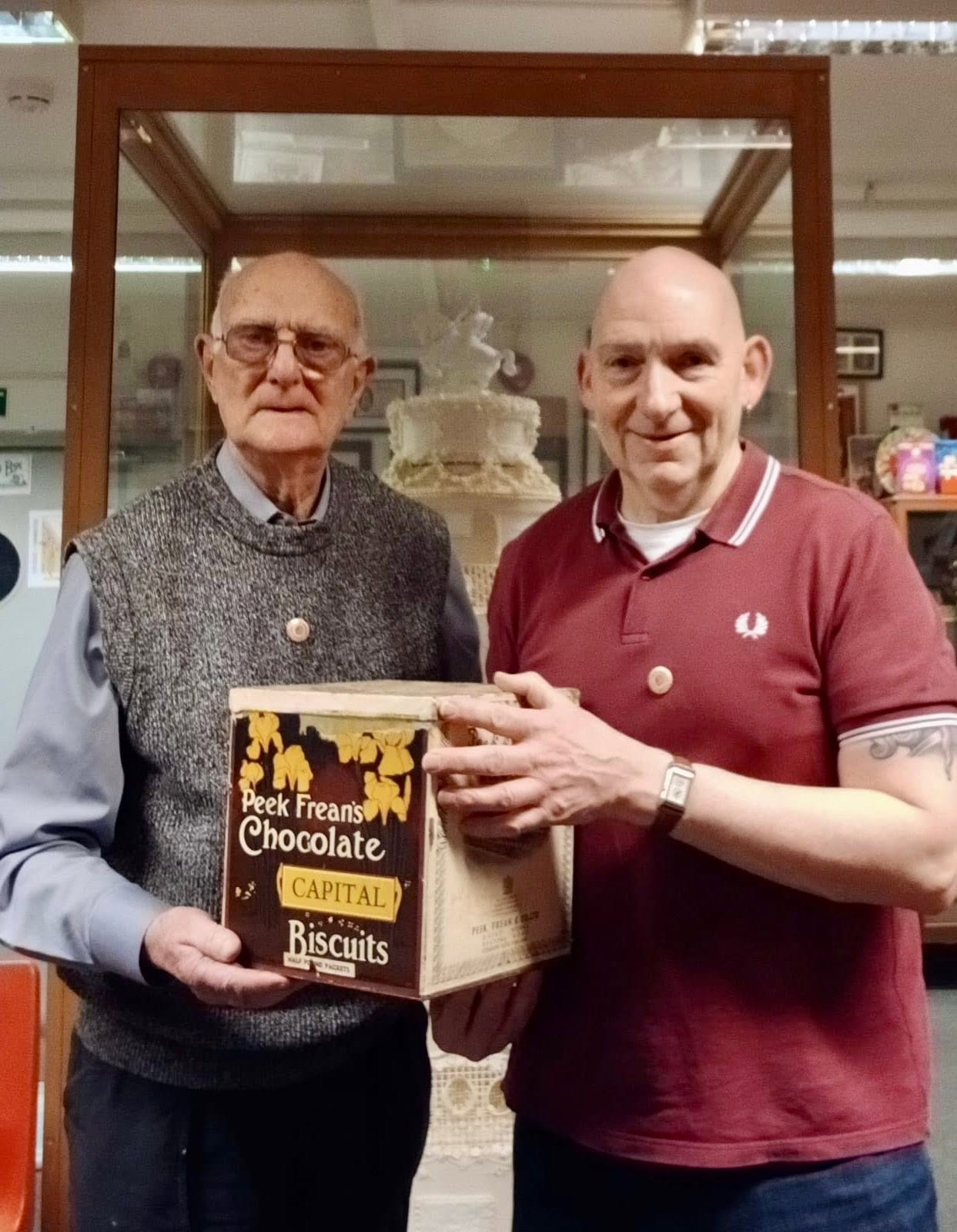
But Frank will now be known to all those who have visited the Peek Frean Museum, in the old biscuit factory, where he and local man, Gary Magold, welcome groups and solo visitors and give talks about the collection of Peek Frean memorabilia. ‘We have had over 2,000 visitors,’ says Frank proudly, ‘despite the fact that we do not advertise and we open by appointment only.’
His double-barrelled name came about when his pay packet was mixed up with another F. Turner at the biscuit firm. ‘As I was the junior employee, it was agreed that I should have to alter my name, so I became Clough-Turner. No paperwork was signed, but my passport still states Frank Turner.’
These days, Frank occupies his time with the museum, plus he is a member of several associations connected to the RAF and the Fire Service, who have dinners and galas that he attends in full regalia.
He now lives in the RIBA Award-winning Appleby Blue Almshouse, where he is very happy: ‘Compared to my former apartment, the Almshouse is a totally different world,’ he declares. ‘I do not have a regimented life but do things that I want to do.’
Frank ended with praise for the people that made him welcome 66 years ago: ‘The friends I have made over the years, in Bermondsey, have been true friends.’