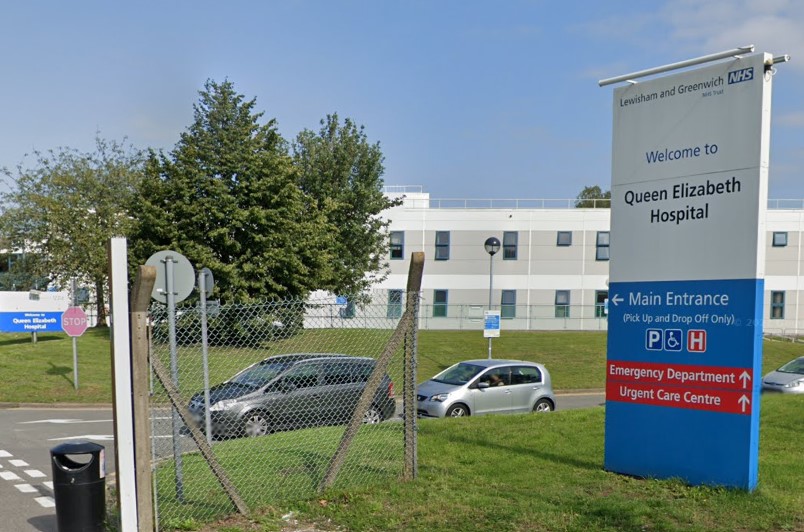
Combustible materials found in external walls and cladding at Woolwich’s Queen Elizabeth Hospital have the potential for “rapid fire spread” according to surveys – but the NHS trust says it is ‘confident’ it has sufficient measures to keep patients and staff safe.
Lewisham and Greenwich NHS Trust has identified fire safety risks at the Queen Elizabeth Hospital (QEH) in Woolwich because of “deficiencies” in its external walls and cladding.
The trust also identified failures by staff to maintain effective fire evacuation procedures throughout its premises but it has assured patients it has “robust fire safety arrangements in place” across all of its sites.
Papers from the NHS trust’s last board meeting in July revealed that fire safety risks had recently been discovered throughout the QEH.
Surveys of external walls and cladding at the Woolwich hospital identified the presence of combustible materials, missing or incorrectly installed cavity barriers as well as building design features (such as parallel hospital wings) which could facilitate fire spread between structures.
All of these deficiencies could increase the likelihood and speed of fire spread, according to the NHS trust, which it says raises the potential for “serious injury or loss of life” as well as “major disruption to clinical services”.
More specific fire safety risks were identified within St Nicholas House, a block of flats on the QEH campus. These risks included “means of escape, fire doors and behavioural factors”. As a result, all but one of the 67 tenants in St Nicholas House were decanted at the time of the July board meeting.
As well as the QEH’s building problems, the trust identified failures within its own fire safety management processes across all of its premises.
This included “inconsistent” compliance with corporate fire safety standards, concerns regarding the quality and completion of fire risk assessments and evacuation planning arrangements, and the implementation of actions arising from such assessments.
Fire safety infrastructure, such as fire doors and fire alarms at University Hospital Lewisham, were also discovered to be in need of investment and backlog maintenance.
The trust said the failure of its fire safety management arrangements could result in “delayed evacuation, ineffective containment of fire incidents, disruption to clinical services, and non-compliance with statutory fire safety requirements”, the impact of which would be “potential for serious harm to patients, staff and visitors”.
In response to the findings, the trust commissioned a more comprehensive study of the QEH to fully discover the extent of what remediation is required. The aim is for this to be completed by March 2027.
The NHS trust has submitted an indicative remediation plan for the hospital which stretches to 2029. The London Fire Brigade has raised concerns regarding the pace of this plan and has said it would consider enforcement action if it deems that progress is insufficient.
In regards to the rest of the trust, fire door surveys are being undertaken at University Hospital Lewisham which are set to conclude next month. There are plans to complete fire evacuation plans for the entire trust by March next year as well.
A Lewisham and Greenwich NHS Trust spokesperson said: “We have robust fire safety arrangements in place across our sites and are committed to ensuring that our buildings are safe for all who use them.
“These arrangements are regularly reviewed as part of our assurance and risk management processes, and we are transparent about any resulting concerns and mitigations, working closely with the London Fire Brigade as needed.
“As disclosed, there are concerns about elements of the external wall and cladding system at Queen Elizabeth Hospital. These concerns are being actively and safely managed through a range of regularly reviewed, enhanced fire safety measures and controls, while we work with the building owner to develop and implement a long-term programme of remediation.
“We are confident that we have the right measures in place to effectively reduce and manage the concerns and keep Queen Elizabeth Hospital safe for those who use it.”