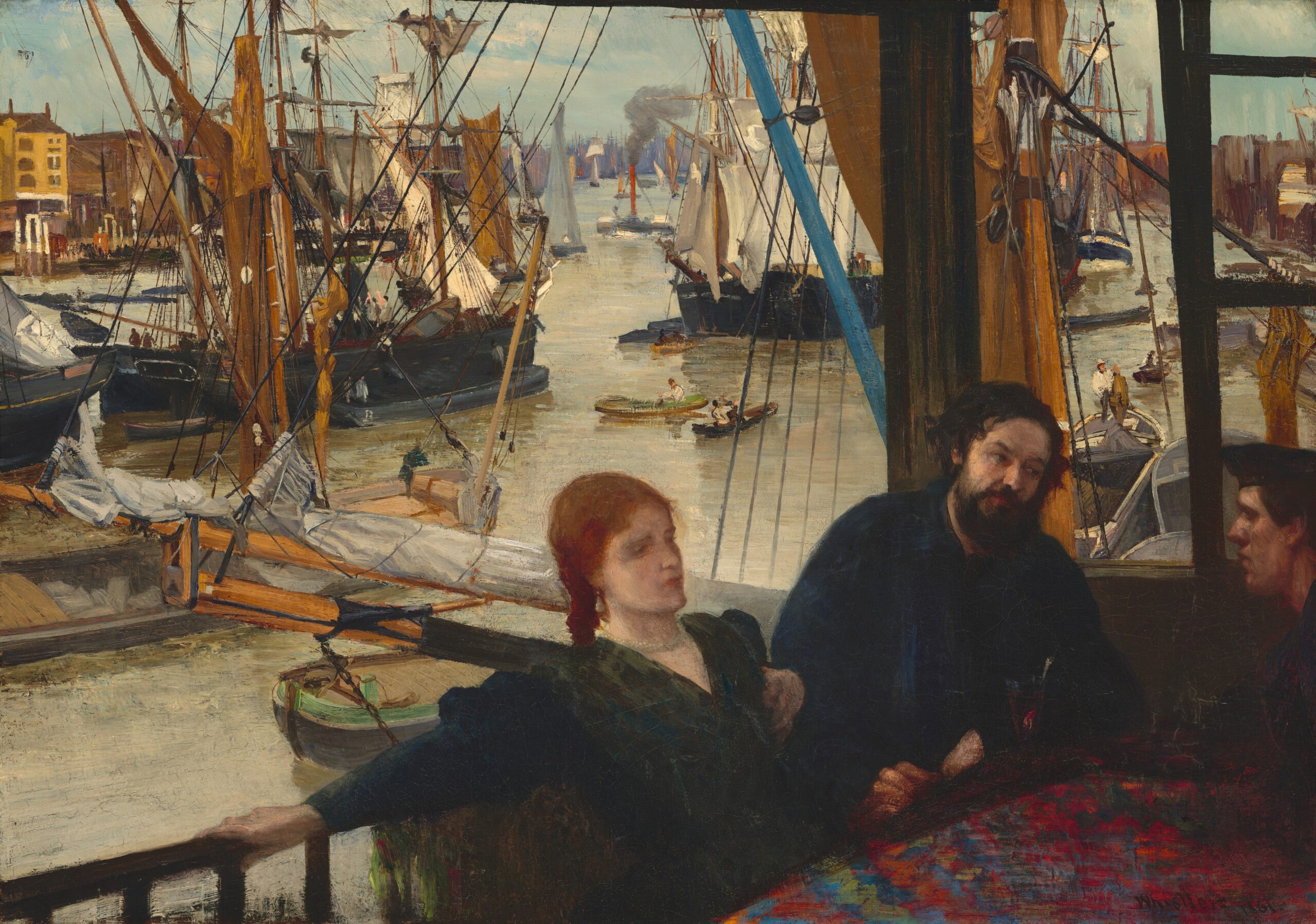
Poetry In Motion
‘Working people relax on the balcony of a disreputable pub near the docks of Rotherhithe’ reads the caption next to James McNeill Whistler’s 1864 painting ‘Wapping’, from a series of Thames scenes on display in Tate Britain’s ambitious and comprehensive new Whistler exhibition. A painter and his beautiful model are shown in conversation with a sailor at The Angel pub in Rotherhithe. Worlds collide in this depiction of modern city life – its painted surface simultaneously cut into with a palette knife and smoothed over with softer brushwork. Bohemian, muse, and seadog, outcasts on the margins, anchored in a riverside pub, with no moral compass offering safe passage for the painting’s bourgeoisie audience. No wonder then, that Victorian art critic John Ruskin accused Whistler of ‘flinging a pot of paint in the public’s face’, writes Ed Gray.
According to poet and friend of Whistler, Charles Baudelaire, ‘modern art should capture the thousands of floating existences that drift through the underworld of a great city.’ You can still find a disreputable pub or two in Rotherhithe, but the adage rings true – once the artists move in, change is afoot. Whistler’s riverside haunts have largely been erased since he painted them, but traces remain. I’ve whiled away peaceful afternoons on Whistler’s balcony at The Angel – gazing at the river, trying to imagine it rammed with boats drifting amidst the filth and stink of an industrial working city.
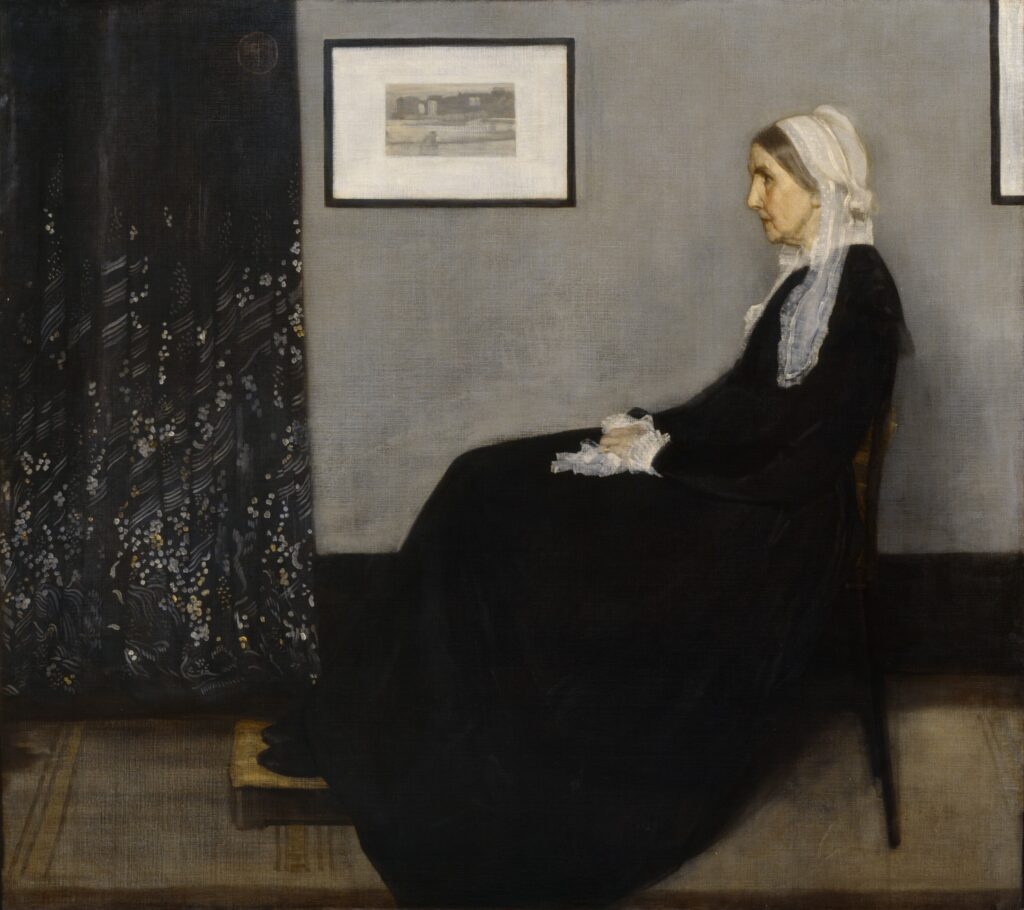
Whistler is so much more than the painter who famously arranged his mourning mother on canvas in sparsely muted tones – Arrangement in Grey and Black No. 1 is on loan here from Musée d’Orsay – and then fought a lawsuit against Ruskin to save his reputation. He was quintessentially an international painter – born in Massachusetts, raised in Russia, painting throughout Europe – consistently outward looking to the art and culture of Europe and Japan, often working alongside fellow female artists. Moreover, he was a man obsessed with what paint can do, its musicality, and the poetry of sight. It eventually drove him to bankruptcy, but he always kept the paint flowing – his mantra was ‘no day without a line’.
This is the first Whistler show for 30 years and Tate Britain and lead curator Dr Carol Jacobi have scoured far and wide to bring together an all-encompassing, vivid presentation of the artist and the man. Working across a broad range of media, whether painting, pastel, dry point etching, painted furniture, and sketchbooks – cleverly digitised so that visitors can flick through – in a variety of scales from large portraiture where paint drips, blurs, and dissolves into incompleteness, to exquisite tiny landscapes. The curators have even decorated the walls with his butterfly logo, adjusted by Whistler after his lawsuit to incorporate a sting in its tail.
There is much beauty here, but it is the riverside scenes of Southwark that I return to. Blurred misty light falling over a turpentine-soaked river, warehouses transformed into cathedrals, lone silhouetted river dwellers absorbed in their lot. Nocturnes, in Whistler’s own words, ‘when the evening mist clothes the river in poetry.’
Tate Britain until September 27th.
Booking and full details: https://www.tate.org.uk/whats-on/tate-britain/whistler