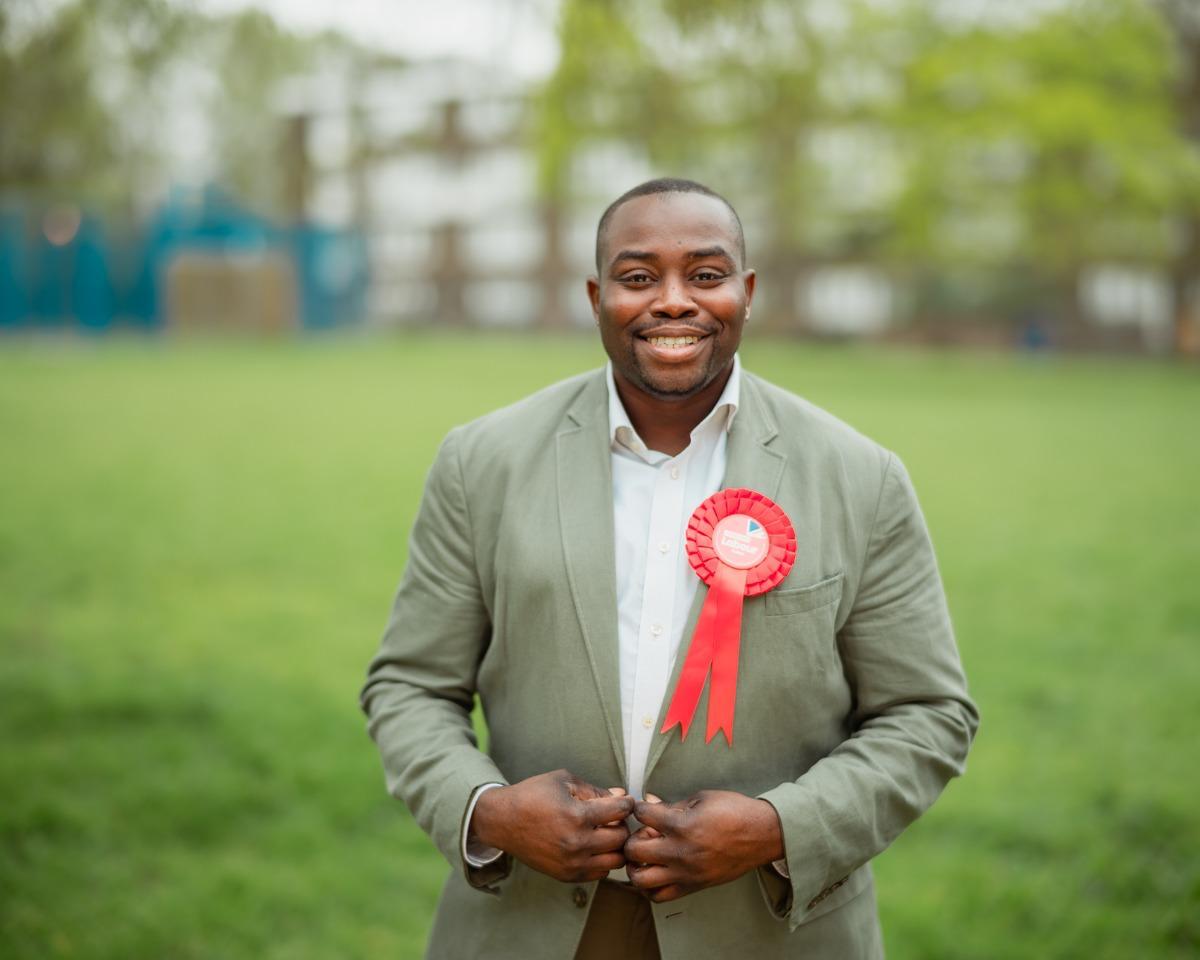
The leader of Greenwich Council has called Labour’s vision for the borough “the most ambitious of any party” ahead of this week’s election. Greenwich has been a Labour stronghold since 1971, and Anthony Okereke is hoping to maintain that control when residents take to the polls on Thursday.
Anthony is leading his first re-election campaign as council leader since being elected to leadership in 2022. He told the Local Democracy Reporting Service (LDRS) he’s been enjoying it despite the challenge of having to juggle leading the authority and campaiging for Labour to maintain or grow its 47 council seats.
He said: “It reminds you and takes you back to why you’re doing it and what you’re trying to achieve.
“Being able to go on a doorstep and say to someone ‘That is my plan’, and hearing them respond positively to that. I think it’s great. That’s what you want to do when you set out a political vision for a borough.”
Labour’s manifesto for Greenwich contains several big promises. Eye-catching policies include delivering 6,000 council, social rent and low rent homes over the next decade and offering every child under the age of 16 in the borough a £150 voucher to buy a bicycle.
Anthony assured Greenwich residents that Labour’s plans had been looked over and financially assessed by council officers and were fully costed and deliverable. He was also confident that the message he was delivering on doorsteps was being received positively by voters.
The latest YouGov poll has predicted Labour will maintain control with 33 points. The voting analysts also predicted that other parties will make significant gains on Greenwich Council, especially the Green Party at 26 points, meaning Labour’s massive majority on the 55-seat council could be weakened.
Anthony said: “I’m going in for the win. I haven’t been paying too much attention to polls. I’ve just been getting my head down, trying to communicate my vision. It is the most ambitious vision of any party in Greenwich.”
“This is a manifesto that is focused on real, tangible things. It’s not a manifesto that is going to come with any empty promises.”
The Labour leader wanted residents to focus on local issues when it came to this week’s election, imploring voters to leave their national politics at the door.
He said: “The challenge of this election isn’t going to be Labour versus Reform. That’s not what’s at stake here. What’s at stake here is can we be the right mix of council to deliver for residents. If we’re not, that’s a problem.
“I would encourage residents to go and read everybody’s manifesto and see what their offer is. Don’t let the offer be in your national opinion. Bring it back to your local.”
Housing is an issue that Anthony is keen to tackle in Greenwich. The 36-year-old council leader still lives with his parents. He said he understands the importance of housing in the city because of his living situation.
Anthony was proud to have been named YIMBY (Yes In My Backyard) of the year at the ‘Brickies’, the inaugural edition of Labour’s YIMBY awards last November which celebrated party members who were encouraging and facilitating house building.
Within Labour’s Greenwich manifesto, the party has committed to delivering 6,000 council, social rent and low rent homes over the next ten years. Anthony said that number had not been “plucked out from the air” and it was achievable.
Anthony said: “I think there are different ethoses in the YIMBY movement. I’m about making sure we get good quality housing, good affordable housing and good social housing, and getting the investment that social housing deserves and needs to get built.
“I feel proud to be able to stand on those values and be recognised for it, because ultimately I want to change people’s circumstances and I want us to be able to change people’s environments.”
One housing issue that concerns Greenwich residents is the proliferation of new HMOs and the subsequent loss of family homes in the borough. Anthony said Labour had a two-pronged approach to deal with this on both planning and licensing terms.
In planning, the council leader said by delivering those 6,000 homes the demand for HMOs would decrease. He also proposed bringing in policies that would put a cap on the amount of HMOs in any given area, be that by ward or by street, and not allow any property under a certain square footage to be converted into an HMO.
In licensing, Anthony said the council would enforce the maximum £40k fine on rogue landlords who weren’t providing satisfactory living conditions.
One of Greenwich Labour’s most discussed policies this election cycle is its promise to offer every child under the age of 16 in the borough a £150 voucher to buy a bicycle. Using 2021 census data, it would cost Greenwich the best part of £9m if every child took up the offer.
Anthony said the voucher pledge had two goals; getting the young people of Greenwich more active, and helping families with the cost of living. He added: “We’re trying to give the gift of cycling to every young person.”
He also denied claims the vouchers were an election gimmick, saying his party had set up similar schemes before—loaning E-bikes to residents for £10 a month—and naysayers didn’t understand that the vouchers would be fully funded through developer contributions and “no council tax will be used on them whatsoever”.
When asked whether the council could use that money to restore the staffed provision at three of the borough’s five adventure play centres (APCs) that were recently cut, Anthony said the cuts were made because some of the APCs were becoming a revenue issue while the vouchers would be a one-off capital payment.
He said the council had to remove some of the staffed APC provision to deliver a balanced budget (the APC changes aim to save the council £2.2m over the next four years), and so money was now being spread around the centres more evenly according to how much they were each being used.
He said: “When we spoke to young people [in the APC consultation], they wanted more flexibility in the activities that they want. So we’ve proposed a £400k annual grant for them to do satellite projects, then you’ve also got the APCs in which we will invest £600k.”
Another Labour manifesto policy is the promise to double the number of Community Enforcement Officers on Greenwich streets. Anthony said those council officers worked really well with the police in the borough.
He was proud of the work the council had done so far to tackle crime and anti-social behaviour—knife bins, a short film about the harm of grooming gangs and therapy for young people who have been involved in violence—but acknowledged more work needed to be done.
Anthony said: “We’re still seeing young peoples’ lives being taken away, and this is something we need to challenge when we get back in.”
Other ambitious promises in the Labour manifesto include creating England’s first fully integrated health and social care service to free up more GP appointments, and delivering at least 2,000 EV chargers across Greenwich.
Looking back over the last four years, Anthony said he was most proud of delivering Woolwich Waves, the state of the art leisure centre which opened at the start of the year, and delivering 1,750 sustainable council and affordable homes, some of which are still under construction.
His time as leader hasn’t always been plain sailing. Over the past year, Greenwich Council has made a number of decisions that have divided the borough’s residents and has led to vocal criticism of the South London authority.
Several residents’ groups have protested outside council meetings in the past year, and Anthony himself has at times been the focal point of public indignation.
A recent move of his that was criticised by opposition councillors and residents alike was his decision to change the way public and council member questions were made at council meetings.
The changes, which came into force in March, mean public questions at full council meetings in Greenwich are now limited to no more than 100 words and councillor questions are limited to two per member.
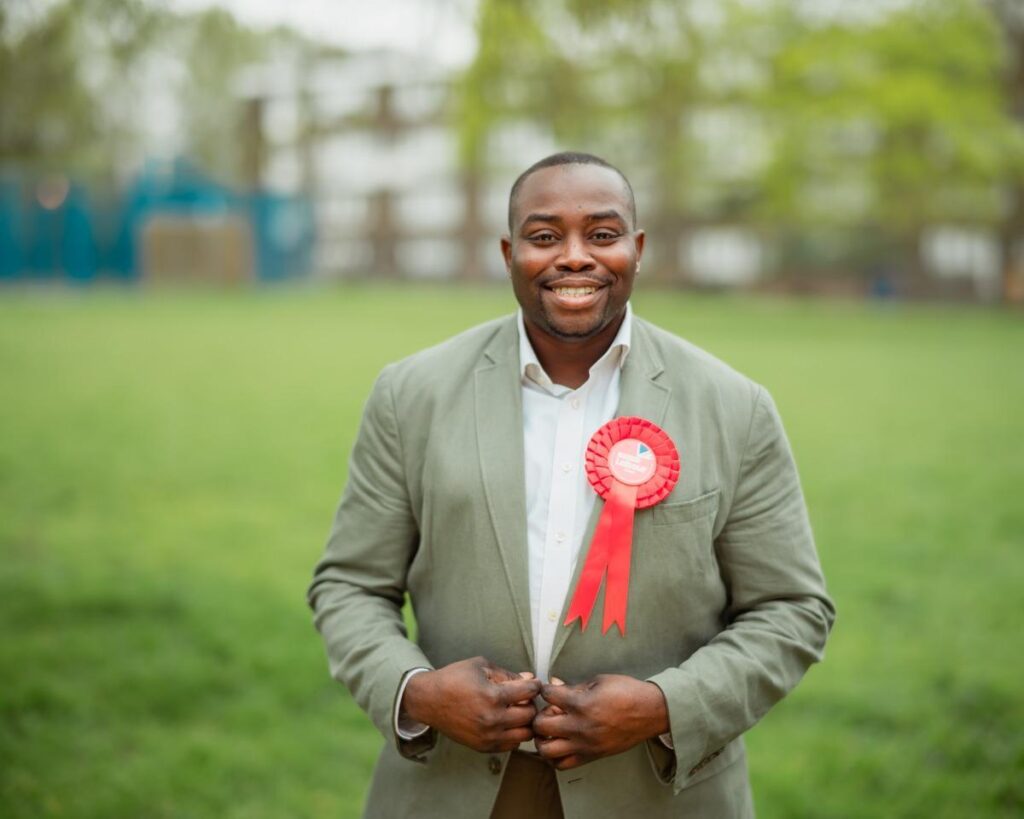
The threshold of evidence was also raised for councillors to ‘call in’ a council decision to undergo further scrutiny in a series of changes one residents association chair called “an appalling attack on democratic rights”.
The council leader didn’t agree with such criticisms and said the changes were about “getting democracy right”. He argued that the questioning system was being used by a vocal minority of residents, and the new limitations allowed more people to voice their concerns.
Increased public questioning has led to meetings regularly stretching over three-and-a-half hours, which the leader said had made it harder for the council to conduct important business.
Anthony said: “We are in no way running away from questions in any way shape or form. This is about making sure that full council is a decision making body.
“It’s important that we have the right type of meetings to make the right decisions that benefit our population. To do that we have to make sure meetings are well managed and meetings are well run, and we need a proper good agenda to do that.”
The increase in public questioning over the past year has been tied to a series of controversial council decisions, such as the APC cuts, the mostly scrapped Sustainable Streets parking project, the introduction of two Low Traffic Neighbourhoods and the potential sale of the Greenwich Equestrian Centre to developers.
Anthony said his council had made these “bold decisions” in order to keep the authority financially stable. Despite delivering a balanced budget for 2026/27, the council predicts it will have a £101m budget deficit by 2029/30.
Anthony said: “We’ve had to make really bold decisions. You don’t become a council who balances their books year after year after year without looking at exceptional financial support, without having to look at bold ways to reform and reimagine your services, and that’s what we’ve done.”